About Nothofagus alpina (Poepp. & Endl.) Oerst.
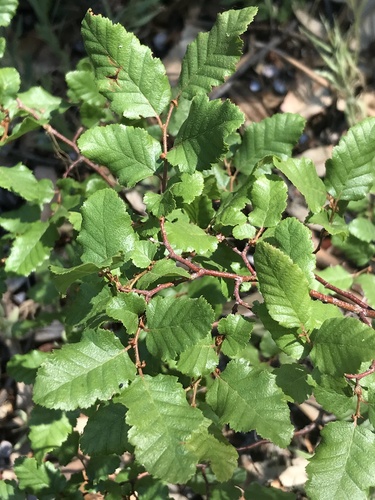
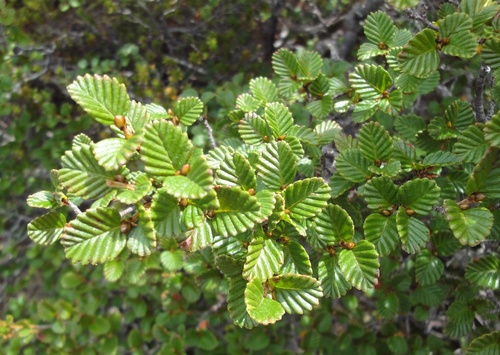
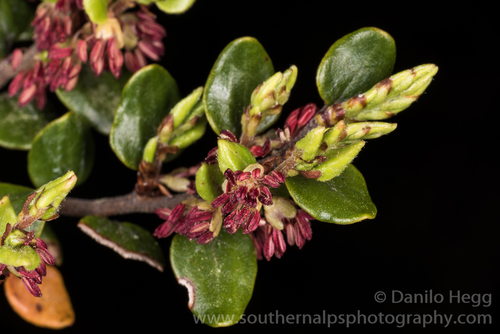
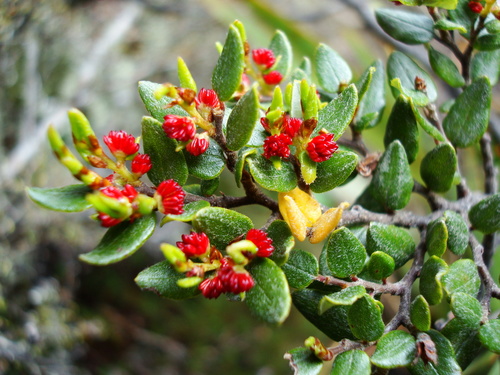
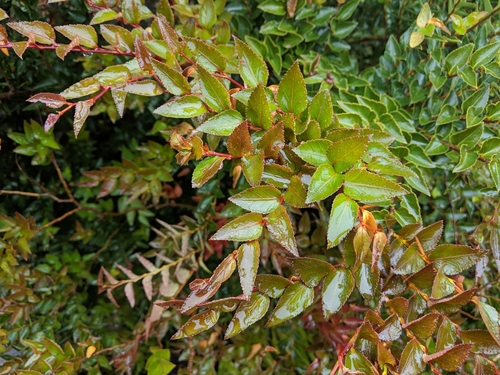
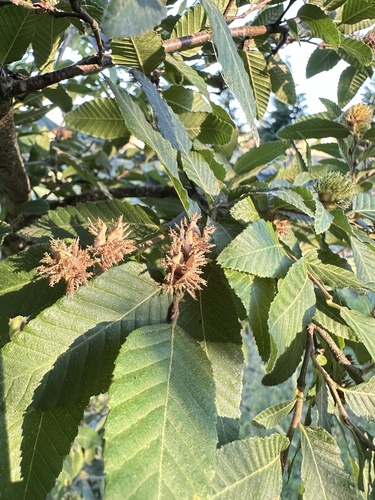
Nothofagus alpina (Poepp. & Endl.) Oerst. is a monoecious, leafy species with alternate leaves. Leaf petioles measure 3 to 12 mm long, and leaf blades range from oblong ovate to lanceolate ovate, with regularly distributed glands and hairs, undulate softly serrated margins. Leaf lamina is 4 to 12 cm long by 2.5 to 5 cm wide, with prominent pinnate veins that are pilose, most noticeably on the lower leaf surface. Newly grown green shoots are pubescent, covered in brown felt-like hairs. Flowers are small and unisexual. Male flowers grow in clusters of 3, are briefly pedicellate, and have numerous stamens; three of these male clusters form inflorescences carried on a peduncle roughly 1 cm long. The fruit is held in a cupule with 4 narrow valves, which contains 2 to 3 small, slightly hairy yellowish nuts 6 mm long. The two lower nuts are triangular and tri-winged, while the flat inner nut is bi-winged. The wood of Nothofagus alpina, commonly called raulí, is pinkish with brown-reddish tones and has a very fine grain. It is medium weight and relatively easy to work, and it is used in furniture, fine Chilean wine barrels, doors, veneers, shingles, and floors. This species has been introduced as an ornamental plant to Great Britain, and grows well in western Scotland, where it receives the minimum 750 mm (30 in) of annual rainfall it needs for good growth. It is a promising forestry tree in western Great Britain, and regenerates easily after coppicing.