About Nothofagus alessandrii Espinosa
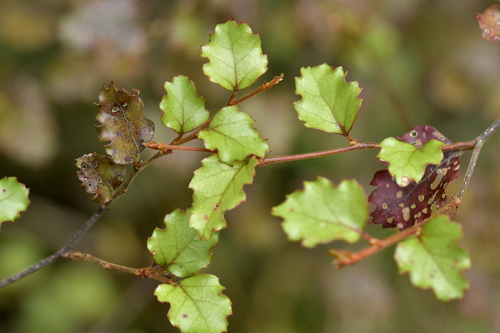
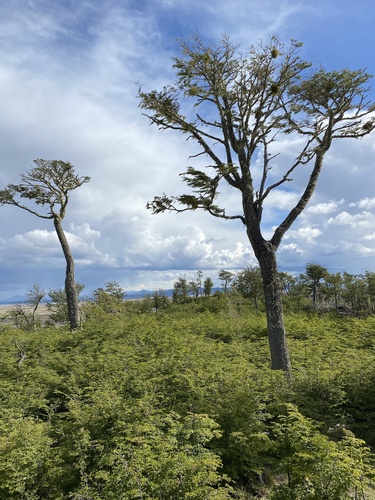
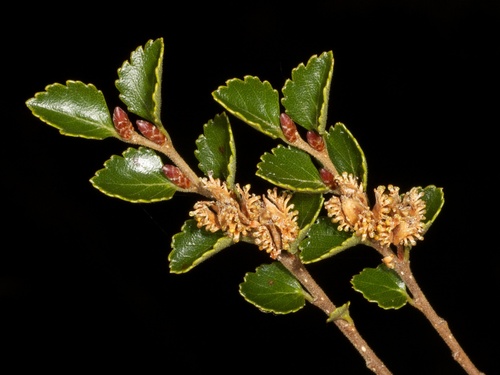
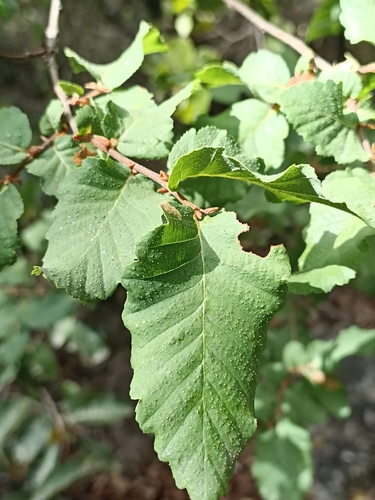
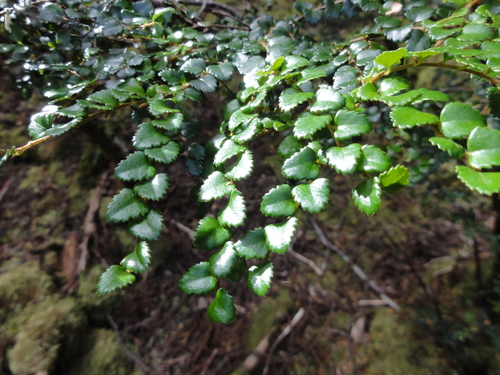
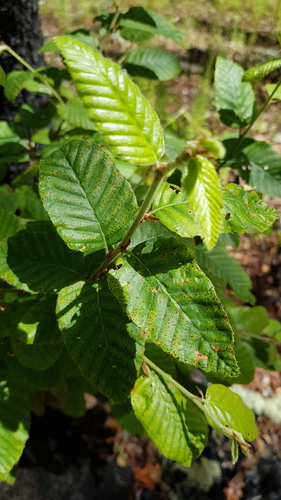
Nothofagus alessandrii Espinosa, commonly known as ruil, is a deciduous tree. It has a straight gray trunk, and can reach up to 30 meters in height. Its leaves are shaped ovate, ovate-cordate, or lanceolate, with visible primary veins and serrated margins. Its greenish flowers are unisexual and not showy. Ruil grows between 37° 05' and 37° 50' south latitude, in the Chilean Coast Range, within the Talca and Cauquenes provinces of Chile's Maule Region. The species has an estimated extent of occurrence (EOO) of 755 km² (292 sq mi), and an area of occupancy (AOO) of 116 km² (45 sq mi). It is a characteristic tree of the Maulino forest plant community. This community forms a transition between the Mediterranean-climate Chilean matorral of Central Chile, and the mild, humid temperate Valdivian temperate forests of southern Chile. Modern ruil forests grow in a climatically homogeneous area. Ruil often forms pure stands, and it frequently grows in locations where Nothofagus glauca (hualo) is also found. In its natural habitat, Nothofagus alessandrii forms a symbiotic relationship with the ectomycorrhizal fungus Cenococcum geophilum. This relationship helps the trees survive drought stress.