About Notechis scutatus (Peters, 1861)
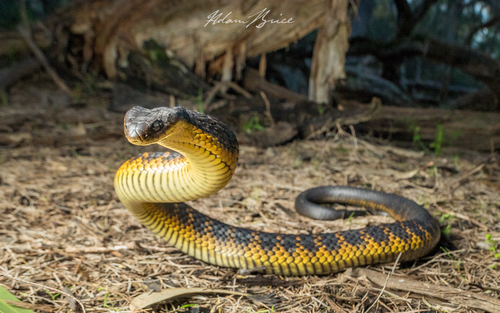
Notechis is a genus of large venomous snakes in the Elapidae family, found only in the subtropical and temperate regions of Australia. Tiger snakes form a large group of distinct populations that may be isolated from or overlapping with each other, and they show extreme variation in size and color. Individual tiger snakes also display seasonal color variation. Their total typical length is around 1.2 metres (3 ft 11 in). Their pattern consists of darker bands, which can be strongly contrasting or indistinct, and range in color from pale to very dark. Their overall body color can be olive, yellow, orange-brown, or jet black, and their underside is light yellow or orange. Tiger snakes use venom to kill their prey, and may also bite when confronted by an aggressor; their bites are potentially fatal to humans. They tolerate low temperatures well, and can be active on warmer nights. When threatened, they flatten their bodies and lift their heads above the ground, taking the classic prestrike stance. Tiger snakes are usually found in coastal regions, where they prefer wetlands, creeks, dams, and other habitats along watercourses, or shelter near permanent water sources in pastoral areas. Habitats with abundant prey can support large tiger snake populations. Their distribution extends from southern Western Australia through South Australia and Tasmania, northwards through Victoria to New South Wales. Their most common habitats are Australia's coastal areas. Tiger snakes give birth to 20 to 30 live young; one exceptional record documents a female from eastern Australia giving birth to 64 young. They typically mate in spring, the warmer season, and give birth to their live young in summer.