About Nomascus gabriellae (Thomas, 1909)
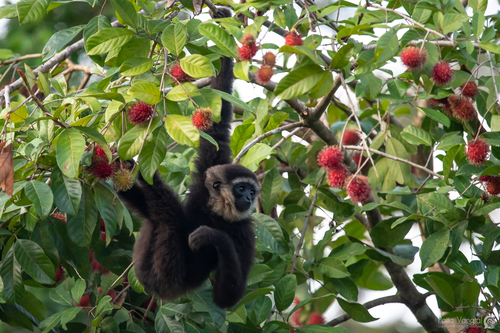
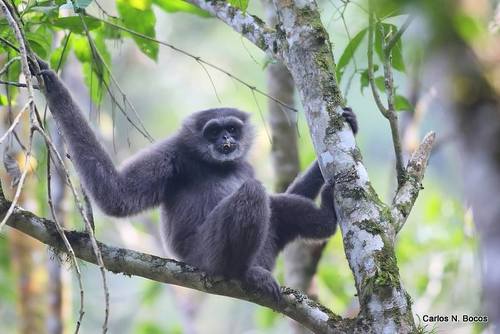
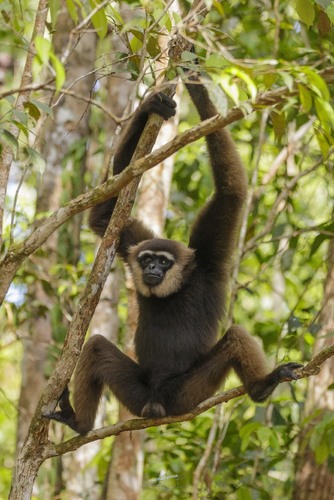
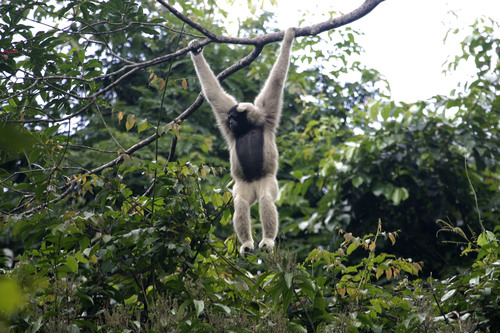
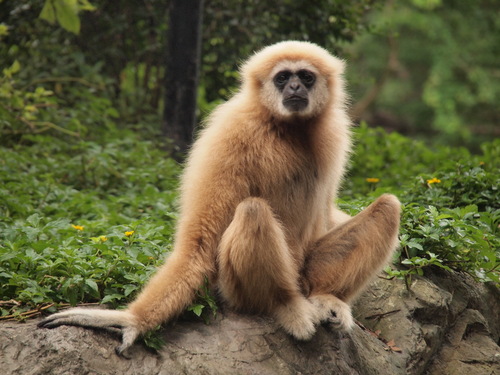
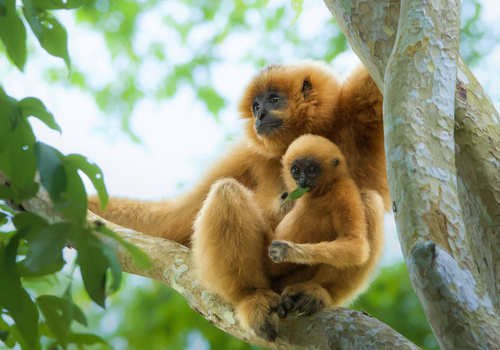
The yellow-cheeked gibbon (Nomascus gabriellae) has several alternate common names: golden-cheeked gibbon, yellow-cheeked crested gibbon, golden-cheeked crested gibbon, red-cheeked gibbon, and buffed-cheeked gibbon. It is a species of gibbon native to Vietnam, Laos, and Cambodia. The species was discovered and named in honor of British naturalist Gabrielle Maud Vassal. Yellow-cheeked gibbons are born with blond fur, and later darken to black. Males retain this black coloration for their entire lives, and have distinct golden cheeks. Females are born blond to blend in with their mother's fur, then turn black as they mature, before turning back to blond when they reach sexual maturity. Adult females only retain a black cap of fur on the top of their heads. This is a diurnal, arboreal gibbon that lives in primary tropical forest. It forages for fruit, and moves through the tree canopy using brachiation. Little information is available about this species in its wild habitat, but it is thought to have an approximate lifespan of 46 years. Groups of yellow-cheeked gibbons vocalize loudly early in the morning. Their songs likely function to defend resources including territories, food-bearing trees, and breeding partners, and may also help attract potential mates. Mated pairs perform coordinated duets, which include phrases that are specific to each sex.