About Nomada marshamella (Kirby, 1802)
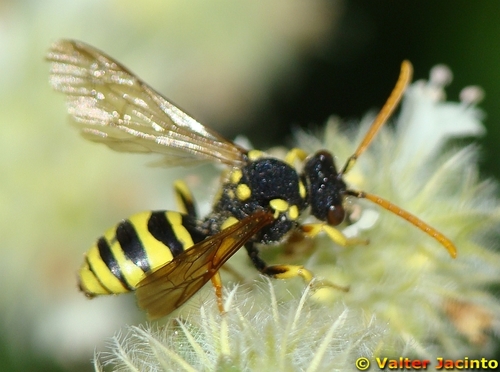
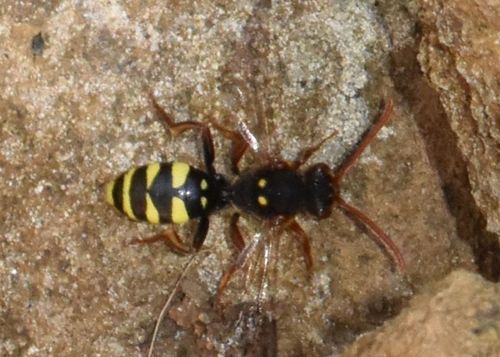
Nomada marshamella is a large nomad bee, measuring 10 to 13 millimeters in body length, with black and yellow coloration and a shape that resembles a wasp. On its second tergite, the yellow spots are well separated, and unlike similar species, it does not have reddish fringes on the tergites. Its sternites are mostly black and yellow with little to no red coloring, and its tegulae are orange. Males of N. marshamella are hard to distinguish from N. fulvicornis, but they can be told apart by less extensive yellow markings on the eye and first tergite, some brown coloring on the tegulae, and longer antennae. This species has a black head; males have yellow markings on the head and are smaller than females. Nomada marshamella is endemic to the western Palearctic ecozone. Its range extends from Britain and Ireland in the west, east to Turkey, north to southern Finland, and also includes the islands of Corsica and Malta. This bee can be found in a wide range of habitats, occurring in both coastal and inland areas in any location where its host mining bees are present. It has been recorded with some regularity in suburban habitats including gardens.