About Nodipecten nodosus (Linnaeus, 1758)
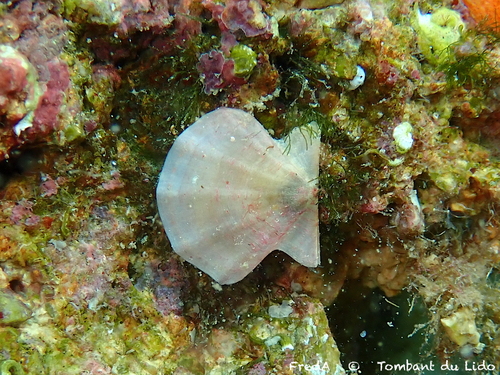
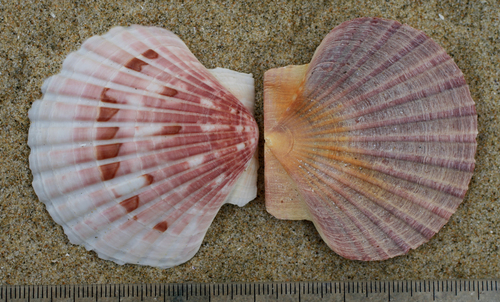
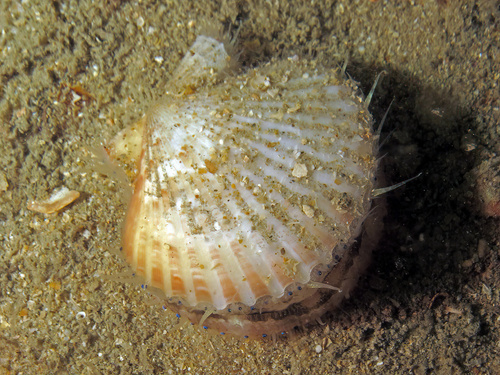
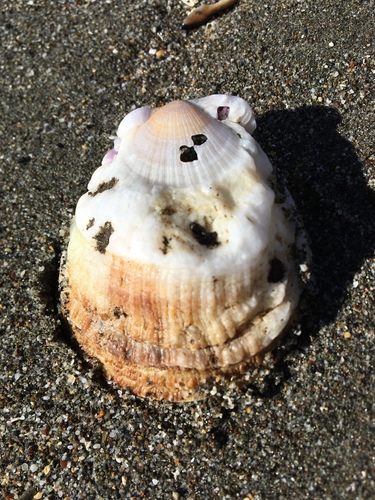
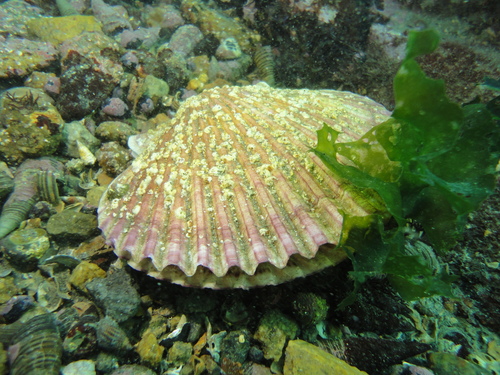
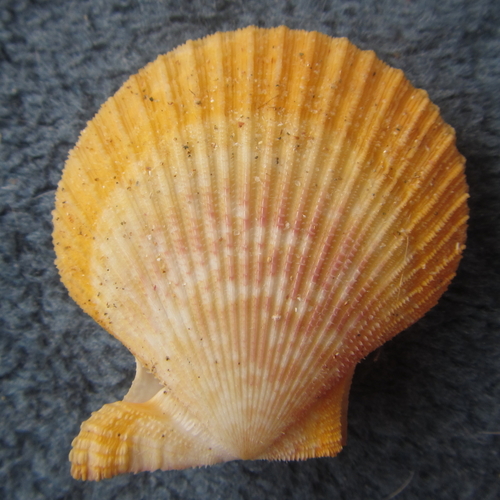
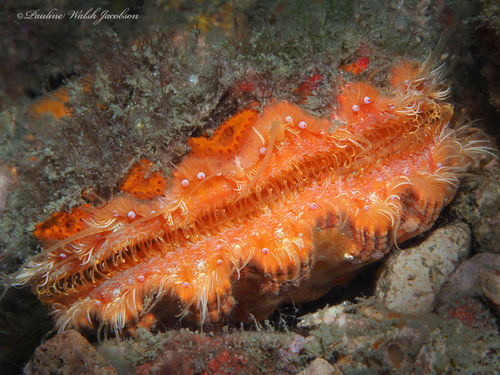
This species, commonly called the lion's paw scallop, has a shell length ranging from 6.4 to 15.2 cm (2.5–6 in), with a nearly circular overall shape. Its moderately thick shell has flattened anterior wings near the hinge. The shell is very brightly colored, with a distinct thick, knobby texture. Shell color can range from red to orange; some individuals have purple or yellow hues. Nodipecten nodosus occurs in tropical Atlantic Ocean waters, with confirmed populations in the Caribbean, the Antilles, the Virgin Islands, Central America, Panama, Colombia, Venezuela, and Brazil. Its overall geographic range extends from the coast of North Carolina to the West Indies, and from Brazil to Bermuda. It can also be found in the deeper sections of the Gulf of Mexico. This species lives at depths between 9 and 49 m (30–160 ft), and typically occurs in low population densities. It cannot be harvested from wild fisheries for farming, but it is commonly used for aquaculture in Caribbean Colombia due to its quick growth rate. The lion's paw scallop is an epibenthic bivalve that inhabits deep tropical Atlantic waters, where it lives on rough sediment and rubble, and attaches to the hard substrates in its habitat. It is a filter feeder that consumes microalgae from the water column. This species spawns twice a year: off the coast of Brazil, spawning occurs once in winter and once in summer. Lion's paw scallops rarely produce pearls; when pearls do form, they are primarily composed of calcite and are non-nacreous.