About Nocomis micropogon (Cope, 1865)
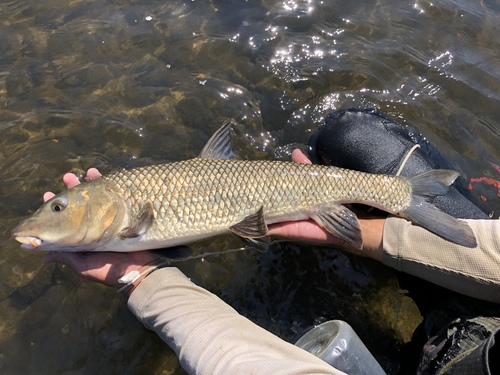
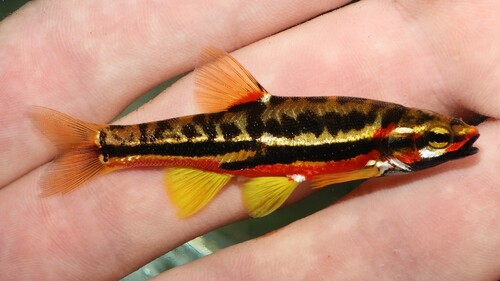
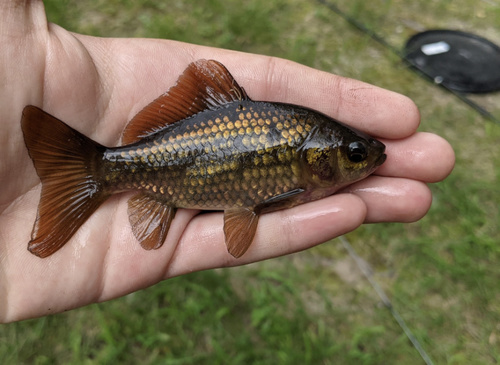
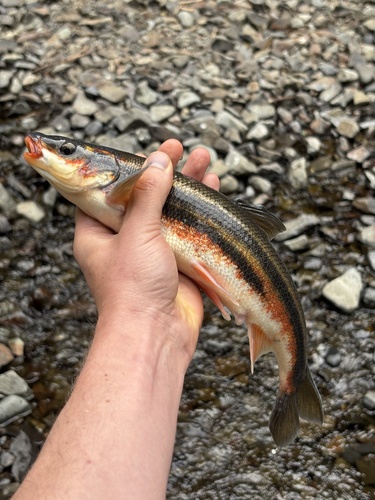
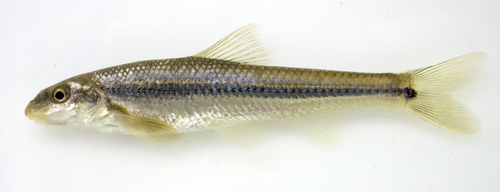
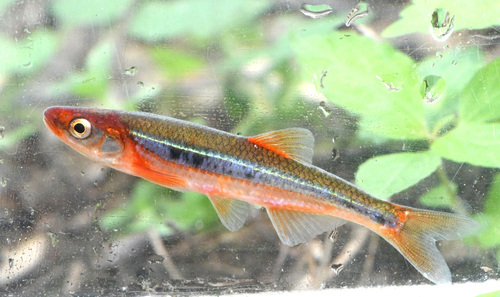
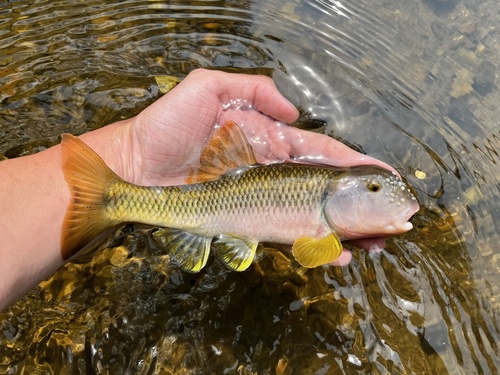
The river chub (Nocomis micropogon) is a species of freshwater ray-finned fish in the family Leuciscidae, which includes shiners, daces, and minnows. It is one of the most common fish found in North American streams. Its native range primarily covers most of the Great Lakes and Appalachian regions. It inhabits clear, medium to large creeks and rivers with moderate to swift current, over rock and gravel substrate. Its distribution stretches from southeast Ontario and southern New York west to Michigan and Indiana, and south to northwest South Carolina and northwest Alabama. This range includes the Susquehanna River system, James River system, Great Lakes basin (excluding Lake Superior), Ohio River basin, Santee River, Savannah River, and Coosa River. It has been introduced into the Ottawa River system in Ontario, and its presence in the Santee, Savannah and Coosa Rivers may be the result of introduction by fishermen emptying bait buckets. The river chub is generally widespread and abundant with no apparent major threats. Exceptions to this status occur in three regions: in Illinois it is considered Critically Imperiled due to its very limited range along the Wabash River, in Alabama it is considered Imperiled, and in Georgia it is ranked as Vulnerable. In Ohio, populations in western regions have been extirpated by turbidity and siltation, while populations in the state's coal region are threatened by acid mine drainage. Dams have also inundated former river chub habitat, eliminating portions of its historic range. Ecologically, the river chub is prey for larger fish, and is used as bait by fishermen targeting large game fish such as bass and catfish. Its diet consists primarily of aquatic invertebrates. One study of river chub stomach contents in western New York found that insects made up 70% of the volume of food consumed, plants or protists (mainly filamentous algae) made up 20%, crustaceans (primarily Cambarus crayfish) 5%, mollusks (primarily gastropods) 4%, with small amounts of fish and arachnids also consumed. Caddisfly larvae and fly larvae (primarily Simulium and Chironomus) made up just over half of the total food consumed. Mayflies (mainly baetids) made up about 6% of the total. Other insects consumed include Coleoptera (beetles), Hemiptera (true bugs), Hymenoptera (bees, wasps, and ants), Plecoptera (stoneflies), Neuroptera (net-winged insects like laceflies), and Lepidoptera (butterflies and moths). The presence of river chub in a stream is a good indicator of good water quality. They are intolerant of pollution, turbidity and siltation, and require a minimum pH of 6.0. They provide important ecological services: they act as hosts for mussel glochidia larvae, and support nest associate fish species, some of which cannot spawn in the absence of river chub. Freshwater mussels release small masses of microscopic larvae called glochidia held in a loose gelatinous matrix. The glochidia encyst on the gills of river chubs, where they metamorphose into juvenile mussels before dropping off to live independently. It is suspected that river chubs feed on these gelatinous masses, just as they feed on drifting insects. The river chub acts as a host for mussel species including the endangered fine-rayed pigtoe and Tennessee clubshell, and is likely a host for many other amblemine glochidia. Nest associates of the river chub include fish species from the genera Clinostomus, Luxilus, Lythrurus, Notropis, Chrosomus, Rhinichthys, and Semotilus. Nest associates' preference for river chub nests may stem from a lack of alternative spawning habitat for some species, and some species absolutely require association with pebble nest builders like the river chub to reproduce. For example, to establish a more viable population of the pebble nest associate Chrosomus cumberlandensis, the species was bred in aquaria alongside a man-made pebble nest, with milt from a breeding male river chub added to induce spawning. Both nest associates and the river chub host can benefit from this affiliation. Hybridization among nest associates is also not uncommon. One known hybrid example is the cross between Nocomis micropogon and Rhinichthys cataractae, which is sometimes identified as Pararhinichthys bowersi.