About Niphidium crassifolium (L.) Lellinger
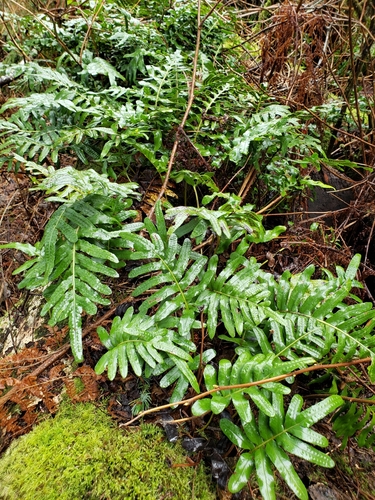
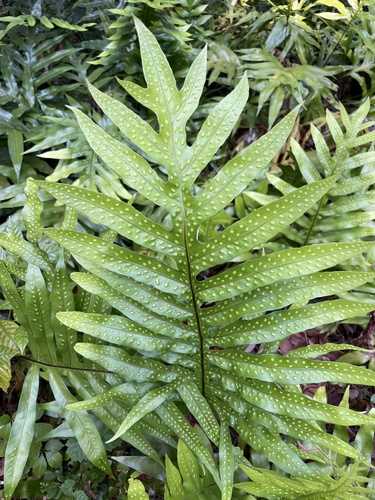
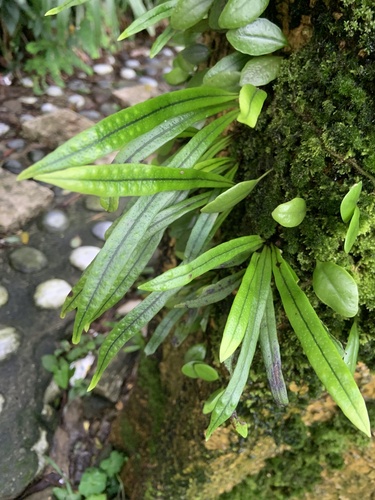
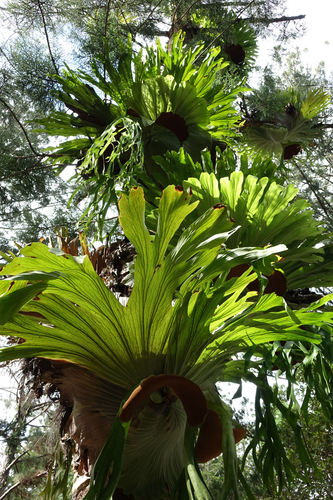
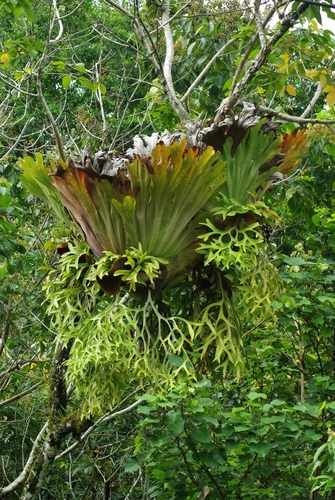
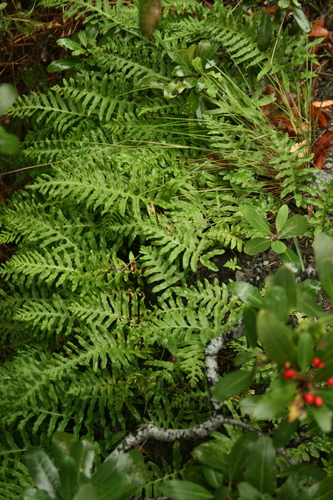
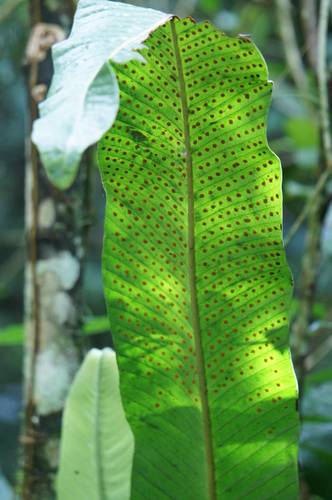
Niphidium crassifolium (L.) Lellinger, commonly called the graceful fern, is a species of fern in the family Polypodiaceae native to Central and South America. It is predominantly epiphytic, meaning it grows on other plants, most commonly in tree canopies. Occasionally, it grows on rocks or the ground, especially at higher altitudes. This fern grows from a rhizome, which produces many fine rootlets covered in dark reddish-brown scales. These rootlets and rhizome together form a root basket; when the fern grows on trees, this structure traps leaf litter and dust to create nutrient-rich, water-retaining soil. Its leaves are simple in shape, 13 to 85 centimetres (5 to 33 inches) long and 3 to 5 centimetres (1.2 to 2.0 inches) wide, covered in a wax-like film when dry. The fern produces large, round sori that grow in single rows between veins near the tip of the leaf. Niphidium crassifolium ranges across Central and South America from Mexico in the north to Peru in the south, and is also found in Panama, Ecuador, Brazil, French Guiana, Guyana, and the West Indies. It grows at altitudes up to 1,100 metres (3,600 feet) above sea level, and tolerates a wide range of humidity levels. Botanist Thomas Croat notes it is likely the most common fern found on Panama's Barro Colorado Island, where it grows as an epiphyte on 12% of individuals of the walking palm (Socratea exorrhiza). It also grows on Platypodium elegans, Ceiba pentandra, Tabebuia guayacan, and Anacardium excelsum. Niphidium crassifolium can be cultivated, growing well in well-drained soil under medium light conditions. It is reported to survive consecutive days of freezing temperatures as low as −7 °C (19 °F). In Northern Peru, its fresh stem is used in traditional medicine to treat inflammation of internal organs.