About Niditinea fuscella (Linnaeus, 1758)
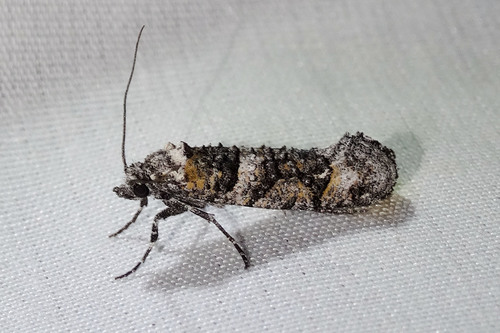
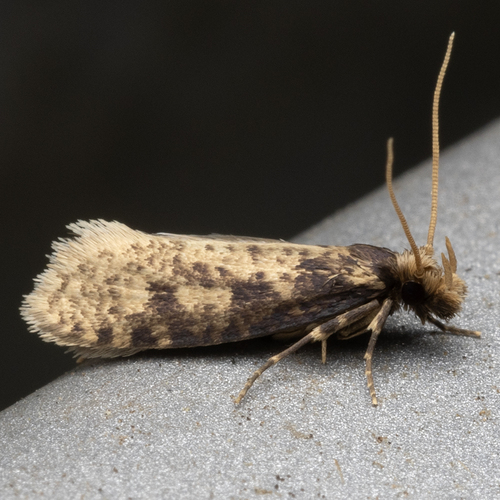
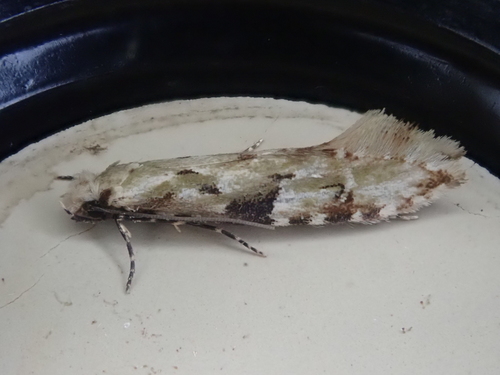
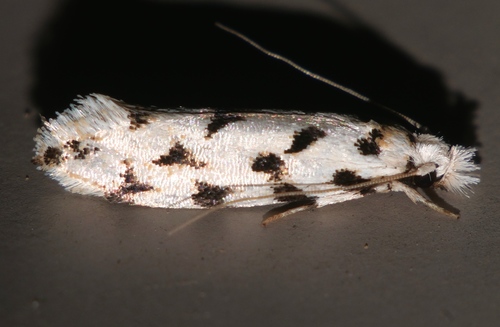
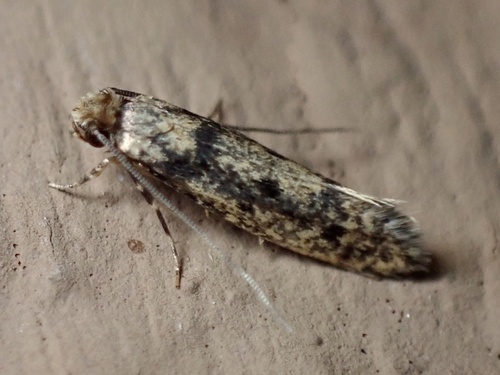
The brown-dotted clothes moth, with the scientific name Niditinea fuscella (Linnaeus, 1758), is a species of tineoid moth. It is classified in the fungus moth family Tineidae, and the nominate subfamily Tineinae within this family. Under its junior synonym Tinea fuscipunctella, it is the type species of the genus Niditinea. It is widespread and common across most of the western Palearctic, absent only from outlying islands such as Iceland and cold regions like the far north of Scotland. It has also been introduced to other areas, including Australia and New Zealand. Adult moths are active from May to September, though the exact timing varies by location. They avoid bright daylight, and only emerge in the late afternoon. This is a small moth species; adults have a wingspan of 14 mm. Their overall coloration is rather dull. Each forewing is brown-grey and marked with three large blackish-brown dots. The hindwings are silvery white, and are edged with a long-haired fringe, a trait typical of fungus moths and their close relatives. The body is dull brown, and a tuft of reddish-brown hair grows on the head. The caterpillars of this species feed on dry animal and plant remains. Despite the species' common name, they are rarely documented as clothing pests. While they will consume discarded wool and similar fabrics, they are most often found in bird nests – particularly those of chicken (Gallus gallus domesticus), domestic pigeon (Columba livia domestica), swallows (Hirundinidae) and woodpeckers (Picidae) – where they feed on shed feathers and bird feces. Less common food sources for this moth include dry peas, dried fruit, bran, dry rose flowers, dead beetles in mealworm (Tenebrio molitor) cultures, and even pigskin bookbindings.