About Nezara viridula (Linnaeus, 1758)
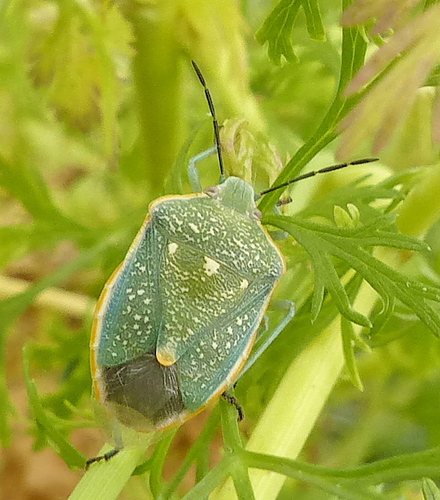
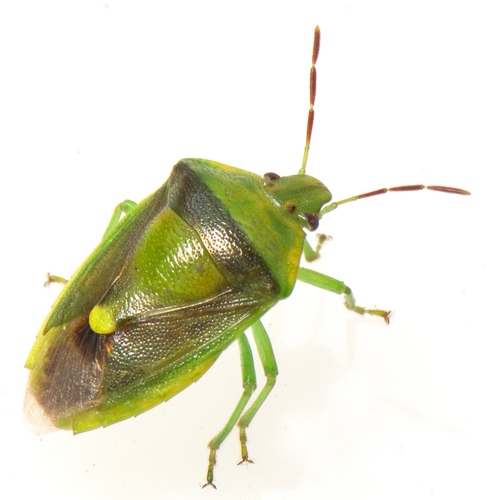
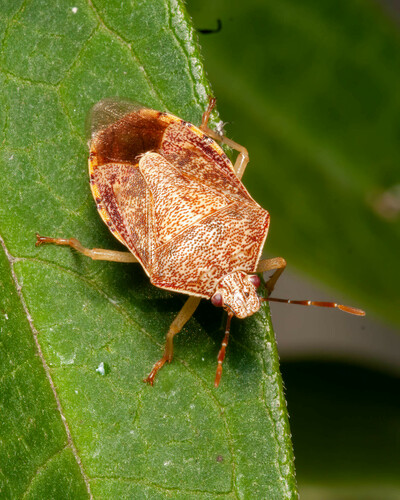
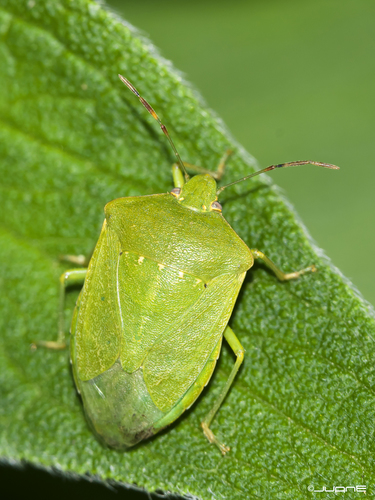
Nezara viridula was first described by Linnaeus in 1758. In adults, males reach a body length of around 12.1 millimetres (0.48 in) measured from the front of the body to the apex of the elytra, while females are larger, reaching approximately 13.1 millimetres (0.52 in). The body is typically bright green and shield-shaped, and the eyes are usually reddish, though they may also be black. There is a row of three white spots on the scutellum. N. viridula can be distinguished from the similar species Chinavia hilaris (the green stink bug) by the shape of its scent gland openings: these are short and wide in N. viridula, while they are narrow and long in the green stink bug. Nezara viridula is a cosmopolitan species found in tropical and subtropical regions across the Americas, Africa, Asia, Australasia, and Europe, occurring between 45 degrees north and 45 degrees south latitude. While its exact origin is unknown, it is thought to have originated in the Ethiopia region of East Africa, and has since spread globally thanks to its strong flight capacity and human transport along trade routes. This species is a highly polyphagous herbivore that can feed on plants from over 30 different families, including both monocots and dicots. It shows a preference for legumes, especially when these plants are fruiting or forming pods. In temperate zones, winter cold is the most important factor limiting N. viridula populations. Overwintering individuals experience a mortality rate between 30 and 80%, and populations cannot survive in areas where the average mid-winter temperature is below 5 °C. Females, larger individuals, and individuals that develop reddish-brown coloration are more likely to survive winter than other groups. In recent decades, this species appears to be expanding its range northward in the northern hemisphere. A successful winter survival also depends on the timely onset of diapause for this species.