About Neverita lewisii (A.Gould, 1847)
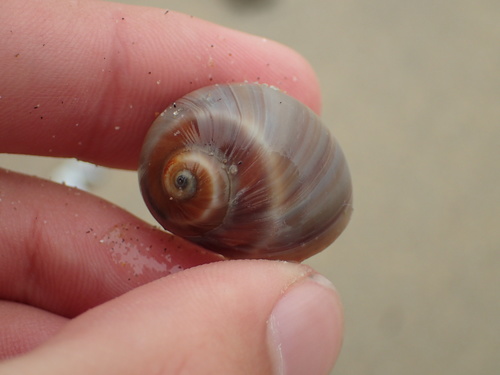
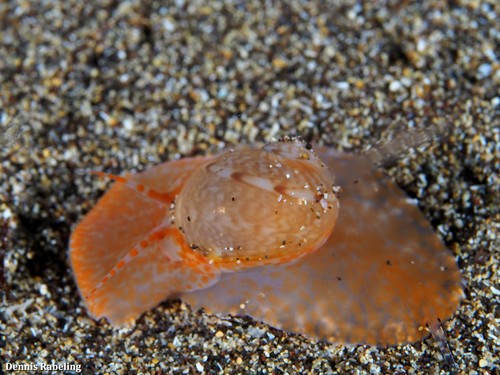
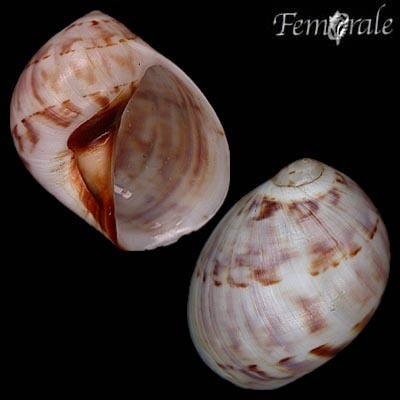
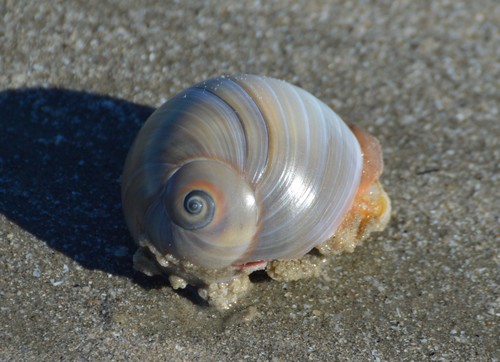
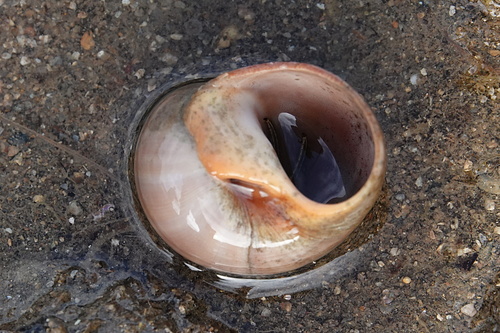
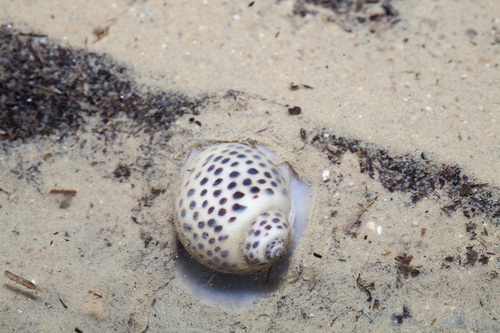
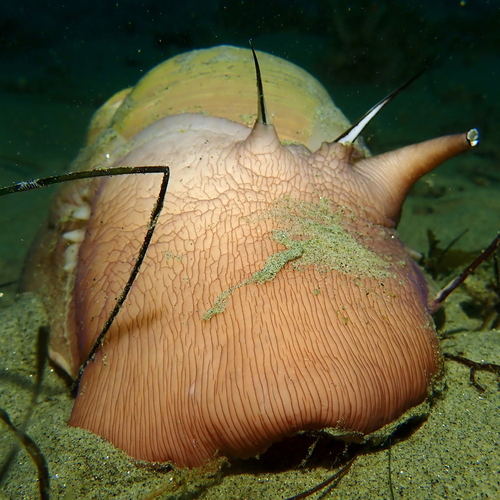
Neverita lewisii, also known as Lewis's moon snail, has a shell that can reach 14 centimetres (5.5 in) across, making it the largest moon snail species. It has an extremely large foot that extends over the shell and mantle cavity when the snail is active. A black-tipped siphon on part of the propodium carries water into the mantle cavity. The cephalic tentacles, located on the snail's head, are usually visible above the propodium. When the snail retracts its soft body into the shell, it expels a large amount of water, allowing it to close the shell with its tight-fitting operculum. This species is distributed in the Eastern Pacific, ranging from British Columbia to northern Baja California, Mexico. It can be found in intertidal zones and at depths up to 180 metres (590 ft), where it typically ploughs through the substrate to search for prey. Like other moon snails, Neverita lewisii lays its eggs in a structure called a "sand collar". It can lay thousands of eggs at a time. The eggs hatch into microscopic larvae that feed on plankton until they complete torsion and metamorphose into the adult form.