About Neuroterus quercusbaccarum (Linnaeus, 1758)
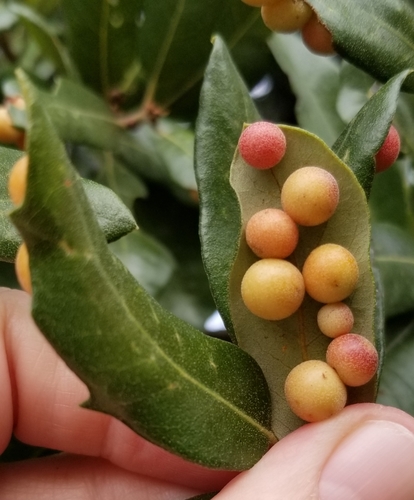
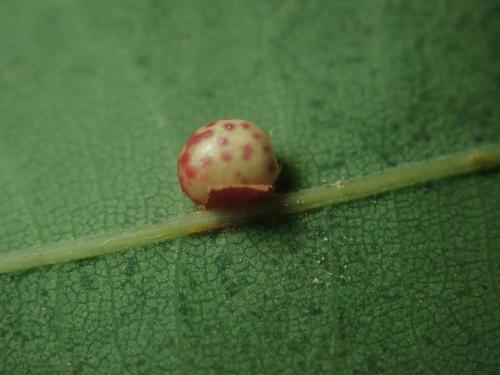
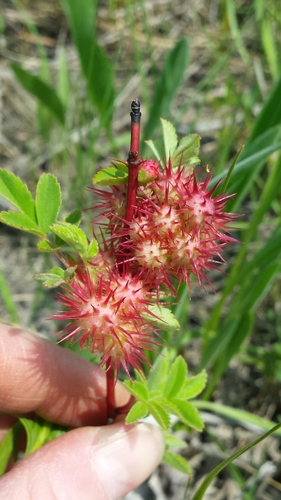
This cynipid wasp species, Neuroterus quercusbaccarum (first described by Linnaeus in 1758), causes two distinct chemically induced plant galls on pedunculate oak (Quercus robur) and sessile oak (Quercus petraea): common spangle galls form on the underside of oak leaves, while currant galls develop on male oak catkins, and occasionally on oak leaves. The species has both agamic and bisexual generations. Its recognized scientific synonyms include Neuroterus baccarum, N. lenticularis, N. malpighii, Cynips lenticularis, C. quercus-baccarum, Spathegaster baccarum, S. varius, and S. interruptor.
On oak trees, the distribution and abundance of spangle galls differ between mature and young oaks, a difference that may be partially explained by the earlier leaf opening timing of mature trees. No spatial zonation of spangle galls was detected across the canopies of mature oak trees. Galls that develop on catkins are parasitized less often than galls that develop on leaves.
Neuroterus quercusbaccarum is distributed across all of Europe, Asia Minor, and North Africa.
The species has an alternating generation life cycle. Males and females of the bisexual generation emerge from currant galls in June. After mating, fertilized eggs are laid into the lower epidermis of oak leaves. Spangle galls develop from these eggs over the winter, and the adult insects emerge from spangle galls in April. These emerging insects lay their eggs in oak catkins or the lower leaf epidermis, and the alternation of generations cycle begins again.