About Nesoptilotis flavicollis (Vieillot, 1817)
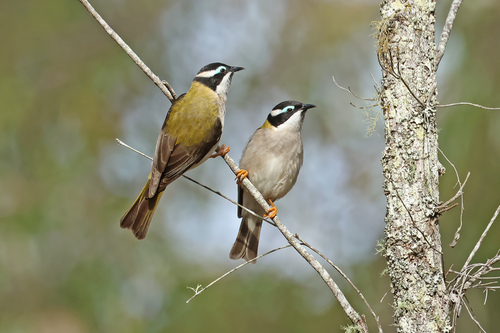
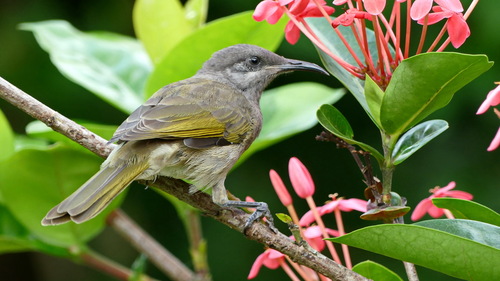
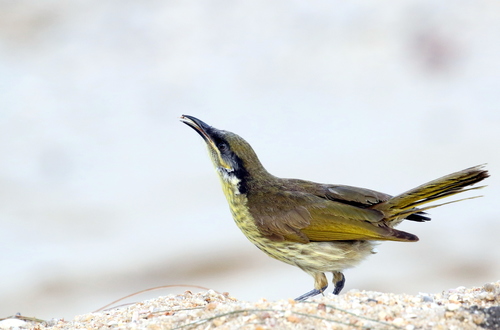
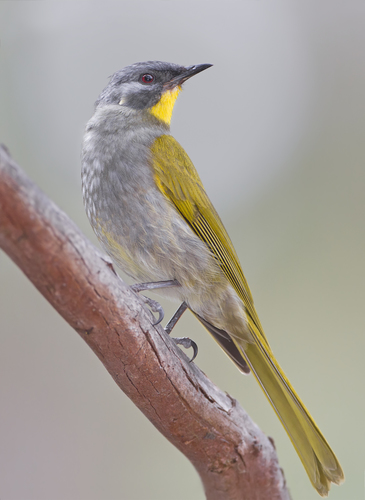
The yellow-throated honeyeater (Nesoptilotis flavicollis) is a medium-sized honeyeater with a relatively long tail. It typically weighs 31 g (1.1 oz) and has an average length of 21 cm (8.3 in). Its upper body plumage is bright olive-green, while its crown, face, and underbelly are silver-grey. This base colouration contrasts with the species' distinctive bright yellow chin and throat. It also has a small yellow ear patch, and yellow outlines along its wing feathers. The yellow-throated honeyeater has a black bill and deep ruby red eyes. Females are smaller than males, and juvenile birds look very similar to adults, but with duller overall plumage.
This species is common and widespread across mainland Tasmania, King Island, and the Furneaux Group, and it is not considered threatened. Its natural habitats include temperate forests, woodlands, coastal scrub, and heath. It prefers both wet and dry sclerophyll forests, but it also uses other habitats such as alpine eucalypt woodland, open eucalypt woodland, cool rainforest, coastal heathlands, and shrublands. It can also be found in golf courses, orchards, parks, and gardens. Older stands of dry sclerophyll, a common preferred habitat, may be adversely affected by fire.