About Nerodia floridana (Goff, 1936)
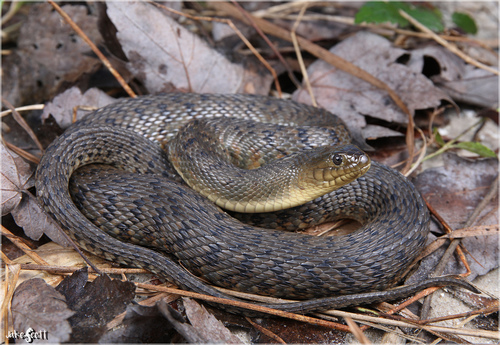
Nerodia floridana is the largest watersnake native to North America. Adult individuals typically reach a total length of 76 to 140 cm (30 to 55 in), including the tail; the largest recorded specimen measured 188 cm (74 in) in total length. Adult coloration is solid grey or greenish-brown, with a white or yellow belly that darkens in color under the tail. A row of scales encircles the lower half of the eye, and this row is separate from the upper lip scales. Among all snakes native to the southeastern United States, only the green water snake has this distinct scale feature. Juveniles usually have around 50 dark crossbars on the back and sides, which fade gradually as the snake ages. Nerodia floridana is distributed across Alabama, Florida, Georgia, and South Carolina. In southern South Carolina, it is most common in open, marshy wetland areas. It is rarely found in rivers or streams, and prefers calm waters with dense vegetation such as swamps and marshes. It also occurs in lakes, ponds, and ditches, and is occasionally found in brackish water. In southern Florida, Nerodia floridana is active throughout the entire year. Like other southeastern U.S. water snakes, Nerodia floridana hibernates during winter in the northern, coldest parts of its range. In colder areas and colder months, the snake can be found basking outdoors on sunny days. In southern Florida, it often travels overland on rainy days. Like other North American water snakes, Nerodia floridana produces live young via ovoviviparity. A small number of observations have recorded matings occurring in late winter or early spring. Females generally produce very large litters and give birth in the summer. Litter size ranges from 20 to 40 young, and births typically occur between June and September. The largest recorded litter for this species was 132 babies, which was recorded from a dead female.