About Nerita polita Linnaeus, 1758
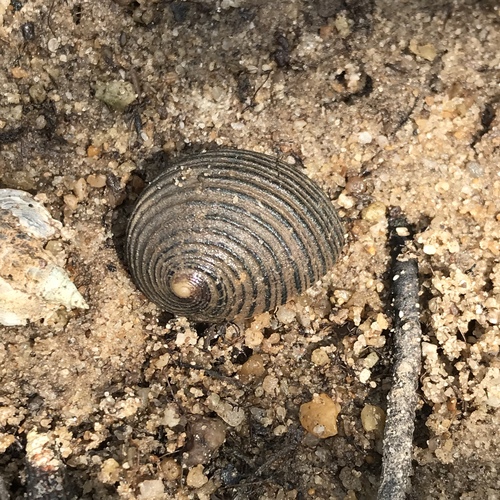
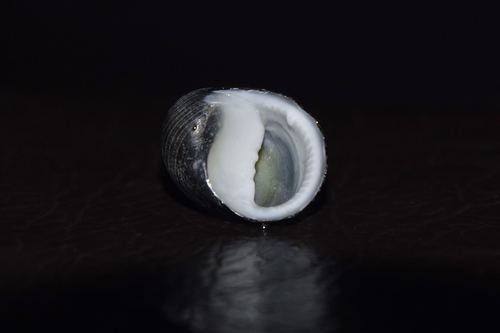
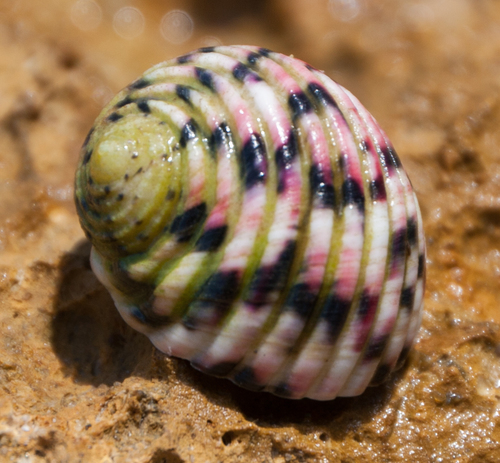
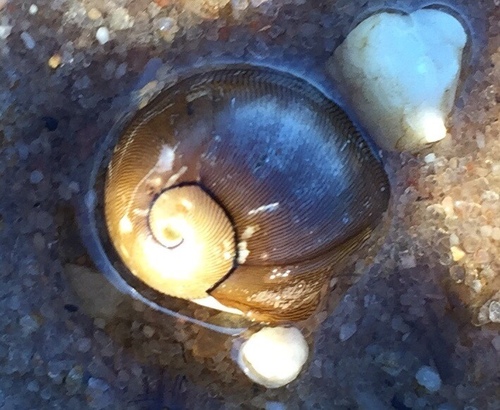
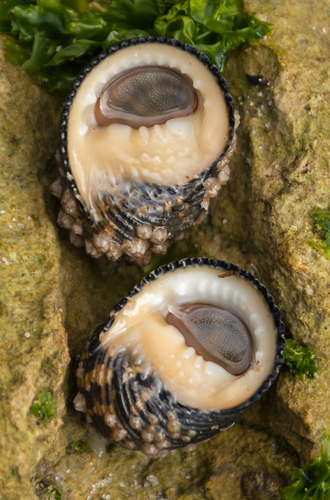
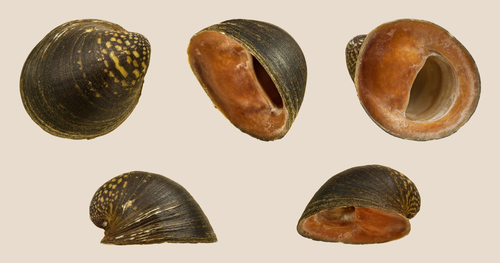
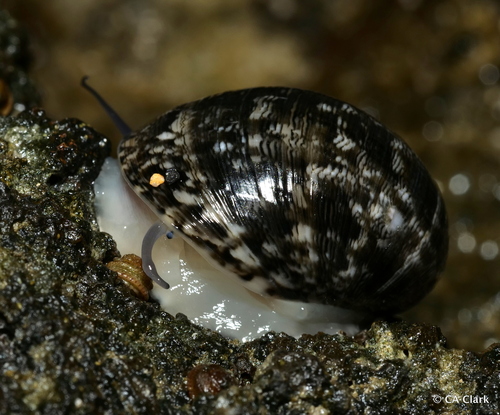
Nerita polita Linnaeus, 1758 has a distinctively smooth and polished shell that reaches up to 4 cm in size. It has a smooth columella, with 2 to 4 weak teeth along its edge. The shell's color is variable: it may be mottled grey, red, or cream, and sometimes has thin or thick axial bands, or a chevron pattern with white and gray spirals. The operculum is smooth, and ranges in color from cream to black. The inside of the shell is mostly white with a yellow tint, and has no teeth. Due to industrialization and urbanization, Nerita polita is exposed to fresh sewage and heavy metals. This species is found in the tropical Indo-Pacific. It occurs mostly in the intertidal zone, where it burrows into sand at the base of basalt formations and limestone near the shore. It can also be found on fine sandy shores and the littoral fringe of rocky shores. Individuals tend to emerge when the tide is low to reproduce and feed, and move back to their resting spots as the tide rises. Confirmed locations for Nerita polita include Aldabra, Chagos, the East Coast of South Africa, Kenya, Madagascar, the Mascarene Basin, Mauritius, Mozambique, the Red Sea, Tanzania, and the Maldives.