About Nerita melanotragus E.A.Smith, 1884
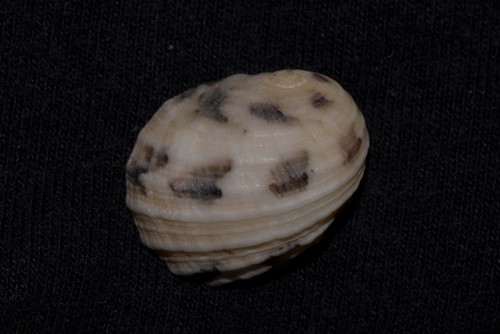
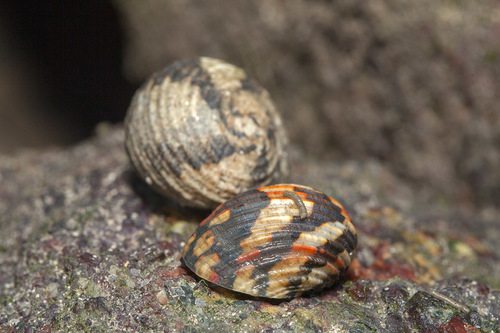
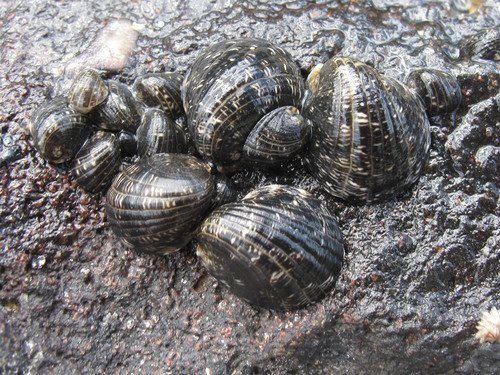
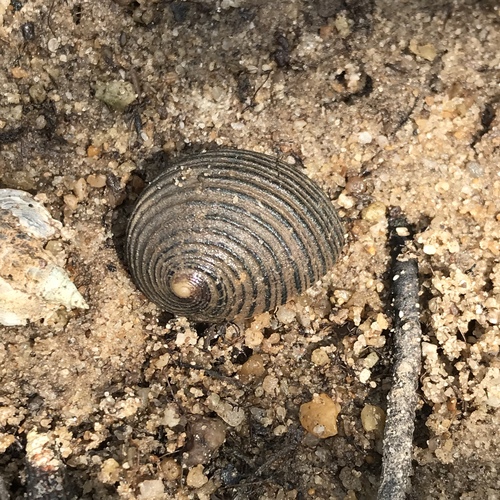
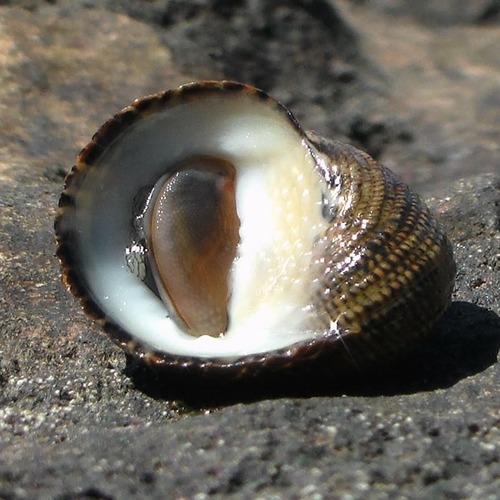
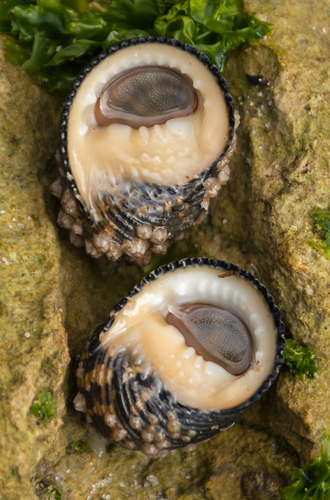
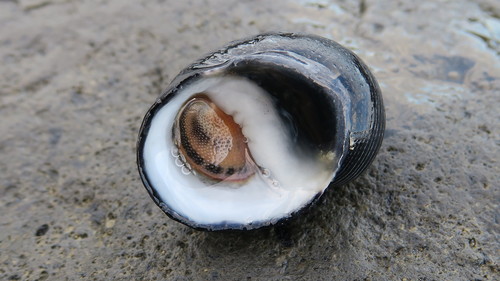
Nerita melanotragus E.A.Smith, 1884 is a nerite species with a moderately sized, very solid globose-oval shell. The shell surface is mostly smooth, marked only by faint, shallowly grooved spiral lines. The outer shell is black, while its aperture is white with a narrow black edge. Once shells grow larger than around 26 millimeters, they begin to wear down. Large worn shells typically have notched edges and a patch of white wear on the right side of the shell. The operculum is granular, pale pinkish-lilac in color, and marked with two black spiral bands. Fully grown shells reach a maximum height of 30 millimeters and a maximum width of 32 millimeters. This species is endemic to the southern Pacific. Its confirmed distribution includes the south-eastern coast of Australia (covering Queensland, New South Wales, Victoria, and Tasmania), Lord Howe Island, Norfolk Island, northern New Zealand, and the Kermadec Islands. N. melanotragus is most commonly found on intertidal rocks, especially in the mid to upper intertidal zone. It prefers to attach to sloped or vertical rock surfaces, or hang from the undersides of rocks. This positioning behavior may function as a method of thermoregulation: individuals on horizontal rock surfaces would absorb the maximum amount of solar radiation, while those on sloped or vertical surfaces absorb less solar energy, and therefore less heat.