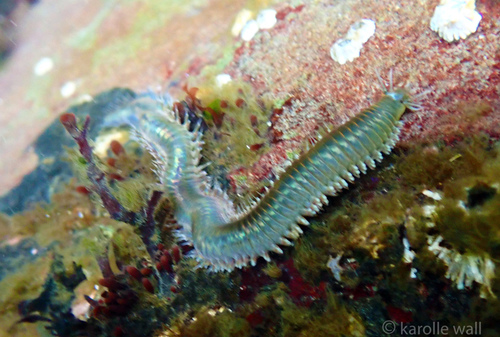
About Nereis vexillosa Grube, 1851
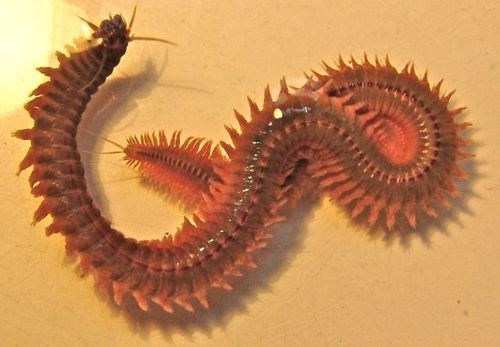
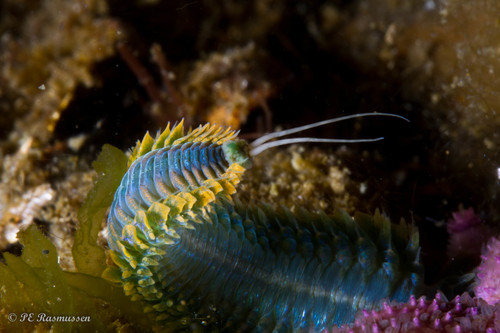
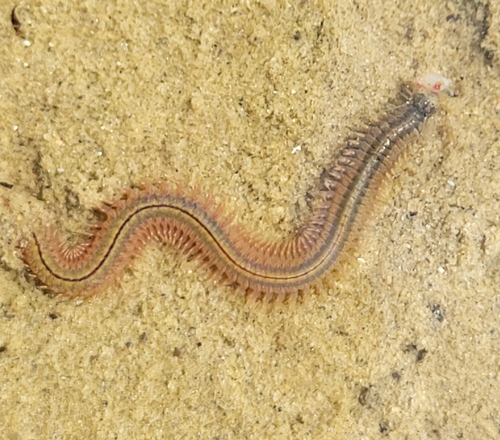
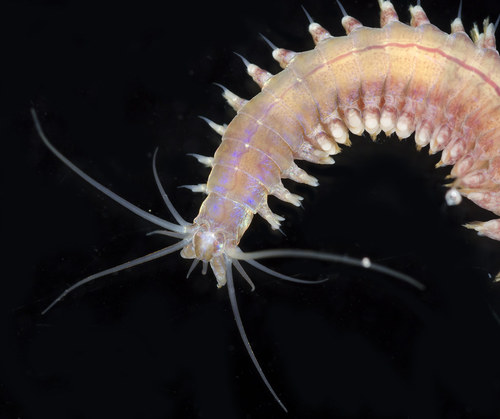
Nereis vexillosa Grube, 1851, commonly called the mussel worm, is a species of segmented worm in the phylum Annelida. Individuals are generally iridescent green, and can grow up to 30 cm in length. This species can be identified by a distinct feature of its posterior body: on the notopodia, the upper ligules are much larger than the lower ligules. It also lacks any collar-like structure around its peristomium. This worm inhabits sand or rocky substrates in intertidal zones and shallow marine waters. Its range extends across the Pacific Ocean from eastern Siberia to western North America, reaching as far south as Santa Barbara, California. It is also found in Southern Africa. When N. vexillosa reaches sexual maturity, its body transforms into a reproductive form called a heteronereid or epitoke. This specialized body form is filled entirely with gametes, and its only function is reproduction. Epitoke individuals leave their burrows to enter the water column and join spawning swarms. This spawning event marks the end of the organism's life cycle.