About Nephrotoma cornicina (Linnaeus, 1758)
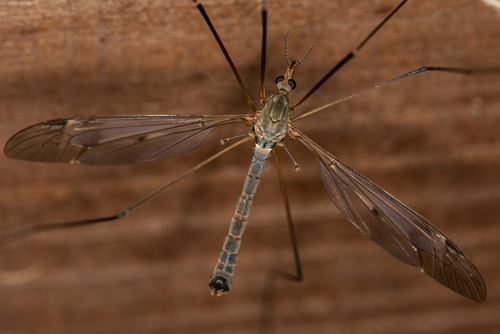
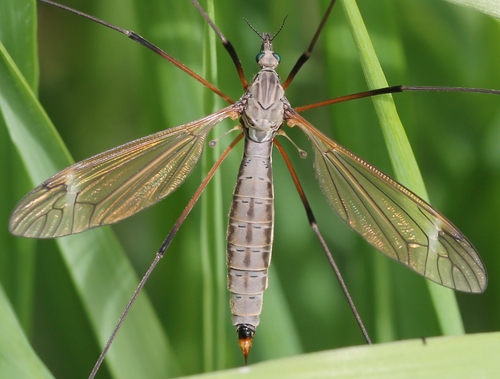
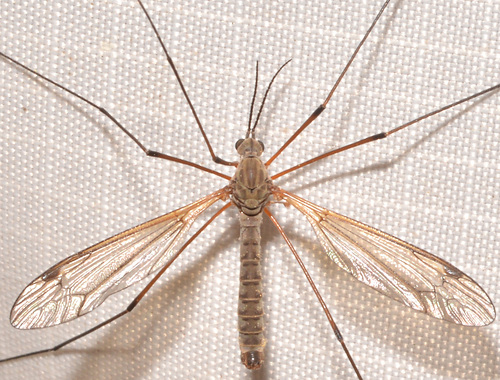
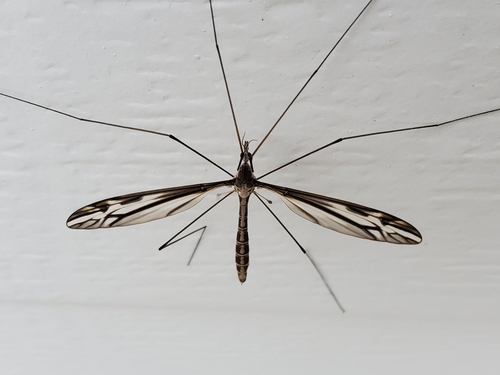
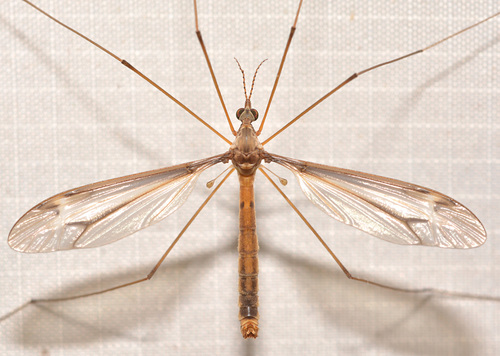
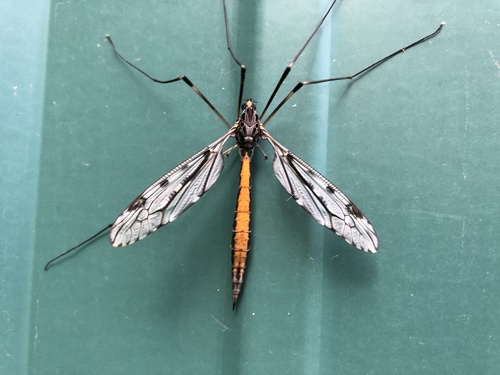
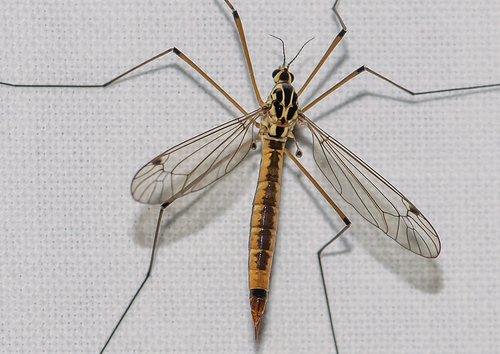
Nephrotoma cornicina (Linnaeus, 1758) is a species of crane fly. Adults of this species reach a body length of 12–15 millimetres (0.47–0.59 in), and have a wing length of 11–15 millimetres (0.43–0.59 in). The stigma on the wings is quite small, brown or black, and clearly distinct. These flies have slender bodies, rather narrow elongated wings, and very long, slender legs. They lack ocelli, and have a black occipital mark. The flagellum is entirely black. The abdomen is mainly yellow, with a dark median stripe that is sometimes absent on the 6th and 7th tergites. In males, the 8th sternite has a straight, fairly long appendage that points toward the caudal margin. The 9th tergite of males is short, quite broad, and swollen and rounded toward the sides. Females have a pointed shiny brown ovipositor with a black basal half, which they use to lay eggs into the ground. This species is widely distributed across the Palearctic realm, the Nearctic realm, and the Near East. In the Palearctic, it is present in most European countries including Albania, Andorra, Austria, Belarus, Belgium, Bosnia-Herzegovina, Bulgaria, Croatia, Czech Republic, Denmark, Estonia, Finland, France, Germany, Great Britain, Greece, Hungary, Ireland, Italy, Latvia, Lithuania, Luxembourg, Malta, Montenegro, Netherlands, North Macedonia, Norway, Poland, Portugal, Romania, Serbia, Slovakia, Slovenia, Spain, Sweden, Switzerland, Ukraine, as well as European Russia, Kazakhstan, Turkmenistan, Uzbekistan, Tajikistan, Kyrgyzstan, Afghanistan, Mongolia, Japan, China, India, and Pakistan. In the Nearctic realm, it occurs in Canada and the United States. In the Near East, it can be found in Georgia, Armenia, Azerbaijan, Turkey, Cyprus, Lebanon, Israel, and Iran. These flies primarily live in turf grass and hedge rows.