About Nephopterix angustella Hübner, 1796
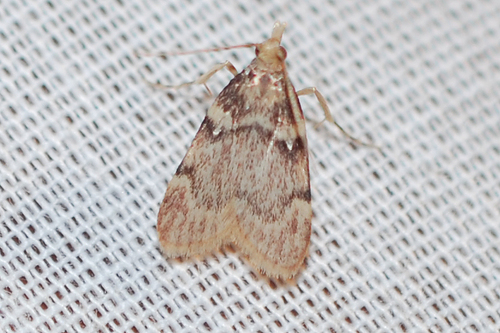
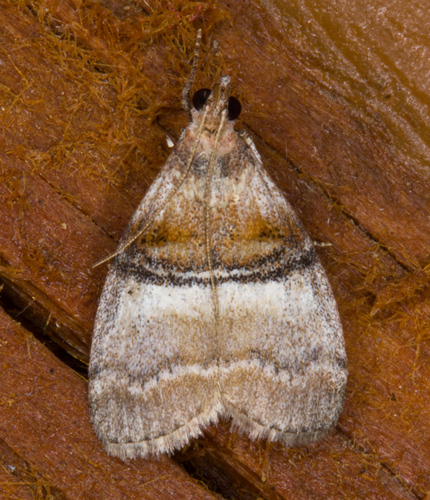
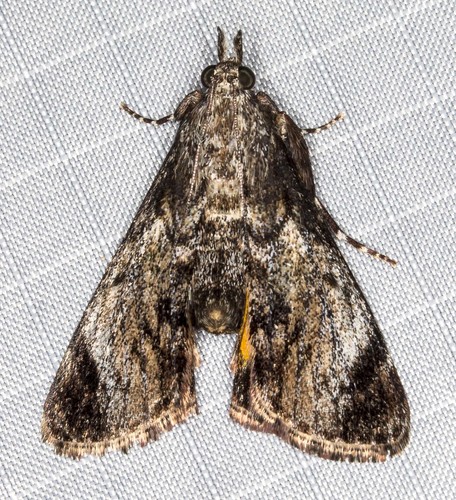
Nephopterix angustella Hübner, 1796 is a moth species belonging to the Pyralidae family, first described by Jacob Hübner in 1796. This species is found in Europe. Its wingspan measures 20–25 millimetres (0.8–1.0 inches).
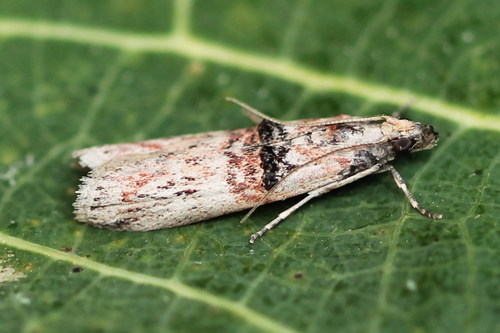
The forewings are greyish ochreous mixed with reddish-ochreous, somewhat sprinkled with ashy-whitish, and have a few black scales that tend to form short dashes in the disc. There is a thick erect bar of blackish raised scales from the dorsum before the first line, reaching 3/4 across the wing. The first line is faintly paler, with an obscure reddish edge. The second line is obscure, marked with some short black dashes towards the costa. There are some indistinct black terminal dots on the forewings. The hindwings are fuscous-whitish, with a fuscous terminal edge.
The larva is dull green or ochreous-yellow, with a darker dorsal line. It has lateral, more obscure spiracular series of ferruginous or purplish marks. Its head is brown, and the third segment has a black lateral spot. Larvae develop within the berries of Euonymus. Adult moths fly from May to October, with the flight period varying depending on location. The larvae feed on bird cherry and Euonymus europaeus.