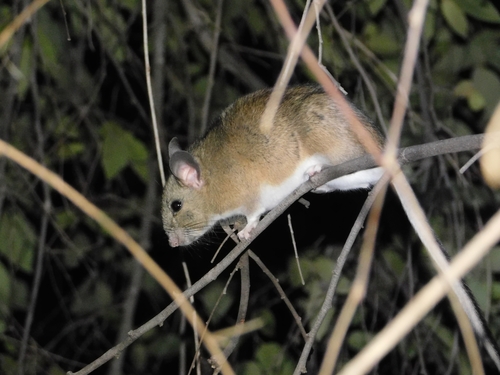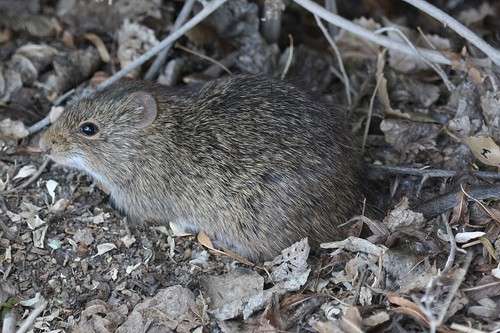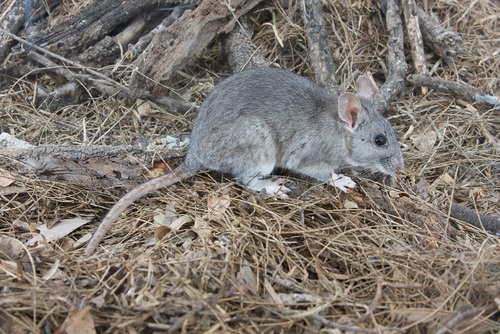
About Neotoma micropus Baird, 1855
Description: The Southern Plains woodrat is vegetarian. It feeds on prickly pear leaves, agave, and sotol, along with the seeds, pods, and nuts of mesquite trees. Common predators of the Southern Plains woodrat include hawks, owls, foxes, raccoons, coyotes, bobcats, and snakes, and western diamondback rattlesnakes prey on this species particularly frequently. Habitat: Neotoma micropus lives in semi-arid brushlands and rocky outcrops. It prefers areas with cactus, mesquite, and thickets. Dens are built under shrubs and cacti, most often prickly pears. Dens have a large central chamber that functions as a nest, with surrounding side chambers used to store food. Adult female Southern Plains woodrats typically stay in the same den for their entire adult life. Other organisms, including desert shrews and assassin bugs, sometimes share dens with these woodrats. The above-ground portion of the woodrat's den is large, standing around 1.2 to 1.5 meters (4 to 5 feet) high. It is constructed from sticks, cactus parts, thorns, and other mixed debris. Reproduction: This woodrat produces litters of two to three offspring. Gestation lasts approximately 30 to 39 days. Populations in the northern part of the species' range breed in early spring and produce one litter per year. Southern populations have a longer breeding season and produce more litters each year.