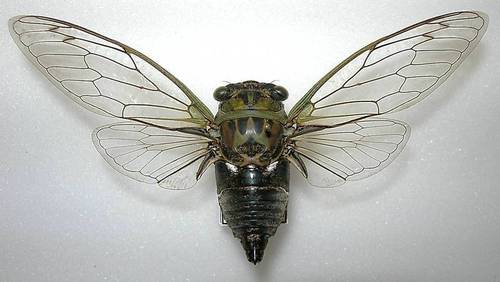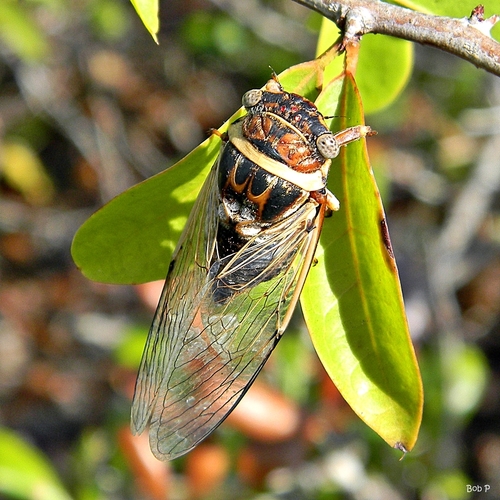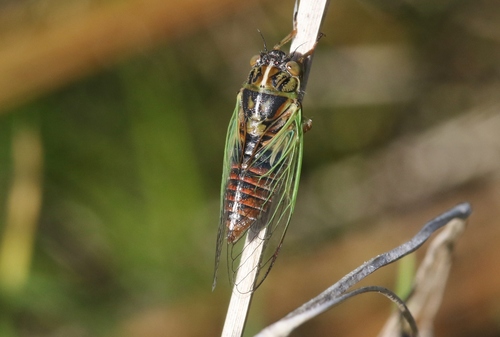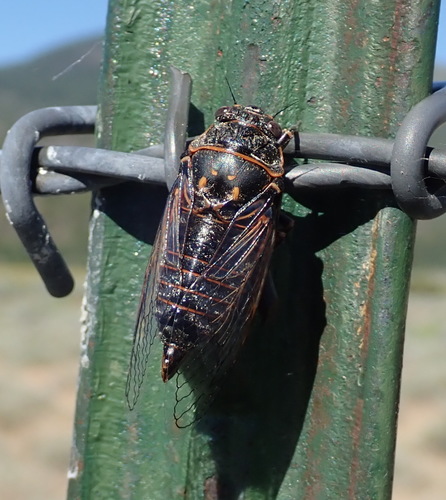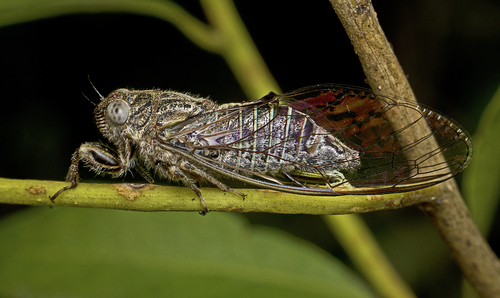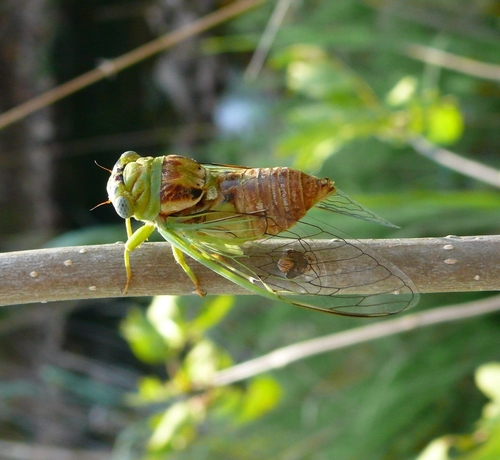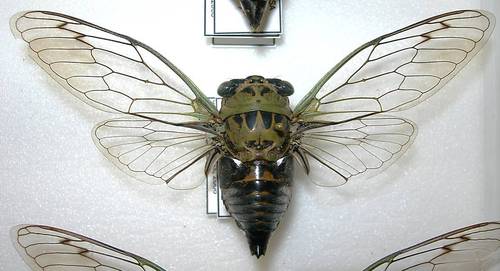
About Neotibicen winnemanna (Davis, 1912)
Neotibicen winnemanna is very similar to two related species: the midwestern Neotibicen pruinosus and the coastal Neotibicen latifasciatus, but can ultimately be distinguished from both. Males of all three species produce highly similar mating calls, which consist of a crescendo of continuous pulsation. The primary characteristic that sets N. winnemanna apart from these two similar-sounding scissor grinder cicadas is its geographic range: N. winnemanna lives in a strip of land roughly following the Appalachian Mountains, stretching from southern New York in the north to northern Georgia and central Alabama in the south. Unlike N. latifasciatus, N. winnemanna populations are not common in maritime forests or other coastal vegetation, though they may reach inland coastal waterways of the US East Coast, including estuaries and bays. Distinguishing N. winnemanna from N. pruinosus is often more difficult. This is especially true when considering range overlap: the two species may have overlapping populations in parts of the upper Southeastern United States, and there may be intermediate forms between N. winnemanna and N. pruinosus. The male mating call of N. winnemanna is a loud, pulsating buzz that lasts around twenty seconds per call. It has between one and two alternating pitch pulsations per second interspersed throughout, and its volume gradually increases to a crescendo before tapering off into a low, soft buzz. These cicadas commonly call from the upper branches of deciduous trees, particularly at dusk. N. winnemanna is an annual cicada, meaning individuals emerge from the ground every year, generally between June and September, with emergence peaking in September. N. winnemanna is typically distinct from Neotibicen linnei, Linne's cicada, whose range partially overlaps with that of N. winnemanna. However, Reynolds (2008) speculates that some physical traits of N. linnei, including the bowing of the costae (the leading edges of the wings) and the elongation of the opercula (the covers on the underside of the tympana, or eardrums), are similar to those of N. winnemanna due to possible hybridization between the two species. Suspected hybrid populations exist, but this hybridization has not been positively confirmed.