About Neoscapteriscus borellii (Giglio-Tos, 1894)
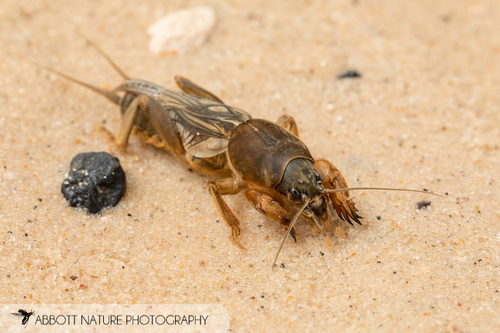
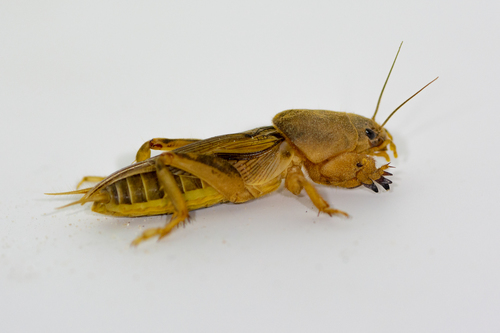
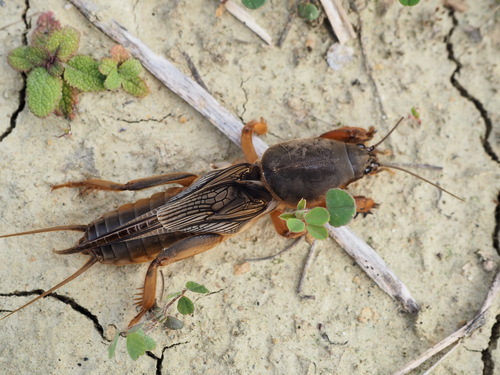
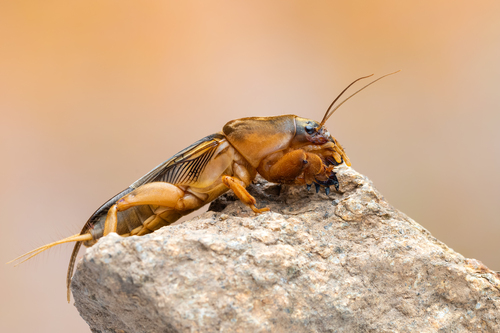
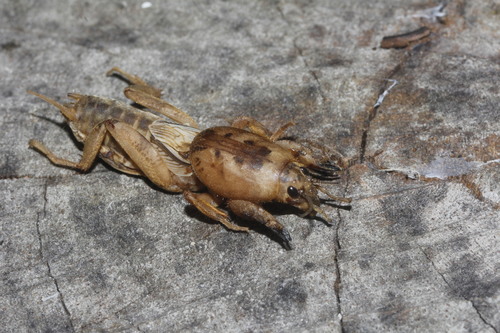
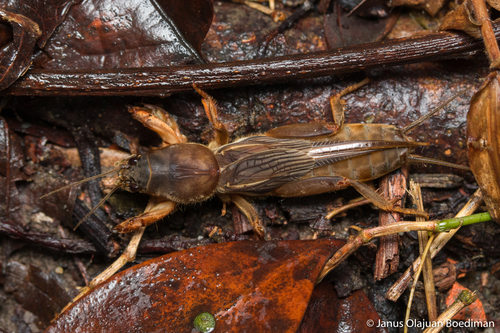
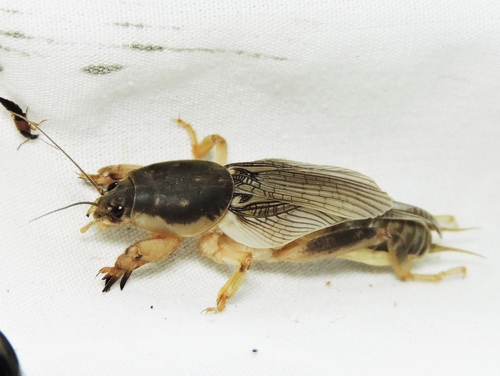
Neoscapteriscus borellii, previously described as Scapteriscus borellii, is a fairly large mole cricket that reaches about 3 cm (1.2 in) in length. Like other species in its genus, it can be identified by two sharp claws and a sharp-edged blade-like process on its forelegs. Most other mole crickets have three or four claws. A gap half as wide as one claw separates the two claws of this species at the base; this separates it from the tawny mole cricket (S. vicinus), whose claws nearly touch at their base. This species has forewings (called tegmina) longer than its prothorax, and membranous hind wings longer than its abdomen. This distinguishes it from the short-winged mole cricket (S. abbreviatus), which has hind wings shorter than its forewings and cannot fly. Only male N. borellii sing, they typically produce a low-pitched trill with a pulse rate of about 50 pulses per second within two hours of sunset. In this species' native range of South America, natural enemies keep its population levels controlled. After arriving in the southern United States in the early 1900s, it became established as an invasive pest. It lives in shallow burrows dug into sandy soil, and damages lawns, pastures, golf courses, and cultivated plants. Most damage comes from its burrowing activity, which loosens soil, uproots plants, and causes soil to dry out. Unlike its two closely related herbivorous relatives S. vicinus and S. abbreviatus, N. borellii is mainly a predator. Breeding occurs in spring. In southern Florida, there can be two generations of nymphs over summer, while areas further north only have one generation per year. Additional breeding activity in autumn produces large nymphs that overwinter. To reduce damage from Scapteriscus mole crickets in Florida, biological pest control programs have introduced the species' natural enemies from its native South America. Larra bicolor, a parasitoid wasp, deposits its larvae on adult mole crickets. The fly Ormia depleta lays eggs on mole crickets. In both cases, the developing larvae consume the host mole cricket's tissues. The mole cricket nematode Steinernema scapterisci releases a bacterium that causes sepsis and death in its mole cricket host.