About Neophoca cinerea (Péron, 1816)
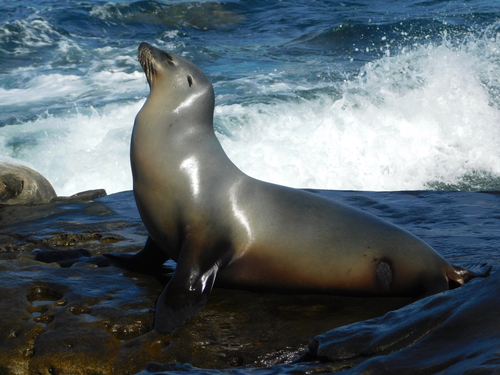
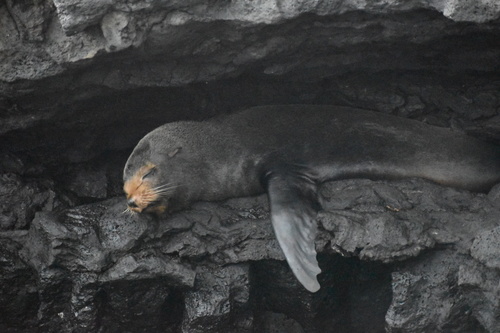
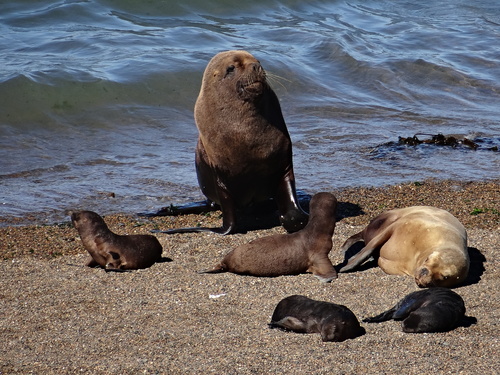
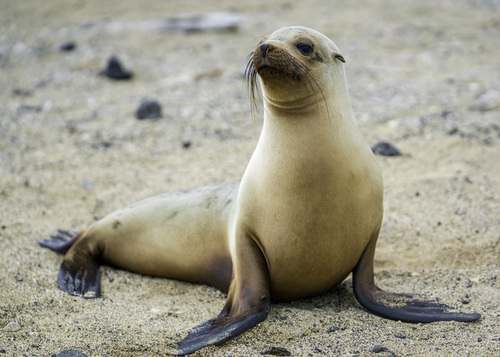
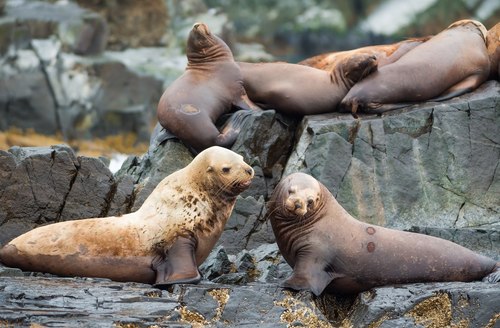
The Australian sea lion, with the scientific name Neophoca cinerea, is also called the Australian sea-lion or Australian sealion. It is the only pinniped species endemic to Australia. It is currently the only living species in the genus Neophoca; the only known related species in the genus is the extinct Pleistocene New Zealand sea lion Neophoca palatina. The total population of Australian sea lions is estimated at 14,730 individuals. The species is listed as "in need of special protection" under Western Australia's 1950 Wildlife Conservation Act, and its global conservation status is endangered. Unlike most other pinnipeds, which follow a 12-month reproductive cycle, Australian sea lions have unusual, irregular breeding cycles that alternate between a 5-month cycle and an aseasonal 17-18-month cycle. Females have silver or fawn fur with a cream-colored underbelly, while males are dark brown with a yellow mane and are larger than females. Australian sea lions have a sparse distribution across their range. Their territory stretches from the Houtman Abrolhos Islands, located at 28°S 114°E in Western Australia, along the southern Australian coast to The Pages Islands, located at 35°46'S 138°18'E in South Australia. A total of 66 breeding colonies have been identified, with 28 located in Western Australia and 38 located in South Australia. Most breeding colonies sit on offshore islands. Exceptions include Point Labatt in South Australia, Baxter Cliffs west of Twilight Cove in Western Australia, and the Bunda Cliffs on the Great Australian Bight, which lies along the border between the two states. Around 42% of the total known population lives in the three largest colonies located east of Port Lincoln: Seal Bay on the south coast of Kangaroo Island, The Pages, and Dangerous Reef in Spencer Gulf. As the species' total population has declined, its breeding range has also contracted. Breeding colonies that are now extinct once existed in the Bass Strait, especially on Clarke Island and adjacent islands in the Furneaux Group. The existing Abrolhos Island breeding colony is thought to be much smaller today than it was before European settlement. Extinct breeding colonies that once existed also occupied the northeastern coasts of Kangaroo Island, as well as some islands near Perth and Albany. In coastal ecosystems, the nutrient-rich faeces of Australian sea lions may serve as an important source of nutrients. Metagenomic analysis of bacterial communities found in the species' faeces detected very high levels of genes linked to nutrient cycling and transport. These genes may break down nutrients from sea lion faeces into a bioavailable form that can enter marine food webs. Observations of diving behaviour show that Australian sea lions expend significant effort to exploit resources in their surrounding habitats. On average, 79% of dives by Australian sea lions exceed the species' calculated aerobic dive limit. Australian sea lions spend 58% of their time at sea diving and have a high field metabolism. This allows them to maximise the amount of time they spend at or near the benthos: 61% of each dive and 35% of their total time at sea is spent in the deepest 20% of their dives. Overall, 57.9% of the species' time at sea is spent at depths of 6 metres or deeper, a pattern that counts as continuous diving. Seasonal variation in foraging energetics and dive behaviour is likely affected by regional oceanography, the energy maintenance costs of female sea lions and their offspring, and the distribution and behaviour of the sea lions' prey. Australian sea lions have strong site fidelity, and their maximum foraging range extends no more than 300 km from their colony. During stormy weather, Australian sea lions sometimes travel inland, and have been recorded moving up to 9.4 km away from the ocean.