About Neopelma pallescens (Lafresnaye, 1853)
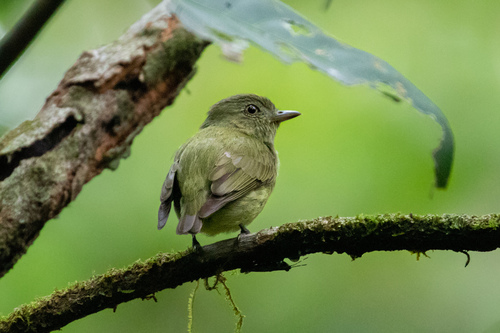
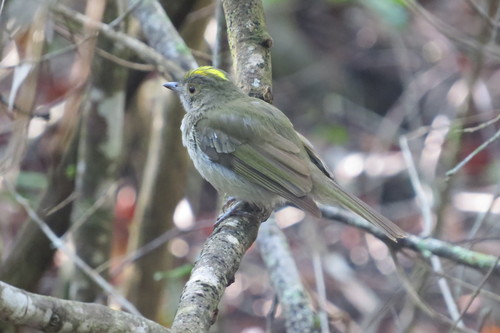
Neopelma pallescens, commonly known as the pale-bellied tyrant-manakin, reaches approximately 14 cm (5.5 in) in length and weighs 16 to 20.5 g (0.56 to 0.72 oz). Both sexes have identical plumage. Adult individuals have a large, bright yellow patch bordered by dusky coloring on the crown. The remainder of the face, upperparts, wings, and tail are olive. The throat is whitish with faint gray streaks, the breast is pale olivaceous gray, and the belly is pale creamy whitish. This species has a grayish mauve iris, a brownish to grayish bill, and brownish to grayish legs and feet. The pale-bellied tyrant-manakin has a disjunct distribution. Its largest range spans Brazil: it extends from the Atlantic coast in Maranhão southwest almost to Bolivia in Mato Grosso, then sweeps east to northern Minas Gerais, and from there northeast to the Atlantic coast in northern Bahia and Rio Grande do Norte. Some sources map the far northeastern Brazilian population as separate from the main part of the species' range. A smaller separate range occurs along the lower Amazon and Tapajós rivers in eastern Pará and Amapá. There are also confirmed reports of this species from southern Guyana. One source notes its presence in Suriname, but the South American Classification Committee (SACC) has no records of the species occurring in that country. Some sources list the species as occurring in extreme northeastern Bolivia, but the SACC only has unconfirmed records of the species there. This species inhabits deciduous and gallery woodlands, where it favors areas with heavy vine growth. It occurs at elevations up to 700 m (2,300 ft).