About Neomys fodiens (Pennant, 1771)
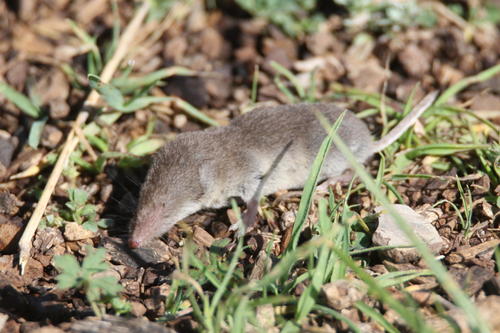
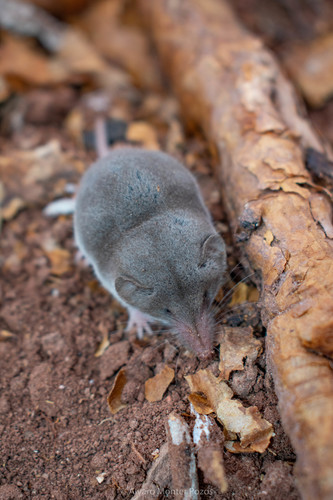
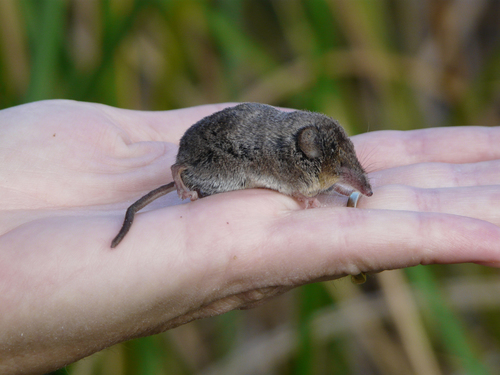
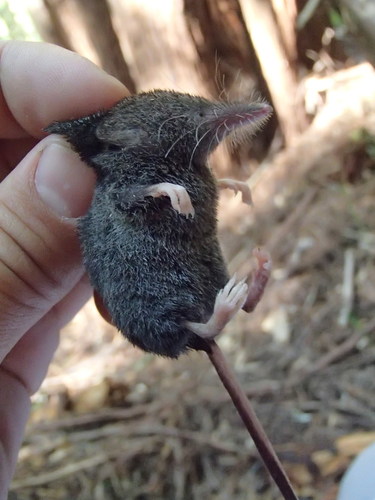
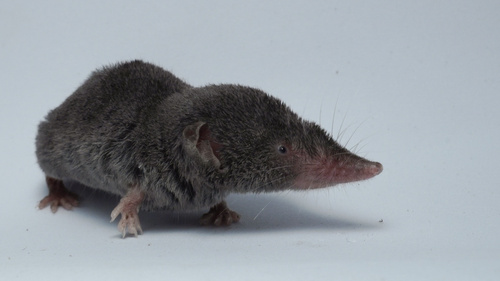
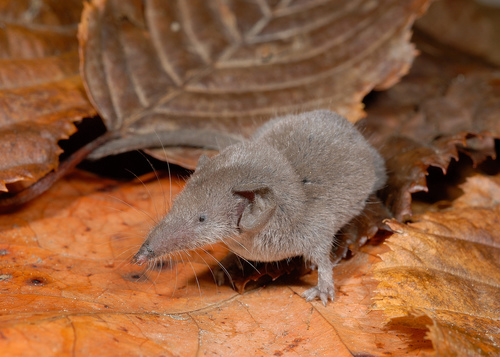
The Eurasian water shrew, Neomys fodiens, reaches an overall length of around 10 cm (4 in), has an 8 cm (3 in) long tail, and weighs between 15 and 19 grams (1⁄2 to 5⁄8 oz). Dense short fur on its head, back, and sides is greyish-black. Its underparts are dirty white, with a sharp border separating them from the dorsal fur. The underparts are sometimes tinged with rusty brown, and occasionally individuals are entirely dark grey. There is a white spot just behind the eye, and often a second white spot near the small, rounded ear, which is nearly hidden in the fur. The nose is black, and the snout is long and tapering. Like other members of the shrew subfamily Soricinae, its sharp, mostly white teeth have red tips. The rusty red color comes from iron deposits that harden the tooth enamel; these deposits are concentrated at tooth tips, especially on molars, the teeth that experience the most wear. Females have five pairs of nipples. The legs are short and the hind feet are powerful, with a fringe of short, stiff hairs along the outer edge. Both of these traits help the shrew move through water. The tail is slender and bears a keel of short white hairs on its underside. This shrew often gives off shrill cries as it scurries. Its karyotype is 2n = 52 and FN = 98. Across its range, the Eurasian water shrew is found throughout most of Europe, excluding Iceland, Ireland, some Mediterranean islands, and the Balkans. In Asia, its distribution stretches from western Siberia and Asia Minor to North Korea and the Pacific coast of Siberia. It rarely travels far from water, and inhabits areas in and around ditches, streams, ponds, watercress beds, fish ponds, damp meadows, and rough bushy ground adjacent to water bodies.