About Neodiprion pinetum (Norton)
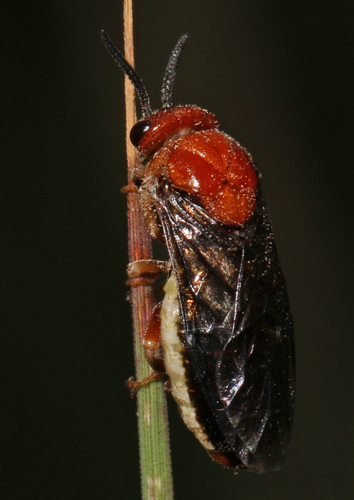
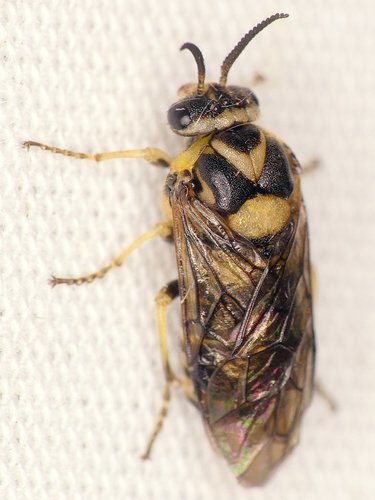
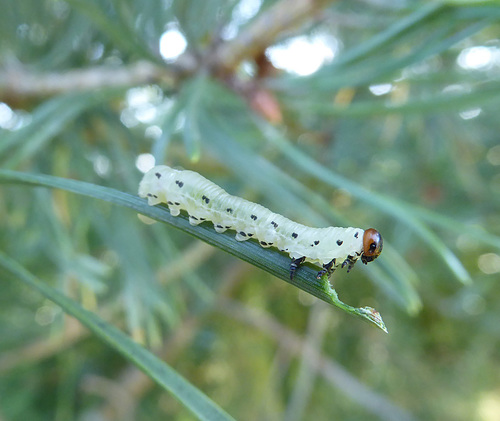
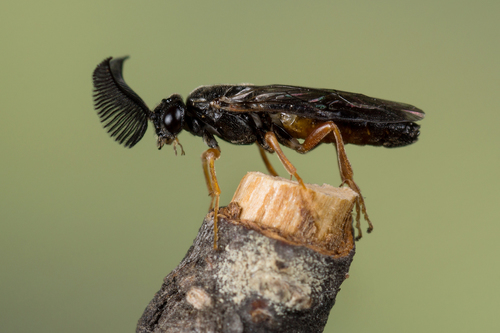
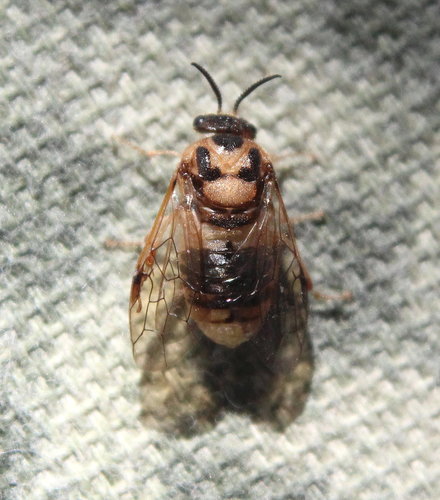
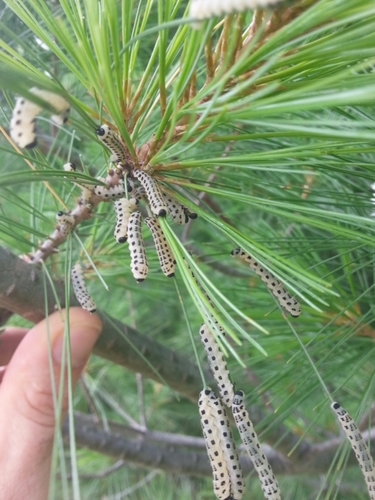
Neodiprion pinetum (Norton) is a sawfly species. Adult N. pinetum are broad-bodied insects with membranous wings. Females have a saw-like ovipositor at the tip of the abdomen, and are larger than males. Larvae have black heads, with a creamy or yellowish body, and four longitudinal rows of black spots. This species is native to North America, and its range extends through the eastern United States to southeastern Canada. Adult sawflies emerge in late spring. The female uses her ovipositor to cut a slit along the edge of a pine needle and lays several eggs inside the slit. If a female has mated, her eggs will develop into both male and female offspring. Unmated females can also lay viable eggs, which all develop into male offspring. Each female lays around 100 eggs over a period of several months. First instar larvae are gregarious, and feed on the surface layer of pine needles. Later instars spread out through the pine foliage, and consume entire needles. They feed on both old and young pine needles; heavy infestations can cause severe tree defoliation, and can kill isolated clumps of white pine. Once larvae are fully developed, they descend to the ground and spin cocoons within leaf litter. They overwinter in these cocoons as non-feeding prepupae, then pupate in spring, and emerge as adults a few weeks later. Several species of parasitic wasps attack the larvae of this sawfly. In an outbreak of this pest in Crawford County, Wisconsin, the egg parasitoid Closterocerus cinctipennis was found to be 90% effective at controlling the population.