About Neoclytus acuminatus (Fabricius, 1775)
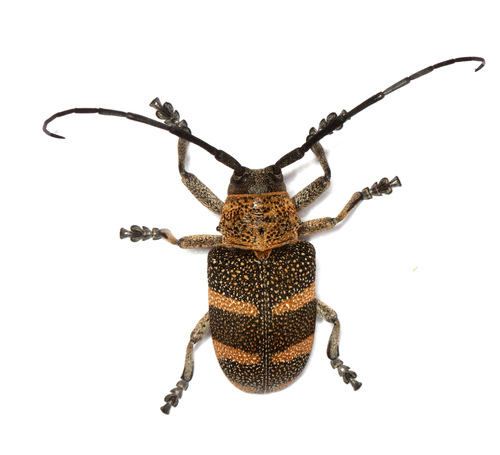
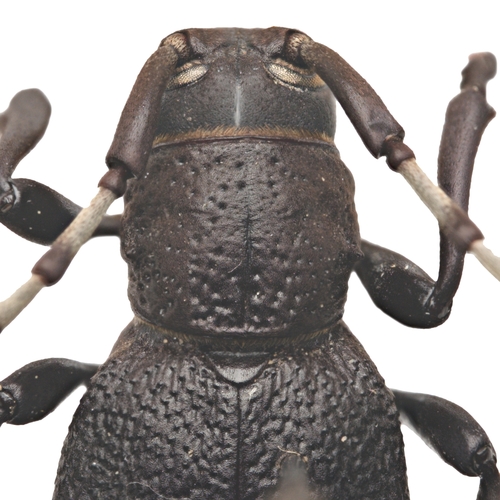
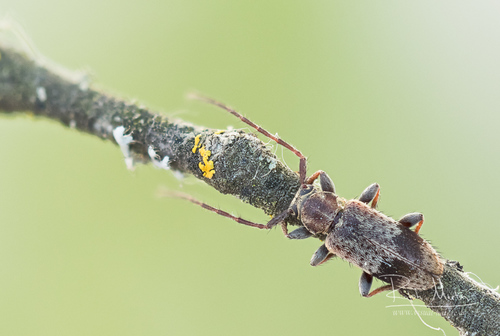
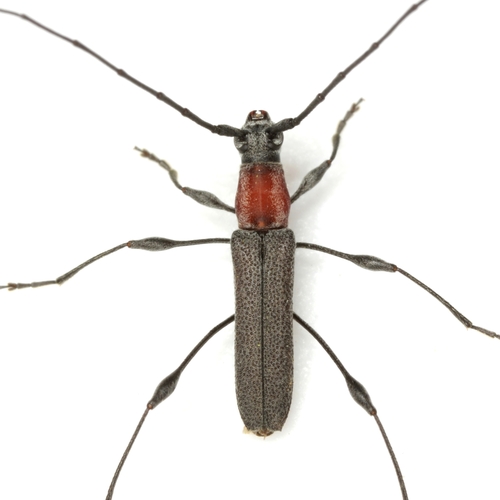
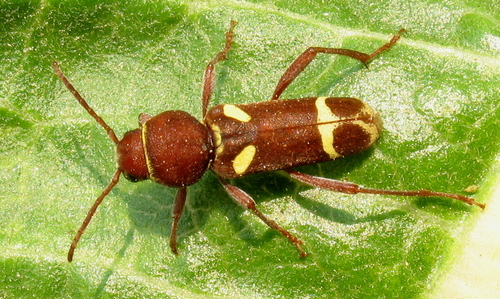
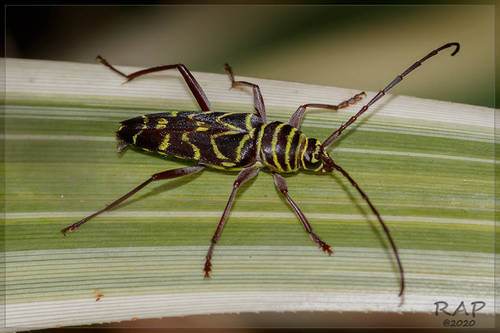
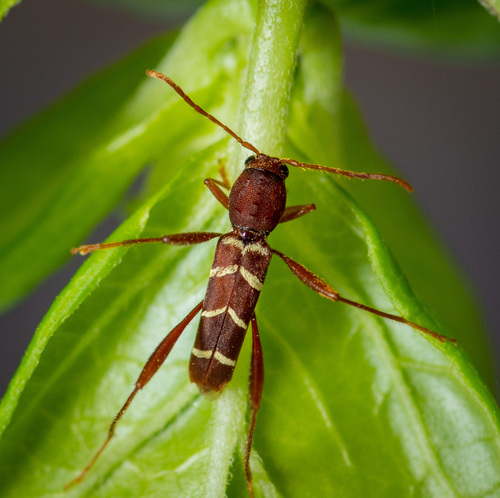
Red-headed ash borers, scientifically named Neoclytus acuminatus (Fabricius, 1775), are a species of cerambycid beetle. Fully grown adults are typically 12–16 mm (0.47–0.63 in) long. They have long antennae that thicken toward the tips, and both their middle and hind pairs of legs are elongated. Their base color is reddish-brown with four contrasting yellow stripes across their body, and their overall body shape mimics that of wasps—this mimicry is a common survival strategy for cerambycids. Adult red-headed ash borers emerge from infested host trees in early spring. Their most common hosts are ash, hickory, and oak trees, but they also use other hardwood species, and sometimes shrubs and woody vines. Larvae of this species feed on the sapwood of dead trees. Several generations can develop over a single summer, after which the species overwinters, most likely in the pupal stage.