About Neobatrachus sudelli (Lamb, 1911)
Scientific name: Neobatrachus sudelli (Lamb, 1911)
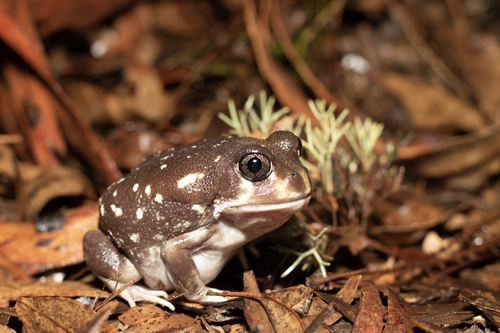
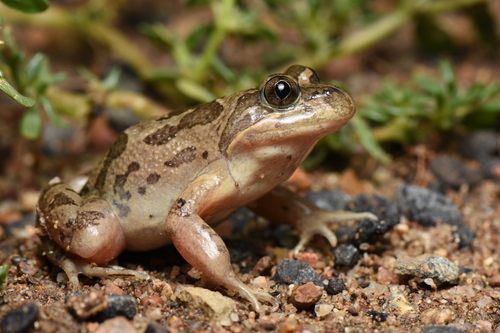
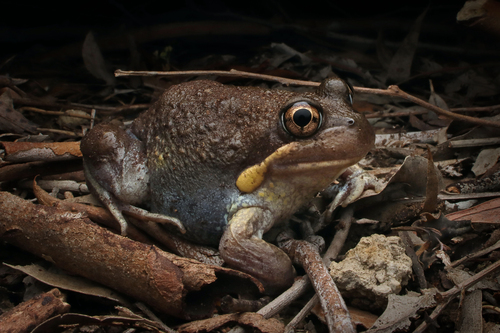
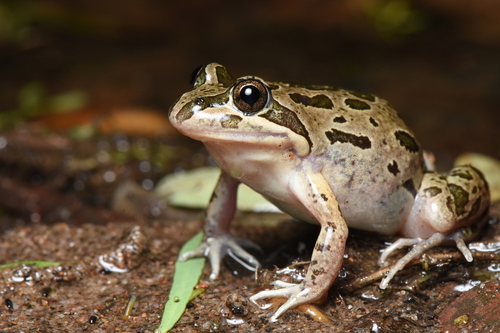
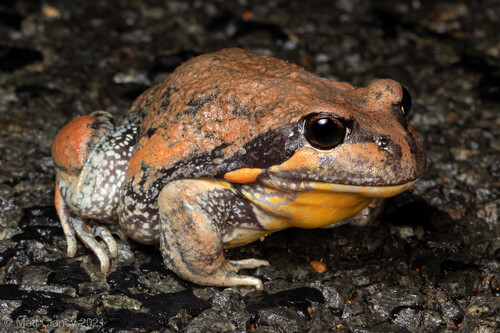
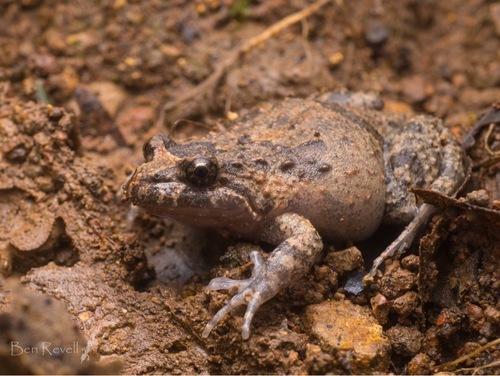
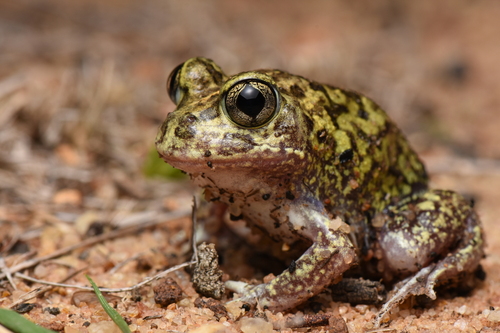
Description Sudell's frog is a relatively small species, reaching only 40 mm in length. Its dorsal coloration is highly variable; it is generally brown, but may also be grey, yellow or reddish, marked with irregular darker spots or blotches. A pale mid-dorsal stripe often runs down the back. The belly is smooth, and colored pale cream or white. The toes are fully webbed, but a deep indentation sits between the webbing of each toe. The metatarsal tubercles, shovel-like structures on the foot that help with burrowing, are completely black. This species has a vertical pupil and a silver iris.
The trilling frog, another common name for this species, is described as a medium-sized, short, fat frog reaching 5 centimetres in snout-to-posterior length. It is usually brown and tan with sharply differentiated mottling, similar in pattern to army desert camouflage. Its underside is white. Its pupil contracts into a vertical slit. The dorsal surface is usually smooth, but males are reported to develop fine, dark bristles on their back during the breeding season. The trilling frog can be distinguished from the painted frog (Neobatrachus pictus) by the "baggy pants" of loose skin that extends almost to the knees when its hind legs are extended.
Distribution The trilling form of this frog is found across central Australian deserts in a band spanning South Australia, Northern Territory and Western Australia. It is notable for its tolerance of arid environments. Populations commonly called Sudell's frog have a more easterly distribution.
Ecology and behaviour Sudell's frog lives in ponds, dams, ditches, clay pans or any still water in woodland, shrubland, and disturbed areas including farmland. Males produce a short trilling sound while floating in water after heavy rains flood breeding areas, from late winter through to autumn. This species is an adapted burrower, and often spends periods of time underground to avoid drought conditions. It lays around 600 eggs in a clump entwined among vegetation near the water surface; the clump will sink if disturbed. Hatching occurs around 3 days after laying. Tadpoles are plump and large, reaching around 77 mm at approximately stage 40. Tadpoles often overwinter, and newly metamorphosed frogs measure between 20 and 30mm in length.
The desert-adapted trilling form can spend years buried deep underground without surfacing, storing water in glands under its skin. Trilling frogs typically dig their way to the surface at the start of late summer rains. There are accounts that Indigenous Australians could catch these frogs to avoid death from thirst by stamping on the right patch of ground to simulate thunder or falling rain, which causes the frogs to surface, allowing the stored moisture to be retrieved. After surfacing, these frogs spend a few weeks calling nightly while floating in or sitting at the edge of rainwater-filled claypans, puddles and waterholes. They feed on the numerous insects that appear with the rains, and lay eggs in elongated clumps, often wrapped around snags in the water. Their tadpoles mature very quickly. Like most Australian frogs, the trilling frog is an opportunistic predator, so its diet mostly consists of any desert-dwelling insects and small reptiles that are small enough to fit in its mouth. In some areas, it is the only ground-dwelling vertebrate that has been collected.