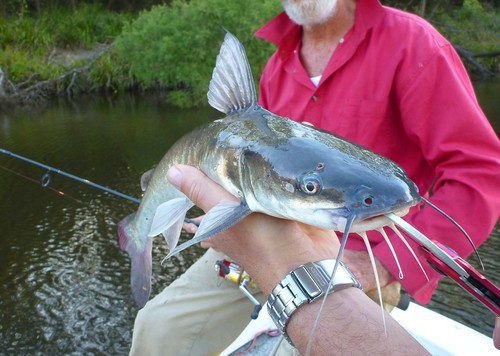
About Neoarius graeffei (Kner & Steindachner, 1867)
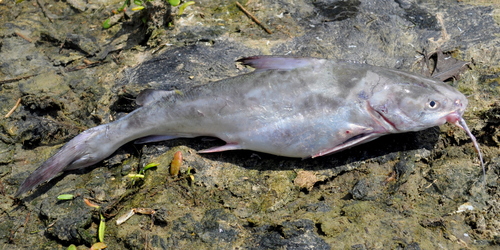
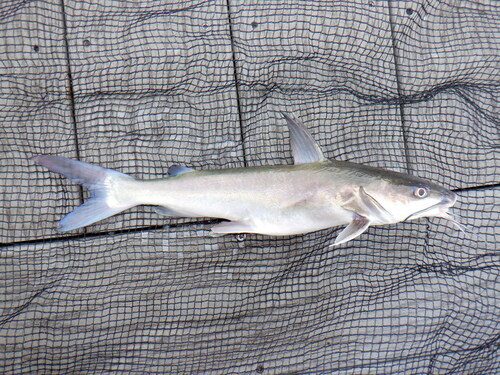
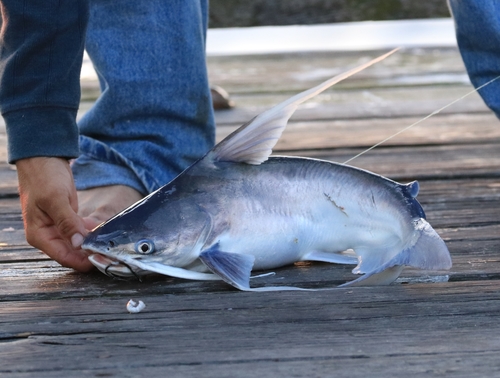
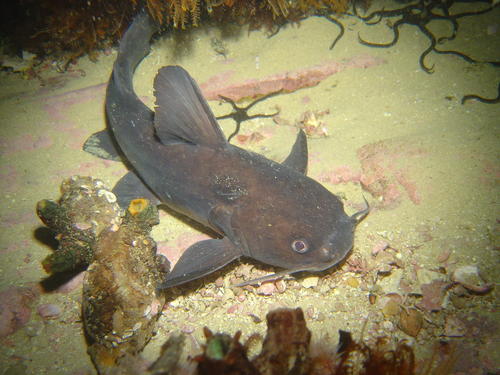
Neoarius graeffei, commonly known as the blue salmon catfish, is a species of catfish that lives in the freshwater rivers of Australia and Papua New Guinea. This species is most easily recognized by its large, shark-like dorsal fin, which is topped with a poisonous spine. Like many other catfish, the blue salmon catfish uses electrical pulses to detect prey in the water. This specialized prey-sensing mechanism may explain why these catfish are recorded to consume land-dwelling hopping mice at a high rate.
The distribution of Neoarius graeffei is restricted to the freshwater rivers of Australia and Papua New Guinea.
N. graeffei breeds between September and February. While direct observation of long-distance movement has not been recorded, it is speculated that this species may migrate long distances to breed. Females build egg mounds inside gravel nests. After spawning, male blue salmon catfish incubate the hatched young in their mouths. No parental care is provided after this incubation stage, and this species is the only ariid catfish known to show this specific breeding behavior.