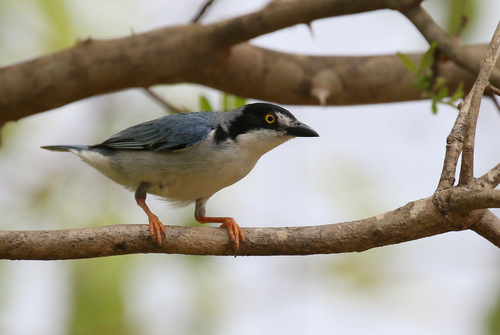
About Nemosia pileata (Boddaert, 1783)
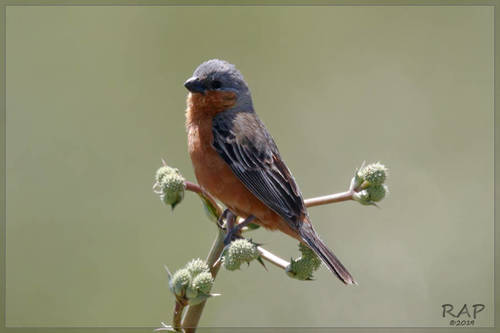
The hooded tanager (Nemosia pileata) is a species of bird in the tanager family Thraupidae. It is found across Argentina, Bolivia, Brazil, Colombia, French Guiana, Guyana, Paraguay, Peru, and Venezuela. Its natural habitats include subtropical or tropical moist lowland forest, subtropical or tropical mangrove forest, and heavily degraded former forest. In 1779, French polymath Georges-Louis Leclerc, Comte de Buffon described the hooded tanager in his work Histoire Naturelle des Oiseaux, from a specimen collected in Cayenne, French Guiana. A hand-coloured engraved plate of the bird, created by François-Nicolas Martinet, was published in Planches Enluminées D'Histoire Naturelle, produced under the supervision of Edme-Louis Daubenton to accompany Buffon's text. Neither Buffon's original description nor the plate caption included a formal scientific name. In 1783, Dutch naturalist Pieter Boddaert coined the binomial name Tanagra pileata in his catalogue of the Planches Enluminées. Today, the hooded tanager is placed in the genus Nemosia, which was first introduced by French ornithologist Louis Pierre Vieillot in 1816, with the hooded tanager as the genus's type species. The genus name Nemosia comes from the Ancient Greek word nemos, which means "glade" or "dell". The specific epithet pileata comes from the Latin word pileatus, meaning "-capped". Six subspecies of hooded tanager are currently recognised: N. p. hypoleuca Todd, 1916, found in north Colombia and north Venezuela; N. p. surinamensis Zimmer, JT, 1947, found in Guyana and Suriname; N. p. pileata (Boddaert, 1783), found from French Guiana through central Brazil to north Bolivia; N. p. interna Zimmer, JT, 1947, found in north central Brazil; N. p. nana von Berlepsch, 1912, found in northeast Peru and west Brazil; N. p. caerulea (zu Wied-Neuwied, 1831), found in east and south Brazil, southeast Peru to east Bolivia, Paraguay and north Argentina.