About Nemapogon cloacella (Haworth, 1828)
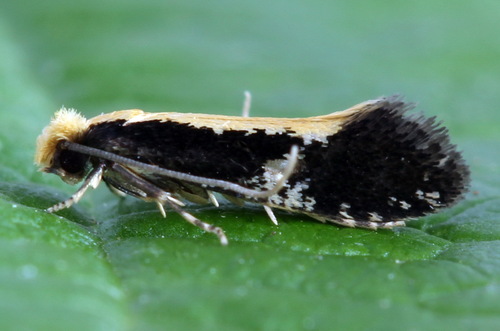
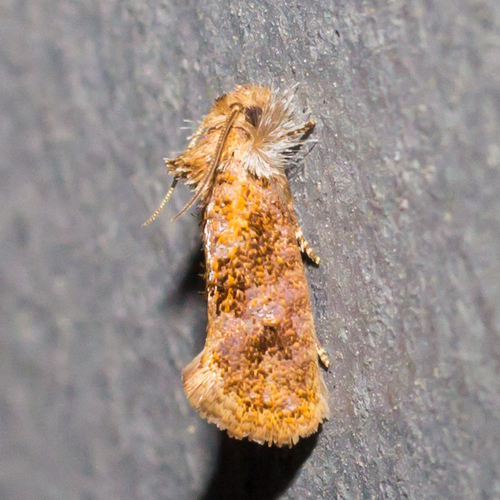
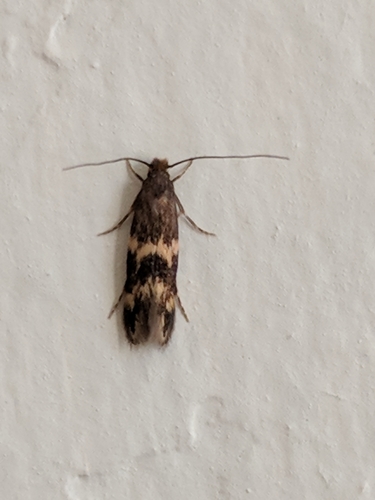
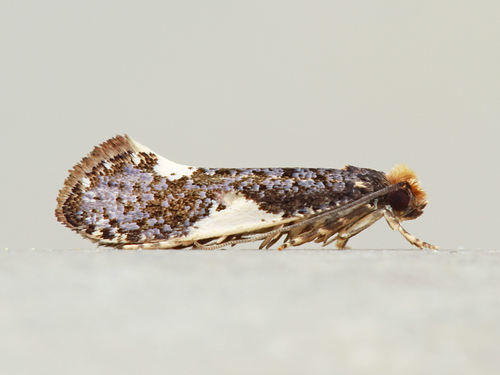
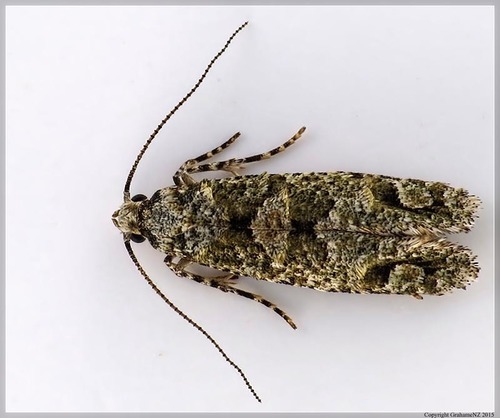
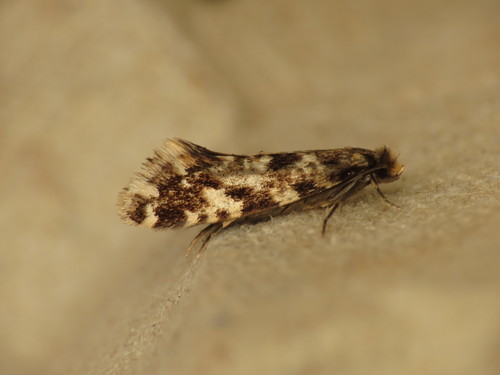
Nemapogon cloacella (Haworth, 1828) is a small moth species with a wingspan of 10–18 mm. Its forewings are irregularly mottled with black, brown, white, and grey, and look similar to close relatives like the European corn moth (N. granella). The head bears a tuft of pale yellow hairs. The antennae are wire-shaped and reach approximately two-thirds the length of the forewings. The thorax is grey, and the fringes along the edges of the forewings are alternately grey and white. The hindwings are dark grey-brown. Larvae of this moth are white to pink, with a reddish-brown head; the neck plate is also reddish-brown. Nemapogon cloacella is a widespread species found across the western Palearctic and North America, where it was recently recorded in British Columbia. It has been reported to be absent from France, but this is considered unlikely to be correct, as it occurs in all countries surrounding France. Its preferred habitat is woodland that contains a large amount of dead trees. The crepuscular adults fly throughout the summer. They are most commonly encountered at dusk, though they can sometimes be seen earlier in the day.