About Nemadactylus douglasii (Hector, 1875)
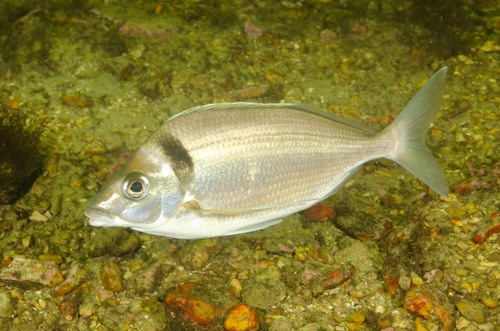
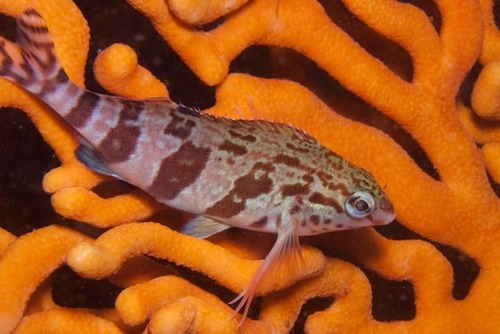
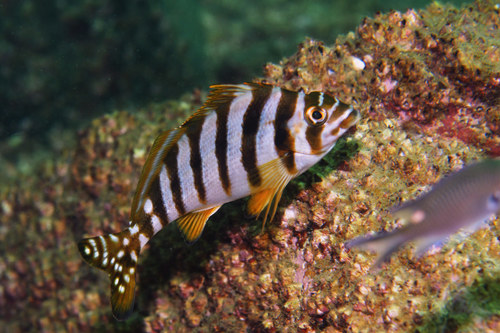
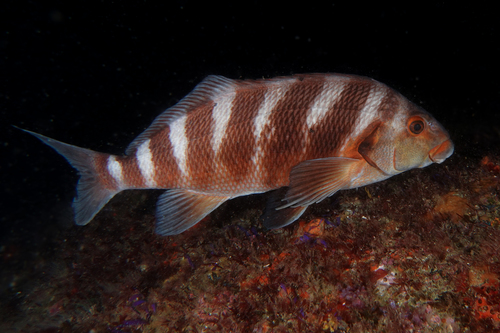
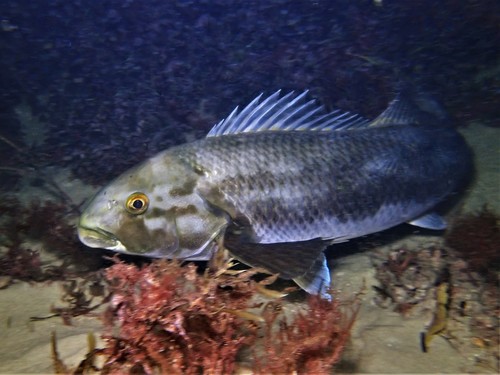
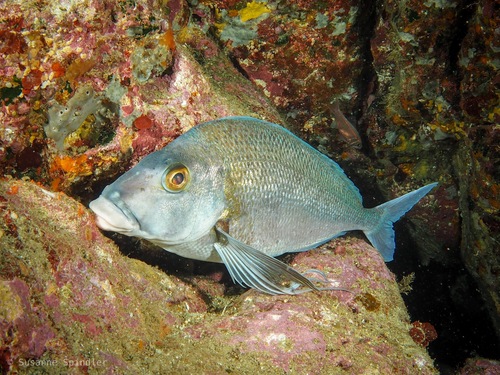
Nemadactylus douglasii, commonly known as the porae, has a compressed, moderately short and deep body; its body depth is around two fifths of its standard length, and it has a very thin caudal peduncle. It has a moderately sized head with a shallow dorsal profile, and adults have a small [bump] over the eyes. There are no bony protuberances on the snout or in front of the moderately sized eyes. It has a small mouth that does not extend as far back as the eyes, with thick, fleshy lips. The small, pointed teeth are arranged in a single row in each jaw, embedded in the lips. Behind the main row of teeth at the front of the upper jaw, there is a patch of smaller teeth. The dorsal fin is continuous with a long base, and there is only slight separation between its spiny and soft-rayed sections, which are of similar length. The spiny section is tallest at the front and decreases in height toward the rear, while the soft-rayed section maintains a uniform low height. The anal fin is similar in shape to the soft-rayed section of the dorsal fin, but slightly shorter. The caudal fin is forked, with the tips of both lobes bluntly pointed. The pectoral fins are moderately sized: their upper rays are branched, while their lower rays are simple and robust. The uppermost of these lower rays is highly elongated, reaching almost to the middle of the anal fin. The pelvic fins are small, and positioned clearly below and behind the origin of the pectoral fins. The spiny section of the dorsal fin contains 17 to 18 spines, and the soft-rayed section has 27 to 28 fin rays. The anal fin has 3 spines and 16 to 17 soft rays. This species reaches a maximum fork length of 81 cm (32 in) and a maximum published weight of 4.0 kg (8.8 lb). Its overall body colour is silvery, with a greenish-blue tinge, or occasionally yellowish on the dorsal side, and paler silvery on the lower body. The fins may have a bluish tinge. Juveniles have a dark blotch just below the middle of the lateral line, and this blotch fades as the fish grows. The porae occurs in the southwestern Pacific Ocean, around eastern Australia and New Zealand. In Australia, its range extends from Moreton Bay, Queensland in the north south to Wilsons Promontory, Victoria, and it is also found off eastern Tasmania. In New Zealand, it occurs around the Kermadec Islands, and around the North Island from the Three Kings Islands to Kaikōura. It inhabits depths down to 200 m (660 ft), found over reefs or over sandy areas near reefs. Juvenile porae live in shallower waters than adults.