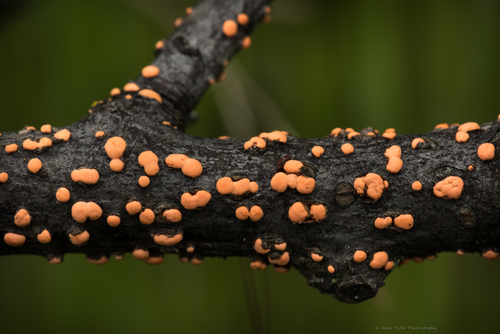
About Nectria cinnabarina (Tode) Fr.
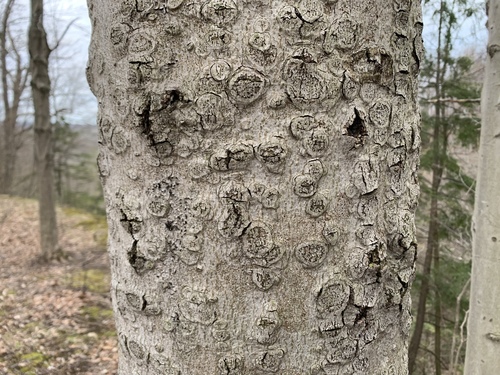
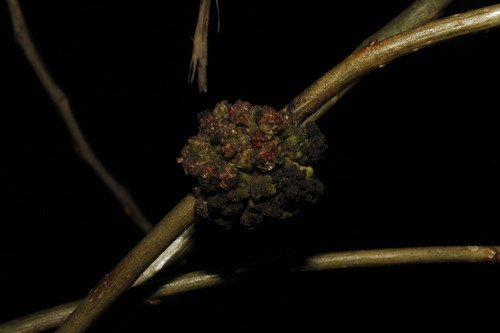
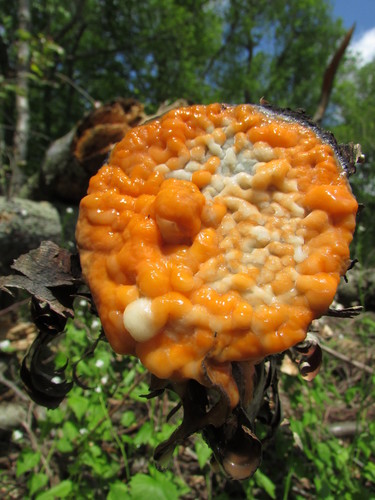
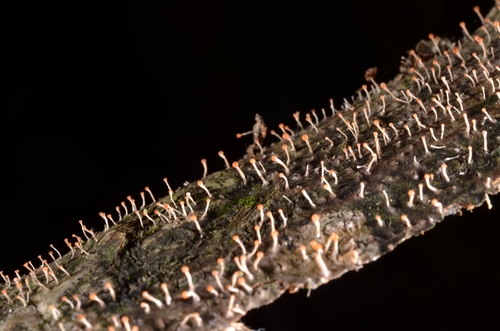
Nectria cinnabarina (Tode) Fr., commonly called coral spot, is a plant pathogen that causes cankers on broadleaf trees. The disease it causes is polycyclic, and the fungus infects trees in cool temperate regions of the Northern Hemisphere. N. cinnabarina is typically saprophytic, but acts as a weak parasite when it gains entry through tree wounds or when other stressors weaken a tree's defenses against it. A 2011 study found that this Nectria cinnabarina complex includes at least 4 distinct species. There are only a limited number of management methods for this disease, such as sanitation practices and pruning off branches that develop cankers. N. cinnabarina is a less significant problem than other Nectria species; some of those other species are among the most important pathogens that infect hardwood trees. Nectria cinnabarina is common in cool, temperate regions of the Northern Hemisphere. It is widespread across the United Kingdom and parts of mainland Europe, and generally occurs anywhere that has host trees for the pathogen. The fungus enters plants through wounds caused by improper pruning, storm damage, and other types of mechanical damage. Infection usually develops in these wounds when water is abundant and temperatures are above freezing. Infections are most common in spring and fall.