About Navarretia fossalis Moran
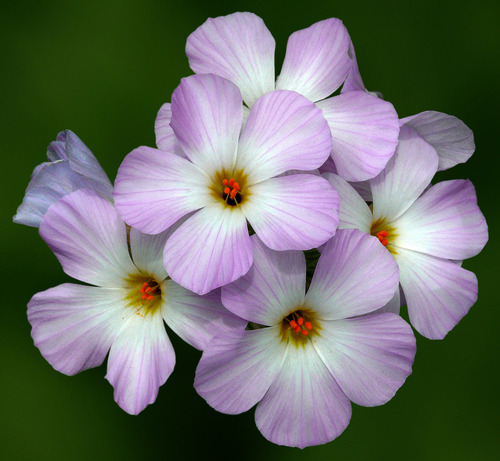
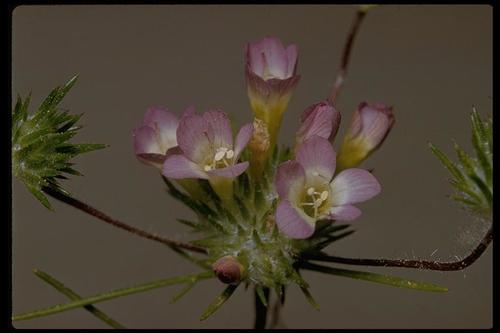
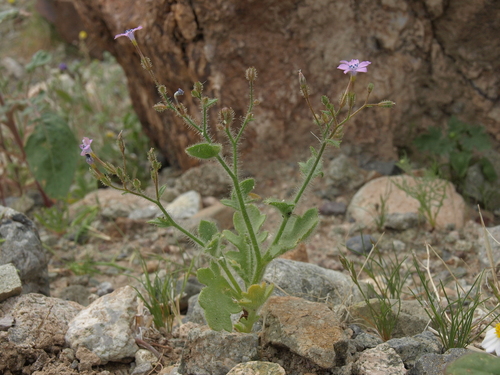
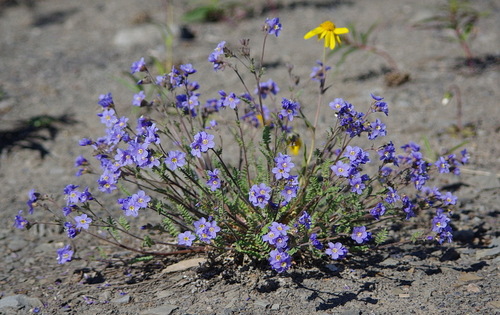
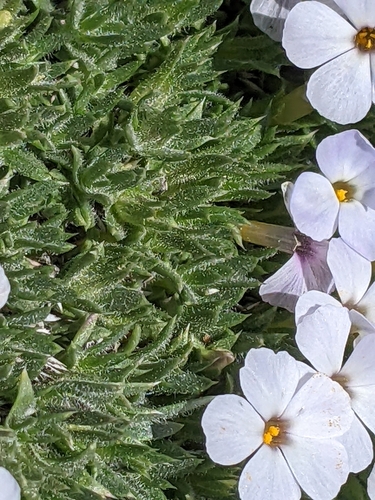
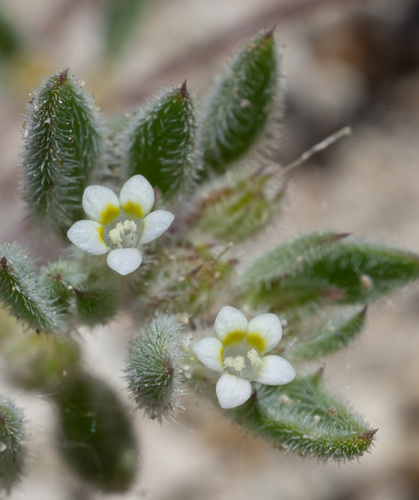
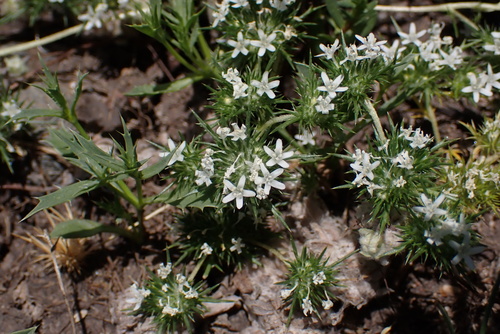
Navarretia fossalis Moran is a hairy annual herb that grows a spreading stem up to around 15 centimeters tall. Its hairless leaves reach up to 5 centimeters in length, and are split into narrow linear lobes that become sharp and spiny when dry. The inflorescence forms a flat-topped head 1 to 2 centimeters wide, filled with lobed bracts and clustered flowers. The flowers are white or have purple tinges, measure less than one centimeter long, and have corollas divided into tiny narrow lobes under one millimeter long. The fruit capsule produces a clump of very small seeds that stay stuck together until they get wet, at which point they separate into a sticky mass. This plant is native to southern California (United States) and Baja California (Mexico), where it is only found in seasonally vernally wet sites. These include vernal pools, ditches, and other areas that are wet or flooded during the rainy season, and dry for the rest of the year. Many of these habitats have alkali soils structured in uneven mounds and depressions that collect water, drain slowly, and then dry out completely. Navarretia fossalis was listed as a federally threatened species in the United States in 1998. At that time, there were approximately 30 known remaining occurrences of the species in Southern California, and around nine known occurrences across the border in Baja California. By 2009, 17 additional new occurrences of the species had been documented. This plant often grows alongside Psilocarphus brevissimus.