About Navanax inermis (J.G.Cooper, 1863)
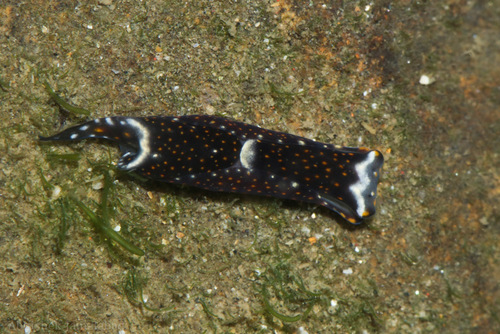
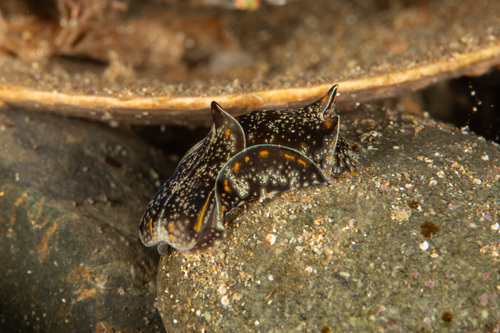
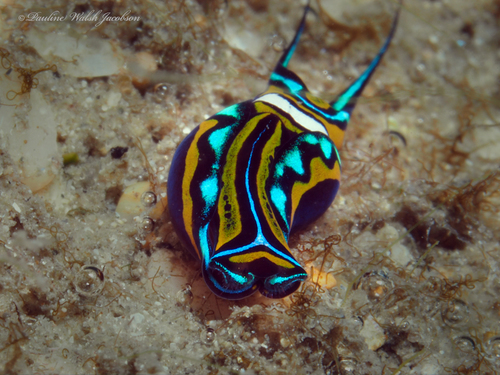
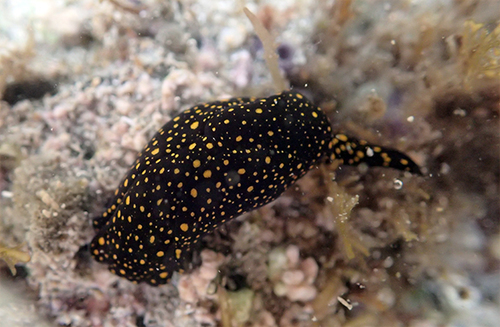
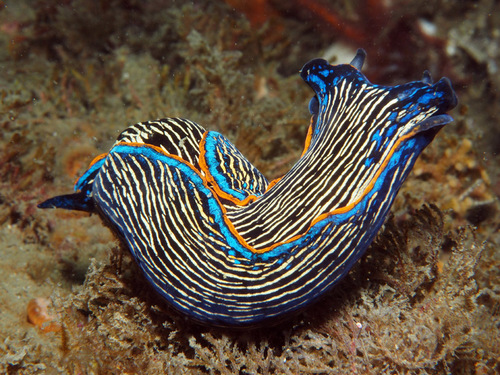
Navanax inermis, first described by J.G. Cooper in 1863, can have a body that is tan, black, or purple with yellowish streaks. Yellow or orange streaks and blue dots are visible along the body margins. It has two large parapodial folds that run the entire length of each side of the body, and these folds almost touch at the midsection. This species has a small internal shell. Mature individuals are typically 2.5 to 10 inches long. Navanax inermis has no radula and no vision-associated organs. This species is found in the eastern Pacific Ocean and Gulf of California, with a range extending from Monterey, California to Baja California. It is most commonly found in rocky intertidal regions and subtidal mudflats. Navanax inermis is a simultaneous hermaphrodite. Copulation can happen in groups called chains, which can include up to four individuals. In the southern part of its range, N. inermis spawns year-round, and can produce more than 800,000 eggs in a single spawning event. After 7 to 19 days of development, embryos are released and live as plankton.