About Nauphoeta cinerea (Olivier, 1789)
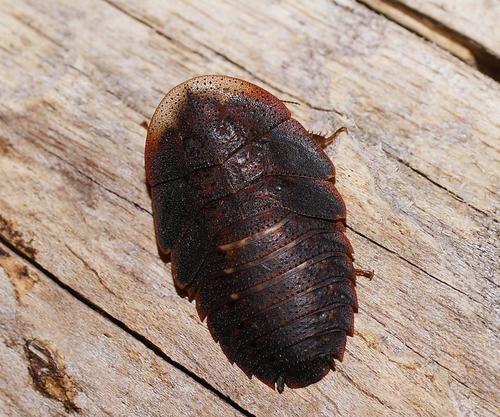
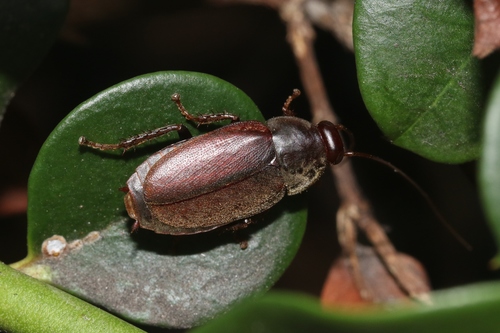
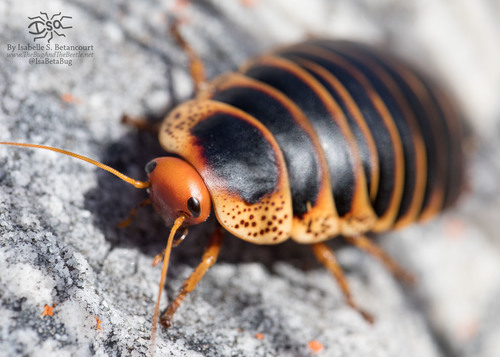
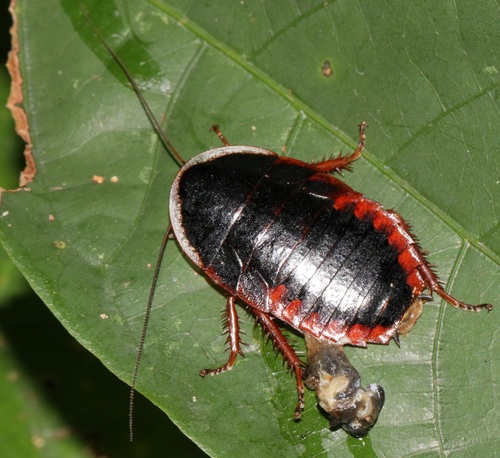
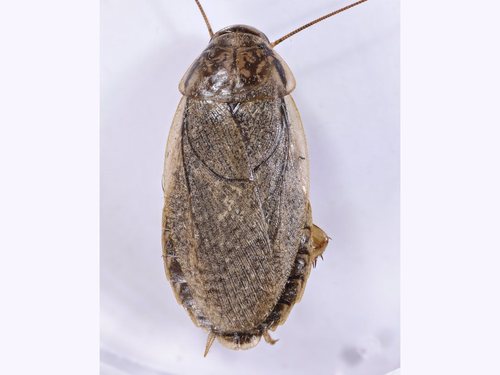
Morphology: Nauphoeta cinerea is mottled brown, has fully developed wings when mature, and can grow up to 30 millimeters in length.
General characteristics: A female Nauphoeta cinerea can produce roughly six broods over its lifetime. Each egg case (ootheca) takes approximately 36 days to incubate inside the female's brood sac, and contains an average of 33 eggs. This species is falsely ovoviviparous: the female pushes the ootheca out of the brood sac but does not lay it down. Nymphs hatch from the ootheca while it is still carried by the mother, they consume their embryonic membranes and the ootheca itself, then cling to the mother for around one hour before leaving.
On average, males take 72 days and go through seven moults to reach sexual maturity, and live for 365 days. Females, by contrast, take 85 days and eight moults to develop to maturity, and live for 344 days.
Distribution: Nauphoeta cinerea is native to north-eastern Africa, specifically found in Egypt, Eritrea, Libya, and Sudan. Because the species often associates with humans, particularly as a stowaway on ships, it has become an invasive species with a circumtropical distribution. Its introduced range includes parts of Madagascar, Thailand, the Philippines, Indonesia, Australia, Hawaii (United States), Mexico, Cuba, the Galapagos Islands (Ecuador), and Brazil.