About Nathalis iole Boisduval, 1836
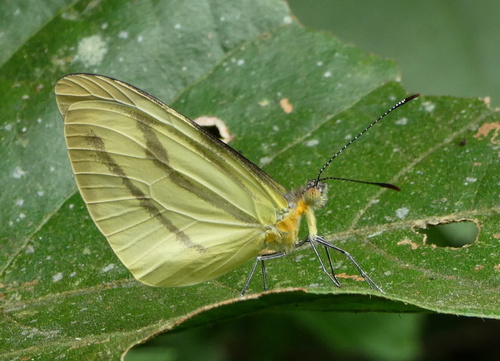
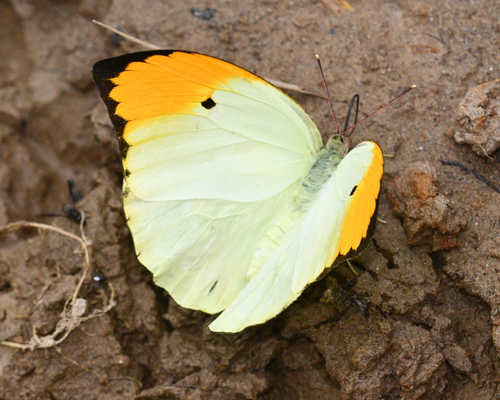
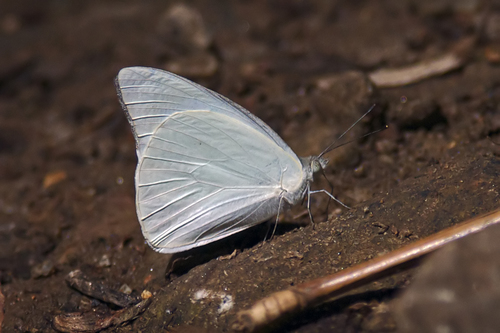
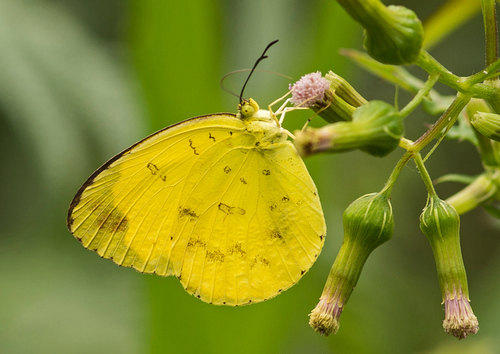
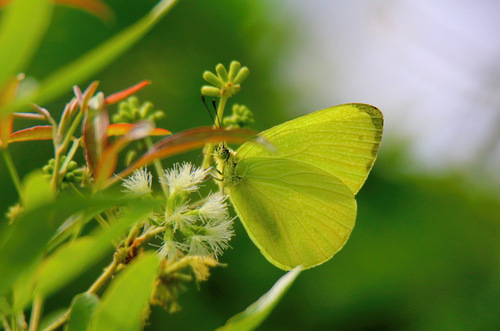
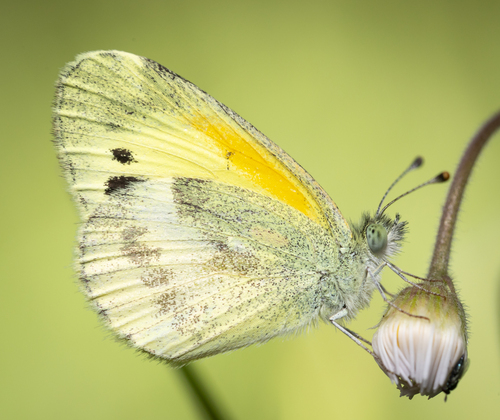
Nathalis iole, the dainty sulphur, is the smallest pierid butterfly species found in North America. A rare population located in Homestead, documented by Smith et al. in 1994, mostly consists of white individuals. Many observers consider the dainty sulphur unique among pierids due to its wing shape and several structural features, leading to the suggestion that it should be placed in its own separate subfamily. This species has highly variable appearance, but a set of distinctive traits helps with identification. The elongated shape of its forewings is one key distinguishing feature. The upperside of its wings is yellow, with a black tip on the forewing. Black bars run along the trailing edge of the forewing and the leading edge of the hindwing. Male dainty sulphurs have an oval scent patch called an androconial spot inside each hindwing bar. This spot is reddish orange when the butterfly is alive, but fades to pale yellow after death. The underside of the wings changes appearance based on the season: summer individuals have yellowish hindwings, while winter individuals have greenish-gray hindwings. Both seasonal forms have black spots near the forewing margin, and a yellowish-orange patch near the base of the forewing. This species occupies almost any open habitat, including coastal flats, deserts, fields, roadsides, vacant lots, and waste areas. It typically flies very close to the ground. For mating behavior, males patrol just inches above the ground to search for females. If a male encounters a female who rejects him, he will often perform an open-winged display that shows off his dorsal bars and androconial spots. This last-resort display to impress the female will frequently cause her to reverse her rejection. Females lay their lemon-yellow or orange-yellow eggs one at a time on young or newly emerging leaves of their host plant. Eggs hatch between 4 and 7 days after being laid. Larvae of this species are quite variable: some are solid dark green, while others are dark green with bright pinkish-purple stripes. Stiff-haired larvae have two pinkish-red bumps just above their head. The chrysalis is green or yellow-green, covered in yellow-white dots. Unlike most other pierids, this chrysalis does not have the characteristic projection on the head. Dainty sulphurs cannot survive cold winter conditions, so they migrate south to overwinter. If a larva develops during short day lengths, it will form a chrysalis that produces a winter phenotype adult butterfly with three times the usual number of dark scales. This higher number of dark scales allows the butterfly to absorb solar heat more easily. The species produces multiple broods each year.