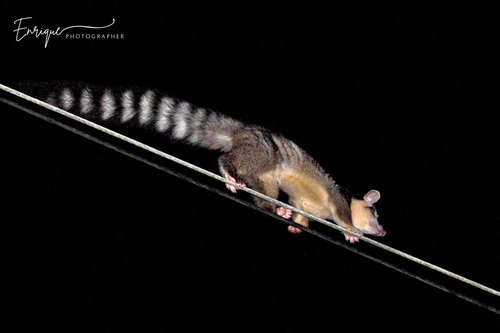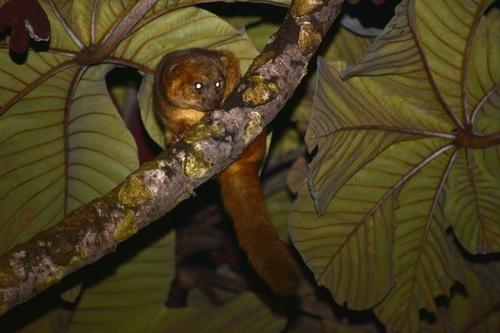
About Nasua nasua (Linnaeus, 1766)
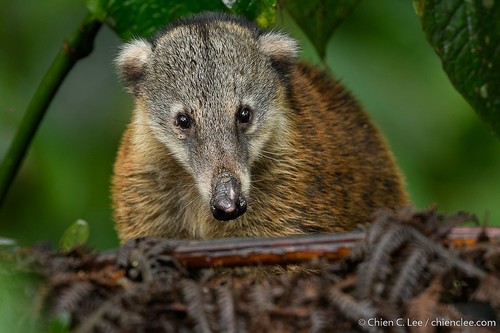
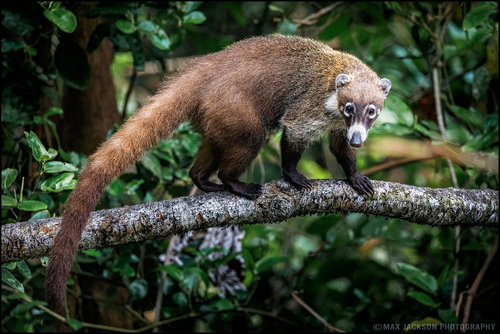
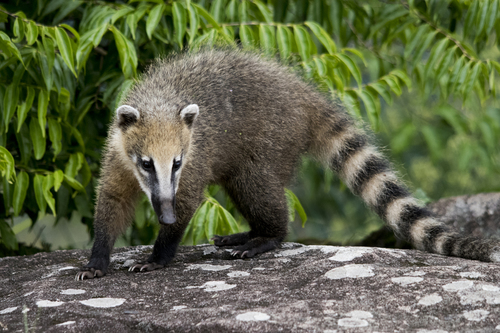
The South American coati, scientifically named Nasua nasua (Linnaeus, 1766), is also commonly called the ring-tailed coati or brown-nosed coati. It is a coati species belonging to the raccoon family Procyonidae, and is native to tropical and subtropical regions of South America. Adult South American coatis generally weigh between 2 and 7.2 kg (4.4–15.9 lb), and measure 85 to 113 cm (33–44 in) in total length, with half of this length made up by the tail. Their fur color varies widely, and the characteristic tail rings may only be faintly visible. The most notable distinguishing feature of this species is that it does not have the mostly white snout that its northern relative, the white-nosed coati, has. The South American coati is widespread across tropical and subtropical South America. It inhabits lowland forests east of the Andes at elevations up to 2,500 m (8,200 ft), ranging from Colombia and the Guianas in the north to Uruguay and northern Argentina in the south. A species' site occupancy is significantly negatively correlated with elevation, and significantly positively correlated with forest cover for Nasua nasua. This species has also been recorded in western Ecuador, and in northern and western Colombia. In Argentina, it has been recorded in the provinces of Santa Fe and Salta. It was introduced to the island of Mallorca, where it has become naturalized and is considered an invasive species. The only confirmed records of white-nosed coati in South America come from far northwestern Colombia, in the Gulf of Urabá region near the Colombia-Panama border. The smaller mountain coati primarily lives at higher elevations than the South American coati, though the two species have considerable overlap in their ranges. The South American coati is active during the day, and lives both on the ground and in trees. It is omnivorous, and feeds mostly on fruit, invertebrates, other small animals, and bird eggs. It forages for fruit in the upper tree canopy, and uses its snout to probe crevices for animal prey on the ground. It also finds animal prey by turning over rocks on the ground or ripping open logs with its claws. The South American coati is known to act as a host for Pachysentis lauroi, an intestinal acanthocephalan parasitic worm. Female South American coatis typically live in large social groups called bands, which contain 15 to 30 individuals. Males are usually solitary. Historically, solitary males were misclassified as a separate species due to their different social behavior, and were called coatimundis—a term that is still occasionally used today. Neither female bands nor solitary males defend exclusive territories, so their ranges overlap regularly. Group members make soft whining sounds to communicate, while alarm calls are distinct, consisting of loud woofs and clicks. South American coatis typically sleep in trees. When an alarm call is given, they climb trees, then drop to the ground and disperse. Known predators of the South American coati include foxes, jaguars, jaguarundis, and occasionally humans. All females in a social group enter estrus at the same time when fruit is in season, and mate with multiple males. The gestation period lasts 74 to 77 days, and the estrus period lasts 1 to 2 weeks. Captive females give birth to litters of 1 to 7 young at a time. In the wild, females leave their group to give birth in a tree-built nest, and rejoin the group with their offspring 5 to 6 weeks after birth. Female offspring usually stay in their natal group. Males typically leave their natal group when they are three years old. In the wild, South American coatis generally live up to 7 years, while captive individuals can live up to 14 years.