About Nanhaipotamon hongkongense (Shen, 1940)
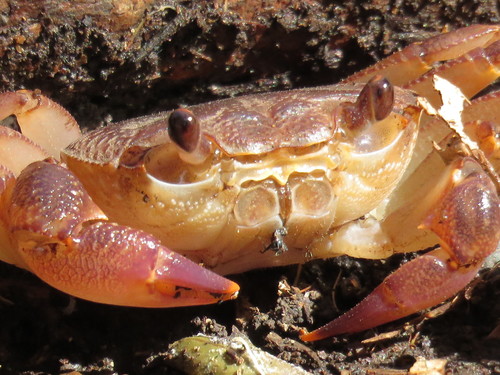
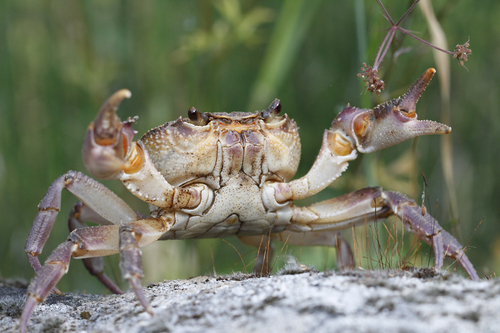
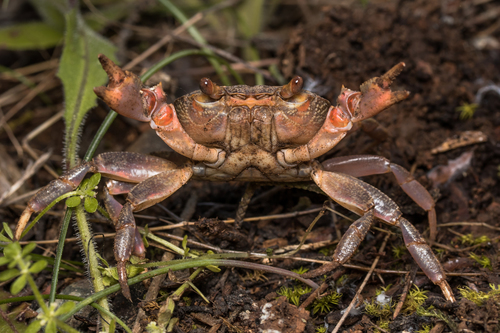
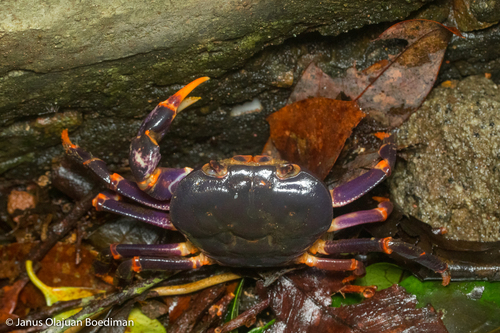
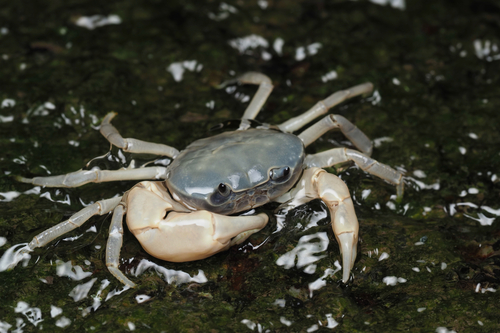
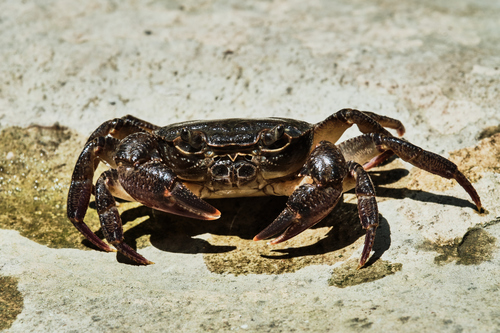
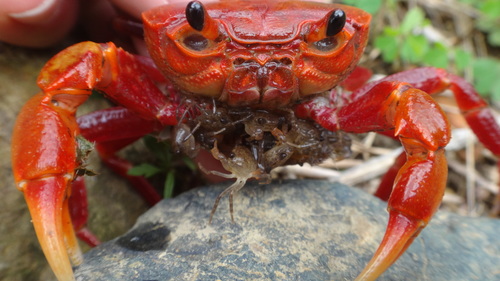
Nanhaipotamon hongkongense is a burrowing crab species that digs burrows into the muddy banks of small rivers and creeks, or into moist soil. It is nocturnal: it mostly stays inside its burrow during the day, and emerges at night or after heavy rainfall. Like all potamid crabs, its offspring undergo direct development and hatch as miniature versions of adult crabs. This semiterrestrial species inhabits the banks of hillstreams, and can also be found in locations far from running water, including moist areas where groundwater seeps through soil. These habitats are generally located within secondary evergreen broadleaf forests. While adults are rarely found in fully aquatic habitats, juveniles and small adults may be found under stones or leaves in small ditches, creeks, and ponds. N. hongkongense lives at elevations ranging from 17 to 514 meters above sea level. Though the species can tolerate some level of pollution, such as plastic trash, it is not abundant in human-modified landscapes or in and near densely populated human settlements. There is anecdotal evidence of individual crabs being found in schools and residential areas, however. It was first considered to be endemic to Hong Kong, and has since been recorded in Hong Kong's neighboring cities of Shenzhen and Dongguan.