About Nandayus nenday (Vieillot, 1823)
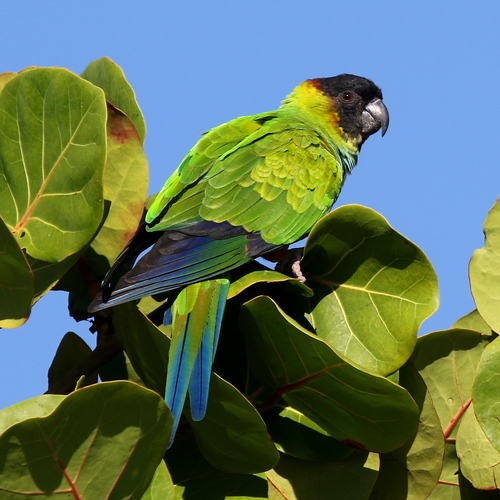
Description: The nanday parakeet is 27–30 cm (11–12 in) long, weighs 140 g (4.9 oz), and is mostly green in color. Its most distinctive feature, which gives the species its name, is its black facial mask and beak. It also has black trailing flight feathers on its wings and a long tail edged with blue at the tip. Its upper chest is bluish-green, while its lower chest is a paler green, and the feathers covering its thighs are red.
Distribution: This species is native to South America, ranging from southeast Bolivia to southwest Brazil, central Paraguay, and northern Argentina, including the Pantanal region. Released caged birds have formed self-sustaining feral populations in Israel, Tenerife, Los Angeles (California), San Antonio (Texas), and multiple counties across Florida in the United States, specifically Pasco, Sarasota, Pinellas, Manatee, Broward, Palm Beach, and Miami-Dade Counties.
Food, feeding, and habitat: This parakeet feeds on seeds, fruit, palm nuts, berries, flowers, and buds. Feral birds will also visit bird feeders. Wild nanday parakeets primarily live in scrub forest and forest clearings near settlements. In their native South America, they are commonly found in open savannah, pastures, and stockyards, and are considered pests in some of these areas.