About Naja haje (Linnaeus, 1758)
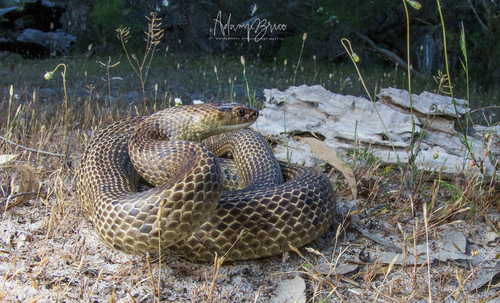
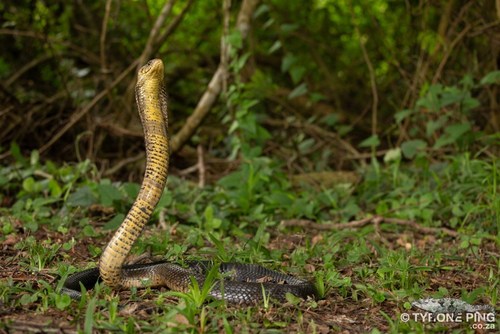
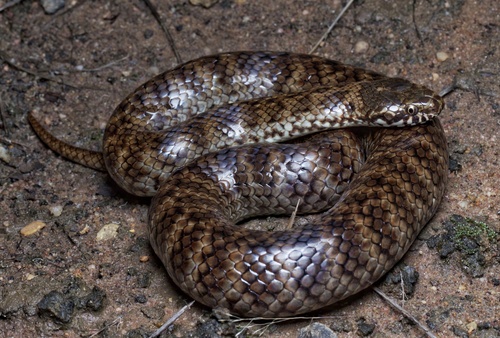
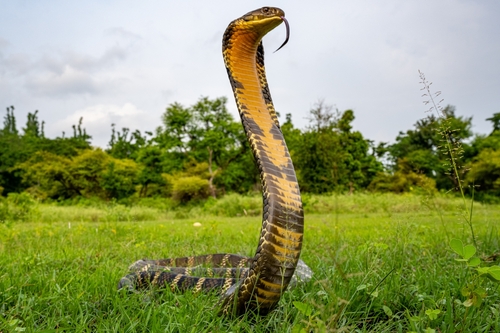
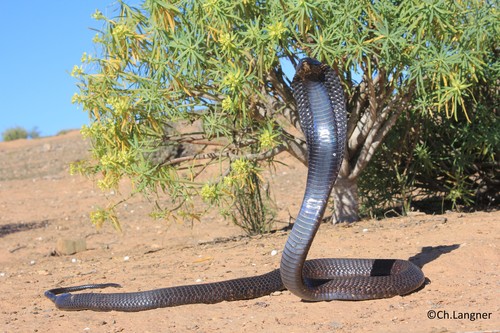
The Egyptian cobra (Naja haje) is a large cobra species. It has a large, depressed head that is slightly distinct from its neck. Like all other cobras, this species has long cervical ribs in the neck that can expand to form a hood. Its snout is moderately broad and rounded, and it has a quite large eye with a round pupil. The body is cylindrical and stout, with a long tail. Adult total length varies widely based on subspecies, geographical location, and population. The head and hood are this species' most recognizable features. Its overall coloration is highly variable: most individuals are some shade of brown, and often have a distinct "tear-drop" marking below the eye. Some individuals are copper-red or grey-brown, while specimens from northwestern Africa (Morocco) are almost entirely solid black. The ventral (belly) side is most often creamy white, yellow brown, grayish, blue grey, dark brown or black, and frequently has dark spots. The Egyptian cobra's geographic range covers most of North Africa north of the Sahara, extends across the savannas of West Africa south of the Sahara, reaches south as far as the Congo Basin, and extends east to Kenya and Tanzania. Older literature records of this species from Southern Africa and the Arabian Peninsula actually refer to other separate species. This species can be found in a wide range of habitats, including steppes, dry to moist savannas, and arid semi-desert regions that have at least some water and vegetation. It is frequently found close to water, and also occurs in agricultural fields, scrub vegetation, and areas with human populations. It often enters human houses, and is attracted to villages by rodent pests such as rats and domestic chickens. There are recorded observations of this species swimming in the Mediterranean Sea, and it is commonly found in water. The Egyptian cobra is a terrestrial species that is typically crepuscular or nocturnal, though it may sometimes be seen basking in the sun during early mornings. It prefers to use a permanent home base located in abandoned animal burrows, termite mounds, or rock outcrops. It is an active forager, and will sometimes enter human habitations especially when hunting domestic fowl. Like other cobra species, it generally tries to escape when approached, moving at least a few metres away. If it feels threatened, however, it will take the typical upright cobra posture with an expanded hood, and will strike. While it prefers to prey on toads, it also eats small mammals, birds, eggs, lizards, and other snakes. It is known to act as an intermediate host for the acanthocephalan parasite Pachysentis ehrenbergi.