About Nageia nagi (Thunb.) Kuntze
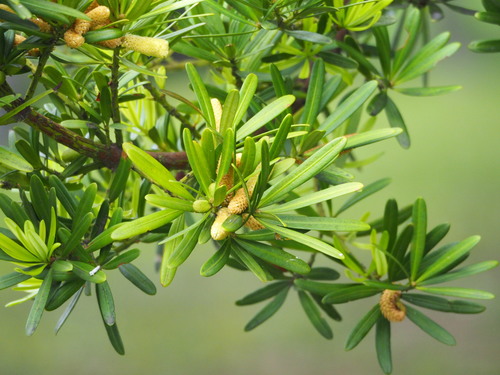
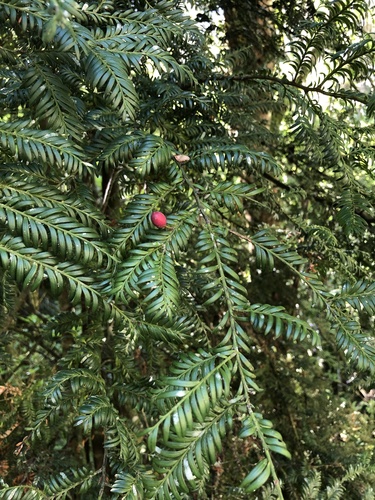
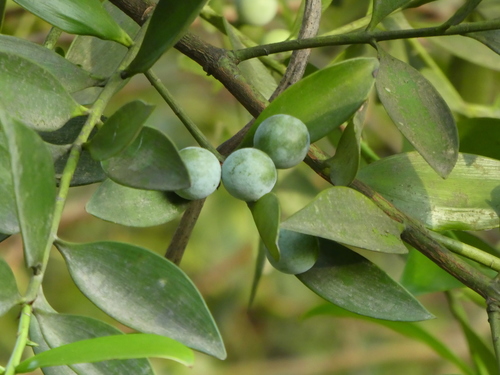
Nageia nagi (Thunb.) Kuntze, a member of the Podocarpaceae family, is a hardy tree species that can tolerate a wide range of weather conditions. It prefers moist, well-drained sites and exposure ranging from full sunlight to light shade. This species is dioecious, meaning male and female reproductive structures grow on separate individual plants. Its pollen cones form as catkins, while its female cones mature within one year and consist of reduced fleshy bracts holding a single inverted ovule. Pollination relies on wind, and the species cannot self-pollinate. Mature trees reach 15 to 20 meters in height and grow relatively slowly. Its leaves are lanceolate-shaped, arranged sub-oppositely on branches, and measure 2 to 8 inches long and 0.75 to 2.5 inches wide. Leaves lack a mid-vein: new leaves are light green, while mature leaves turn dark green and glossy. Young branches are green, and age to a reddish brown color, peeling in small layers. Nageia nagi can be propagated by cuttings or seed. Seeds should be planted in sandy soil in a warm greenhouse. For permanent planting, specimens should be set out in late spring or early summer after the last frost has passed. The species is currently threatened by habitat loss. Its wood is used to construct houses, bridges, utensils, handcrafts, and furniture. The seeds produce an edible oil that is also valued for industrial uses. Young leaves are sometimes cooked and eaten. Its bark has a strong antibacterial effect. Stems are used in cut floral arrangements, and can last up to one year when kept in water.