About Nadata gibbosa J.E.Smith, 1797
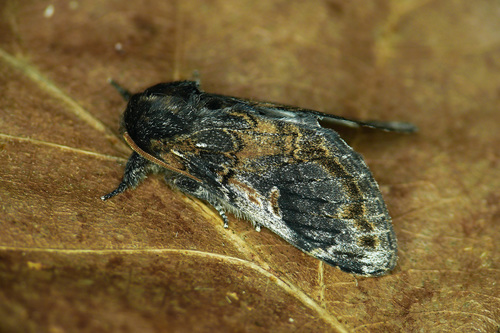
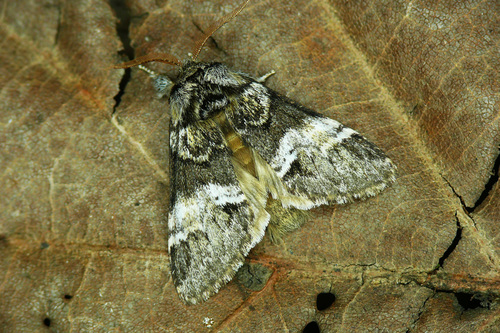
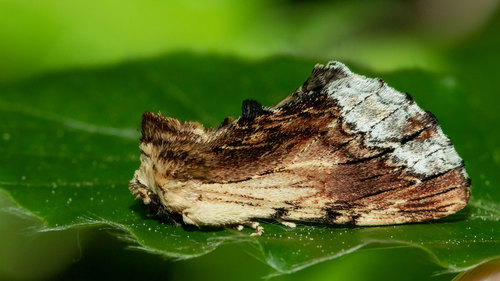
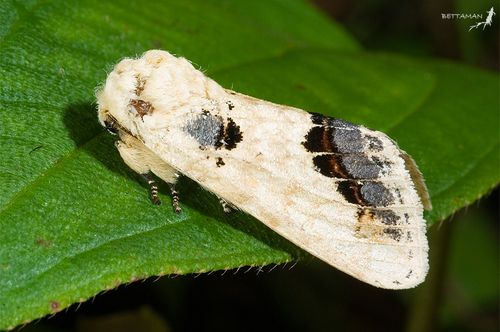
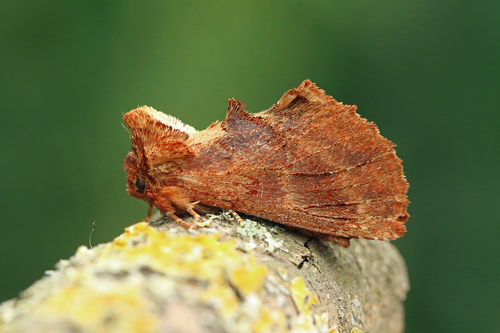
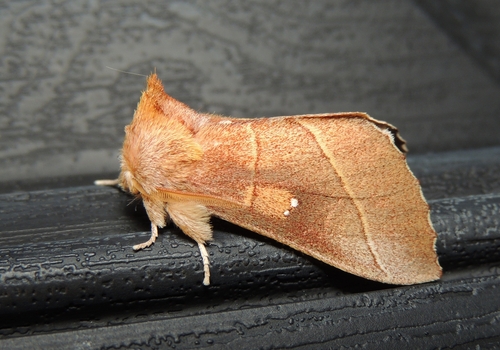
Nadata gibbosa, commonly known as the rough prominent, also called the white-dotted prominent and the tawny prominent, is a moth species belonging to the family Notodontidae, subfamily Phalerinae. The species was first formally described by James Edward Smith in 1797. This common moth occurs throughout North America, ranging from northern boreal forests south to Florida. It is most abundant in deciduous forests at moderate elevation. Nadata gibbosa is nocturnal and attracted to artificial lights. Adults begin flying shortly after dusk, and return to resting sites before dawn, as reported by Fullard & Napoleone in 2001. Adults are active from late spring through early summer, while larvae remain active until fall. After the larval stage, individuals pupate and overwinter until the following spring. This moth has a tan or dull orange body and wings, with two small silver spots on each forewing. Its wingspan measures roughly 2 inches, or 5 centimeters, and it has a pointed thoracic tuft positioned between its wings. Recorded host food plants for this species include: Acer (maple), Alnus (alder), Amelanchier, Betula (birch), Castanea (chestnut), Corylus (hazel), Fagus (beech), Fraxinus americana (white ash), Populus (poplar), Prunus, Quercus (oak), Rosa (rose), and Salix (willow).