About Nabalus albus (L.) Hook.
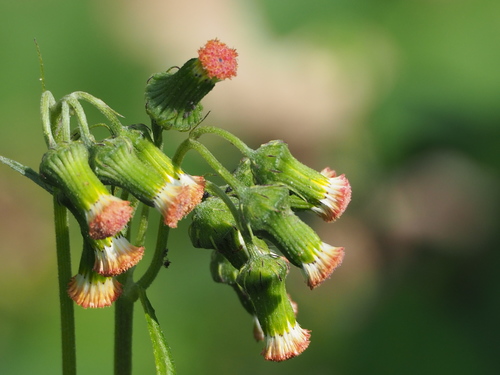
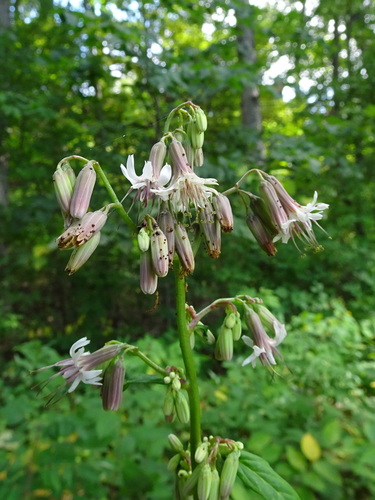
Nabalus albus, commonly called white rattlesnake-root, Boott's rattlesnake-root, or white lettuce, is a flowering plant species in the family Asteraceae. It is native to Canada and the Eastern United States, with its range extending west into North Dakota, northeast Missouri, and four counties in northwest Arkansas; it is commonly found in Connecticut, Maine, Massachusetts, New Hampshire, and Vermont. This species grows in forests, woodlands, and human-altered (anthropogenic) habitats. Distinguishing this species from other members of the rattlesnake-root genus Nabalus requires close examination of its flower heads. All individual flowers within each of its flower heads are ray flowers, each with a strap-shaped ray that may or may not have teeth at its tip; ray flower color ranges from blue to purple, pink to red, or white. Leaf blades of this species measure between 40 and 300 mm in length, and flower heads measure 3 to 5 mm in width. In Missouri, Nabalus albus blooms from July to September. The Iroquois traditionally used a poultice made from the roots of this plant to treat rattlesnake bites. In 2010, this species was reclassified from the genus Prenanthes to the genus Nabalus.