About Myzus cerasi (Fabricius, 1775)
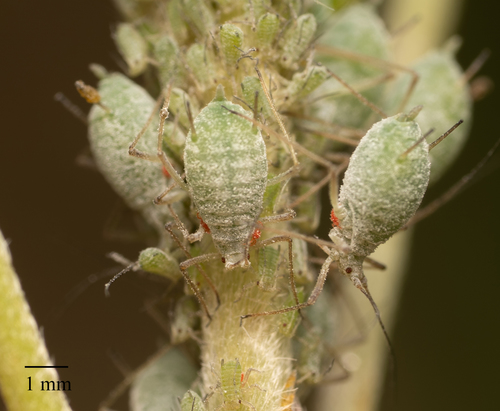
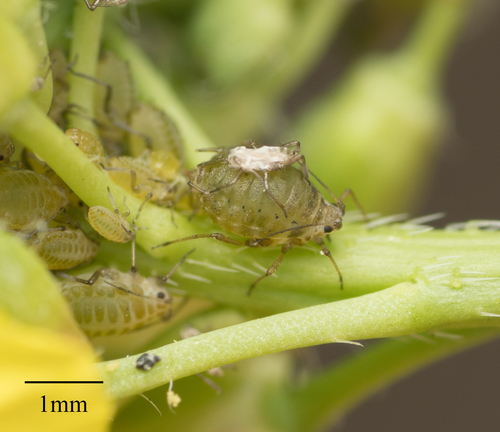
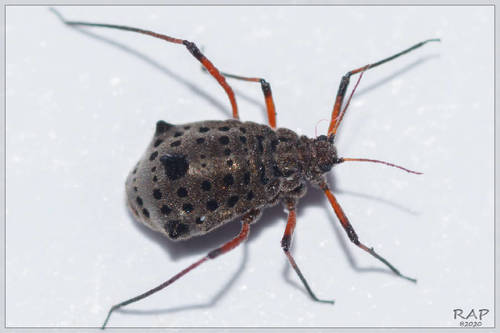
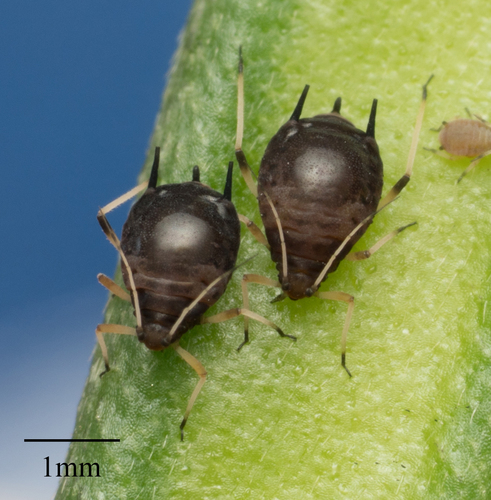
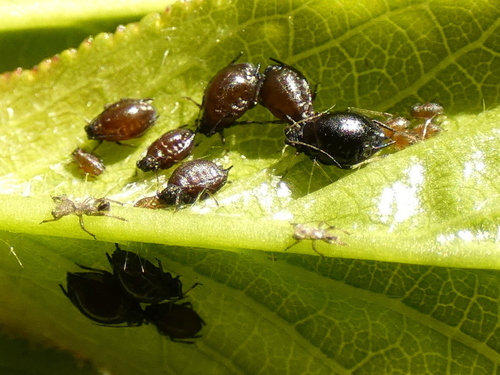
Myzus cerasi, commonly known as the black cherry aphid or cherry blackfly, is an aphid species belonging to the order Hemiptera. As a true bug, it feeds by sucking sap from plants. In terms of morphology, Myzus cerasi is a small to medium-sized aphid. Adult individuals are shiny, range in color from very dark brown to black, and have a sclerotized dorsum. Their siphunculi and cauda are completely black, while their legs and antennae are patterned yellow and black. Apterous summer virginoparae have a shiny black body, along with black siphunculi and antennae; their cauda is dusky to black, and their tibiae are yellow except for the tips. In ecology, the breeding habitat of Myzus cerasi is located on the growing top shoots of Prunus species, specifically Prunus cerasus and Prunus avium. This species forms large colonies that cause leaf curling and damage to newly developing leaves. Myzus cerasi is classified as a cosmopolitan species, with a distribution that covers Europe and parts of Asia. The species' wide range and variety of host species allow breeding programs to utilize potential natural deterrents that may be more effective than older pesticides. Though research has found a correlation between damage caused by cherry aphids and half-line hosts, there is also evidence of host population resistance. For biopesticide control, Bacillus thuringiensis has been found effective at reducing Myzus cerasi population sizes in both laboratory and field studies. Reduced effectiveness of biopesticides under different environmental conditions can be attributed to lower exposure of aphid populations to FDP-41. While only 10 ng/μL of FDP-41 is required to achieve a 70% mortality rate within 72 hours under laboratory conditions, further studies are needed to increase the viability of this control method.