About Mytilus edulis Linnaeus, 1758
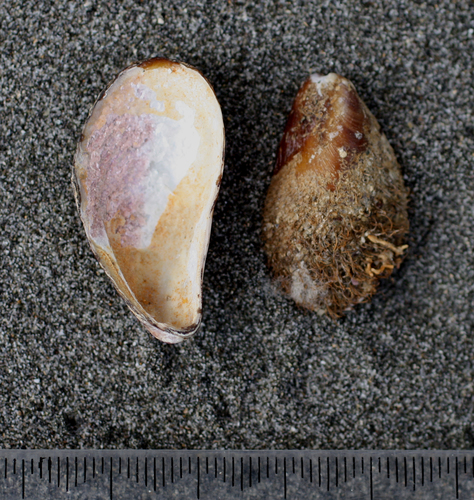
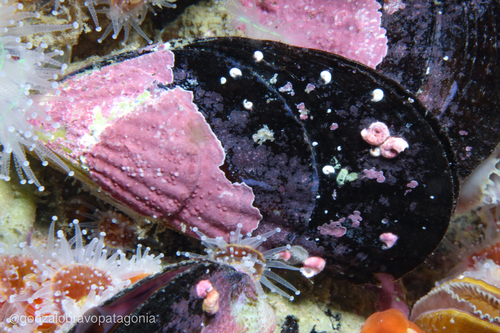
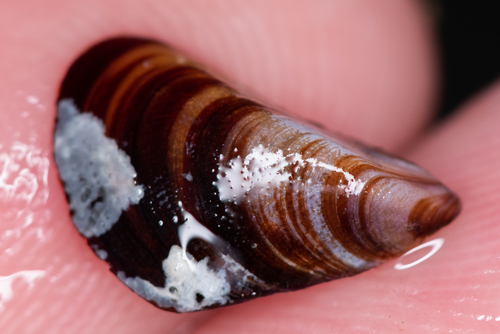
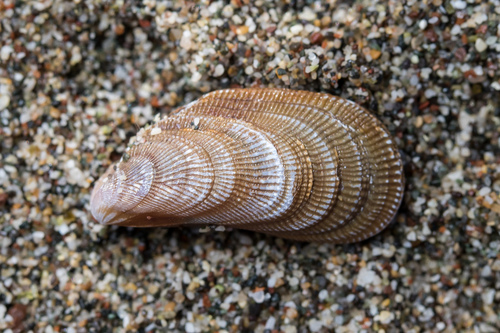
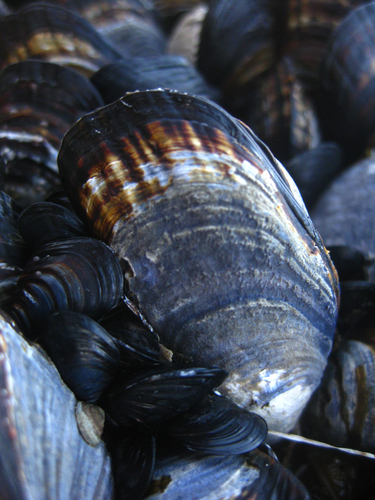
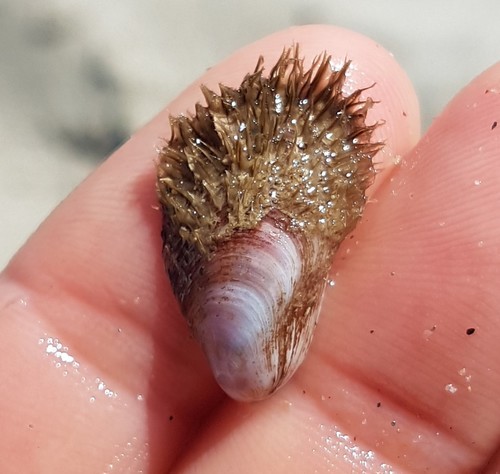
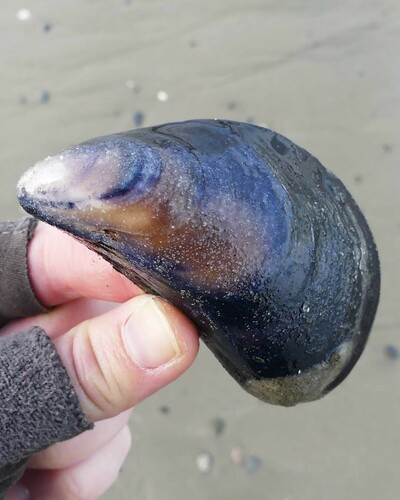
Mytilus edulis, the blue mussel, has a triangular, elongated shell with rounded edges. The shell surface is smooth, marked only by fine concentric growth lines, with no radiating ribs. Shell color ranges from purple and blue to occasionally brown, and sometimes features radial stripes. The outer shell surface is covered by a periostracum; when this layer erodes, the colored prismatic calcitic layer beneath is exposed. Blue mussels are semi-sessile: they can detach and reattach to surfaces to reposition themselves relative to the surrounding water. Blue mussels are boreo-temperate invertebrates that inhabit intertidal zones, where they attach to rocks and other hard substrates using strong, somewhat elastic thread-like structures called byssal threads. These threads are secreted by byssal glands located in the mussel's foot. Blue mussels have separate sexes. Once sperm and eggs are fully developed, both are released into the water column for external fertilization. Although there are roughly 10,000 sperm per egg, a large proportion of the eggs released by blue mussels are never fertilized. Of the larvae that do develop successfully, as few as 1% survive to reach adulthood, with the vast majority being eaten by predators before they finish metamorphosis. The reproductive strategy of blue mussels is characteristic of planktotrophs: by limiting the nutrient allocation to egg production to the bare minimum, they maximize the total number of gametes they produce. If adult blue mussels experience stress at the start of gametogenesis, the development process stops entirely. If stress occurs when mature gametes are already present, adult mussels reabsorb these gametes. Larval viability also depends on the condition of the parent mussels: high water temperatures, pollutants, and food scarcity during gamete production all reduce larval viability, and this reduction is likely caused by insufficient lipid reserves being distributed to the eggs. As filter feeders, blue mussels play a critical role in estuaries by removing bacteria and toxins from the water. Mytilus edulis is widely harvested for food from both wild and farmed populations around the world. It is a staple ingredient in many seafood dishes across multiple cuisines, including Spanish (especially Galician), Portuguese, French, British, Dutch, Belgian, and Italian cuisines, and it is used to make the Turkish dish midye dolma. Blue mussels are also commonly used as laboratory animals, and were historically harvested by Indigenous peoples of North America. Blue mussel populations are currently declining in areas including the Gulf of Maine; historical records show a roughly 40% population decrease over the past fifty years. This decline presents future problems, because blue mussels are a foundation species that provides habitat and protection for other small intertidal organisms, such as small fish, in addition to filtering coastal water. Without blue mussels, levels of filtered bacteria, metals, and toxins would rise significantly in these habitats. Ocean acidification, driven by increasing atmospheric carbon dioxide, is projected to reduce the growth and survival of blue mussels, which in turn could drastically lower the positive impact these mussels have on coastal water quality.