About Mytilus californianus Conrad, 1837
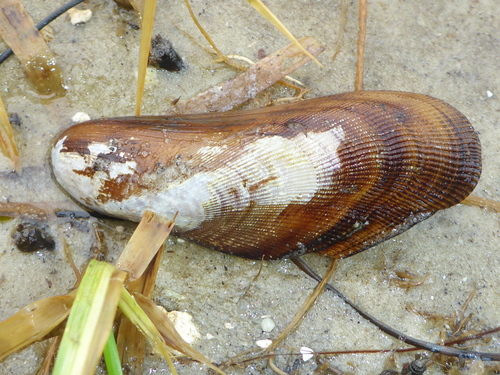
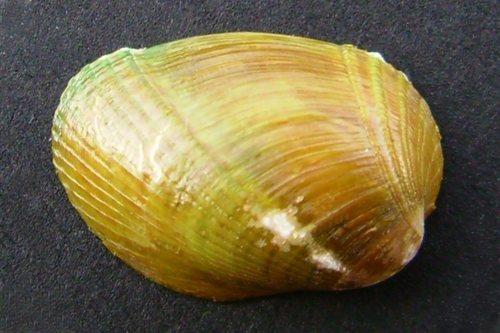
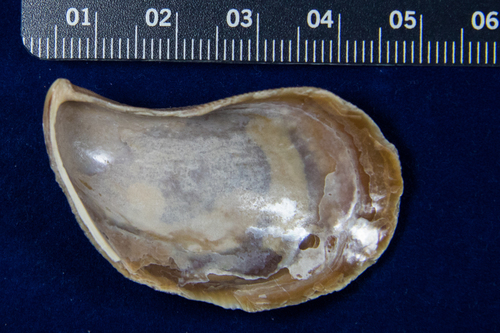
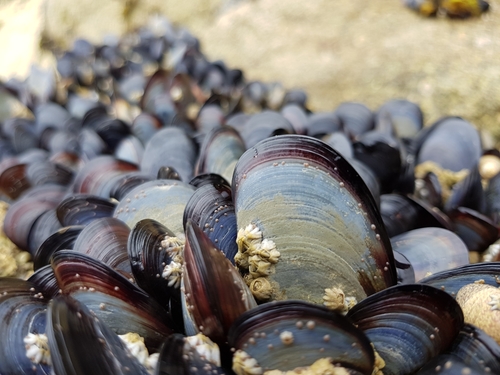
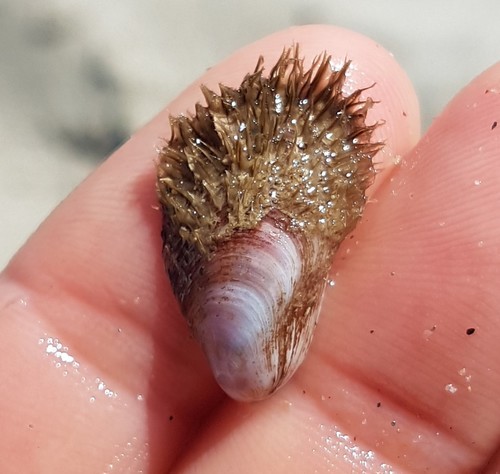
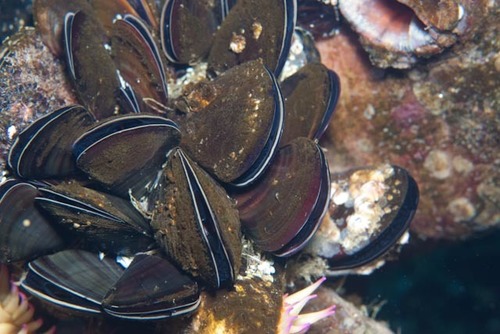
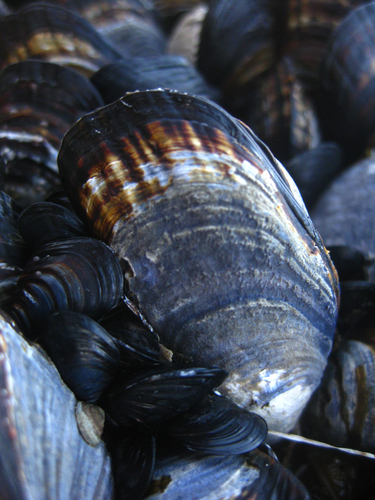
Mytilus californianus, commonly known as the California mussel, has a thick shell that typically measures 129 to 130 millimeters (5 to 5 inches) in length, and may grow even larger. The outer shell surface is blue, covered by a thick brown periostracum that usually wears away except near the shell’s growing edge. The shell’s beaks are often eroded, and the outer surface features coarse radial ribbing and irregular growth lines. The inner surface of the shell is blue and faintly pearly. Like other mytilids, this organism anchors itself to substrate using a very strong, elastic byssus. The shell is composed primarily of carbonates. In the 1950s, the shell carbonate was mostly aragonite with a smaller amount of calcite, but by 2017 and 2018, the proportion of the two carbonates had reversed. This change was unexpected: researchers previously observed increased aragonite in warmer waters, and expected aragonite levels to rise as ocean temperatures increased, but the opposite change occurred. This reversal showed that ocean acidification is the deciding factor in the carbonate composition of M. californianus shells, because calcite is more resistant to acidity than aragonite. California mussels prefer high salinity, low sediment conditions on open rocky coasts. They do not easily colonize bare rock, and instead favor the shelter provided by pre-existing mussels and their biological filaments. They anchor themselves to hard surfaces using their thread-like byssus. When conditions are favorable, California mussels can grow up to 200 mm (8 inches) in length and live for more than 20 years. In the intertidal open coastal environment, mortality is often high, caused by battering from driftwood and other debris, wave impact, predation, desiccation, and disease. One of their main predators is the Pisaster starfish. California mussels feed on plankton. Before European contact, California mussels were an important food source for Native American peoples living along the Pacific Coast. Archaeological evidence from California’s Northern Channel Islands shows that people harvested these mussels continuously for almost 12,000 years. Erlandson et al. (2008) documented a decline in the average size of harvested California mussels on San Miguel Island over the past 10,000 years, a pattern the authors attribute to growing human populations and increased harvest pressure from human fishing. Hogan (2008) describes specific archaeological recovery of mussel remains from the Chumash people dating to 800 to 1300 AD. California mussels continue to be harvested for food and bait along the entire Pacific Coast of North America. The flesh of the California mussel is typically orange in color, and can be prepared by baking, boiling, or frying, similarly to other mussels, clams, and oysters. While they are generally edible, caution is required: during local red tide events, California mussels can accumulate harmful levels of toxins that cause paralytic shellfish poisoning.