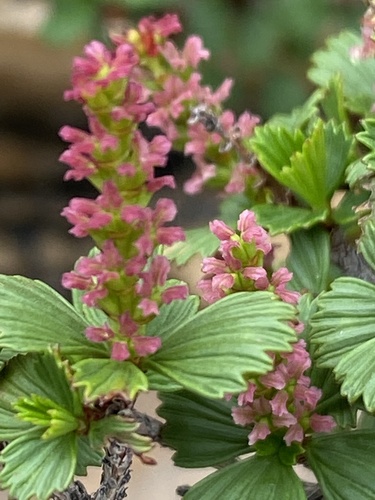
About Myrothamnus flabellifolius (Sond.) Welw.
Myrothamnus flabellifolius (Sond.) Welw. is a small, resinous plant that reaches a shoot height of 200–1,200 mm (8–47 in). It grows in single clumps or as large colonies with extensive root systems. In winter, this plant loses all its leaves and stays bare until the first rainfall. When hydrated, individuals are noticeably larger than when they are dehydrated, and can fold their leaves and stems to reduce light absorption. Its thylakoid membranes stack on top of one another to lower photo-oxidative stress. When the plant dries out, mesophyll cells fold their cell walls, while sclerenchyma and vascular cells do not fold, providing structural support for the plant. When water becomes available again, it is absorbed through the roots, as folded leaves cannot absorb water on their own. Lipids in the plant's xylem assist with water transport, preventing cavitation and supporting rehydration. This species grows along mountain formations in central and southern Africa, typically at altitudes between 500 and 1,900 m (1,640–6,234 ft). It grows in areas with high light intensity, extreme daily temperature changes between night and day, dry winters, and rainy summers, though the length of these seasonal periods can vary greatly between different regions. It can also be found in shallow rocky outcrops with soil approximately 15 cm (5.9 in) deep. Its roots expand to capture water held in the gaps between rocks, and erosion debris usually accumulates around its root system. Due to its ability to produce flowers after months of dormancy, Myrothamnus flabellifolius is commonly called the resurrection plant. In some African cultures, it is a symbol of hope. Its leaves and stems are commonly used to make tea, spices, and lotions. In traditional African village medicine, it is used by healers to treat coughs, influenza, mastitis, backaches, kidney disorders, hemorrhoids, and abdominal pains. Smoking the plant is reported to alleviate chest pain and symptoms of depression. Chewing its leaves is used to manage halitosis and gingivitis.

