About Myrmecophilus acervorum (Panzer, 1799)
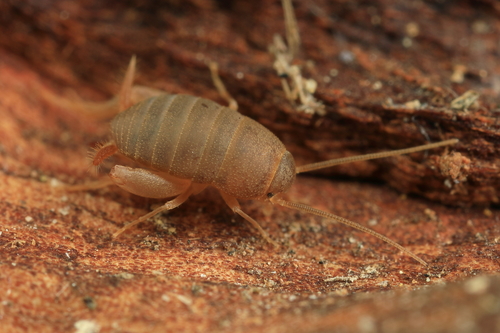
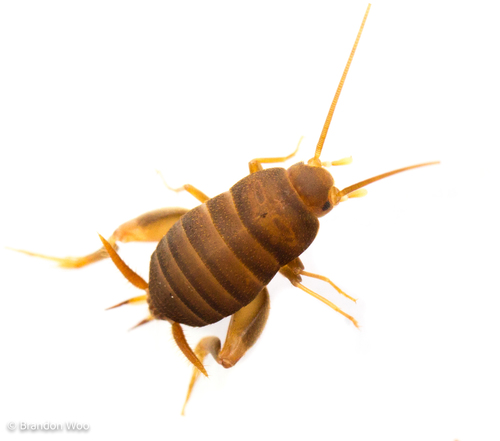
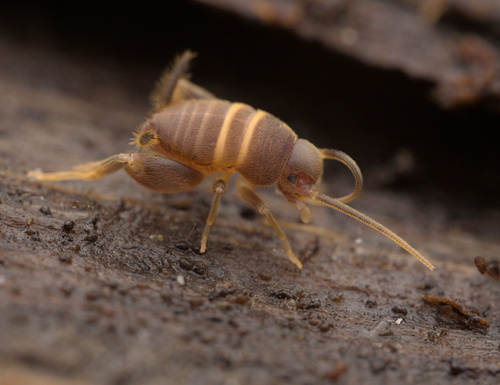
Myrmecophilus acervorum (Panzer, 1799) is an orthopteran insect in the ant-loving cricket family Myrmecophilidae. This continental European species is likely the most widespread and most commonly encountered member of this little-known family in Europe. It is also by far the smallest orthopteran occurring in Western Europe, with the total adult length never exceeding 3.5 mm (0.14 in). Like other members of Myrmecophilidae, M. acervorum spends its entire lifecycle as an inquiline living inside ant nests; this myrmecophilous species associates with over 20 different ant species. Its specialized nesting lifestyle has driven the evolution of numerous morphological differences from other orthopterans. These include a complete lack of wings (since individuals never leave their host ant nest), an absence of hearing organs (because the species no longer uses stridulation), greatly reduced eyesight, and its characteristic very small body size. These tiny insects are dark brown, marked with paler bands and have prominent cerci that act as their main sensory organs. Adults can be found year-round, and individuals take up to two years to reach adulthood after hatching. Females of this species reproduce through parthenogenesis.