About Myrmecia forficata (Fabricius, 1787)
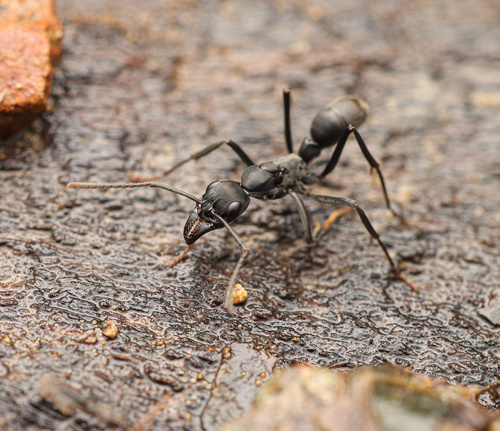
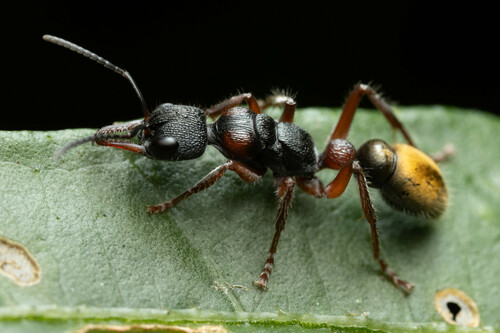
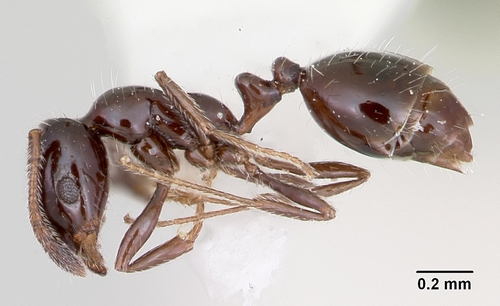
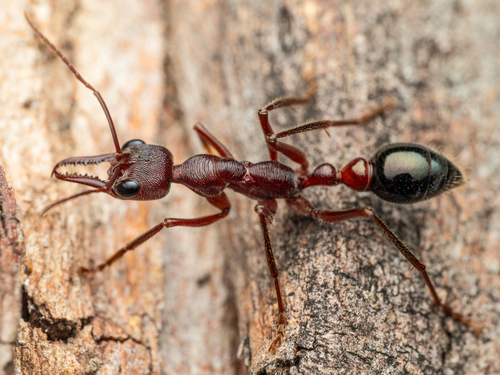
Myrmecia forficata, commonly known as the inchman ant, is a species of bull ant native to Australia. It is found in the southeastern part of the country. It is most common in the Australian Alps at elevations above 300m, but can also be found down to sea level around Melbourne, and throughout Tasmania. The inchman ant is the most venomous of the bulldog ants. Workers range from about 15 to 25 mm (0.6 to 1.0 inch) long, and are less aggressive than the Jack jumper ant. These ants are purplish-brown, with a black abdomen. Their large size gave them their common name, although most individuals are slightly smaller than the traditional inch (25.4 mm). Their nests may be inconspicuously hidden under a rock or inside a small hole. Like many bulldog ant species, inchman ants usually forage alone, even though they live in colonies like most other ants. Inchman ants are carnivores and scavengers. They sting their victims with venom that is similar to the stings of wasps, bees, and fire ants. Their venom is among the most powerful of any insect. The reputation of inchman ants as the most venomous ants likely comes from their toxin's tendency to cause anaphylaxis, which can be fatal for some people. Symptoms from an inchman ant sting are similar to symptoms from a fire ant sting. Reactions are primarily local: swelling, reddening, and fever, followed by blister formation. After a sting, heart rate increases and blood pressure drops rapidly. Approximately 3% of sting cases result in anaphylaxis. Treatment for an inchman ant sting is very similar to treatment for wasp and bee stings.